Home » Jazz Articles » Building a Jazz Library » Classic Bebop
Classic Bebop

Bebop is the sharp dividing line between swing and modern jazz. It was born in the early 1940s from jam sessions led by alto saxophonist Charlie Parker, trumpeter Dizzy Gillespie, pianists Bud Powell and Thelonious Monk, and drummers Kenny Clarke and Max Roach, in and around a club called Minton's Playhouse in Harlem.
These and like-minded musicians revolutionized jazz concepts of melody, harmony, and rhythm. The preceding musical generation of swing improvisers basically played variations upon the notes of a song's melody. But after a chorus or two to introduce the tune, bebop improvisers created entirely new melodic phrases using notes from the harmonic structure of the song's chords, "ignoring" the melody, instead. Beboppers also employed unusual intervals and chords that swing musicians almost never explored such as the flatted fifth scale tone and altered ninth, eleventh, and thirteenth chords.
Social factors contributed, too. A tax imposed on dance halls to raise public funds during WWII forced most dance halls out of business instead. With few places to play, large swing bands and orchestras broke up into more nimble small ensembles, among them the classic bebop quartet (horn, bass, piano, drum) and quintet (mainly with a second horn). Freed from the metronome-steady dance beat, musicians were free to create new tempos, rhythms and sounds to be listened to, not danced to. Bebop ripped the rhythmic lid wide open, creating pulses from swirling eighth-and sixteenth-note patterns that doubled and redoubled the steady "four beats to the bar" swing beat.
Bebop is also renown for its cult of personalities: The freewheeling yet exacting trumpet player who was anything but "Dizzy"; the inscrutable composer / pianist who supposedly adopted the middle name "Sphere" because he wasn't square (Monk); and Bird, the most influential instrumentalist of the second half of the twentieth century from a fiery genius which burned through standard concepts of jazz phrasing and tempo.
 Dizzy Gillespie
Shaw Nuff
(1945)
Early sessions featuring Gillespie and Parker in the company of swingers and boppers ripping off seminal versions of "Salt Peanuts," "Hot House" and "Groovin' High." Includes Clarke, Milt "Bags" Jackson on vibes, and pianist John Lewis, who remained mainstays of Gillespie's rhythm section until forming The Modern Jazz Quartet (MJQ).
 Charlie Parker & Dizzy Gillespie
Diz N' Bird at Carnegie Hall
(1947)
This live document of the first bebop show at Carnegie Hall presents Gillespie in two most flattering settings: Soaring with Bird in a quintet through the serpentine "A Night in Tunisia" and four other bop staples, then with the Gillespie Orchestra for ten selections, including "Cubano-Be, Cubano-Bop" with Chano Pozo.
 Charlie Parker
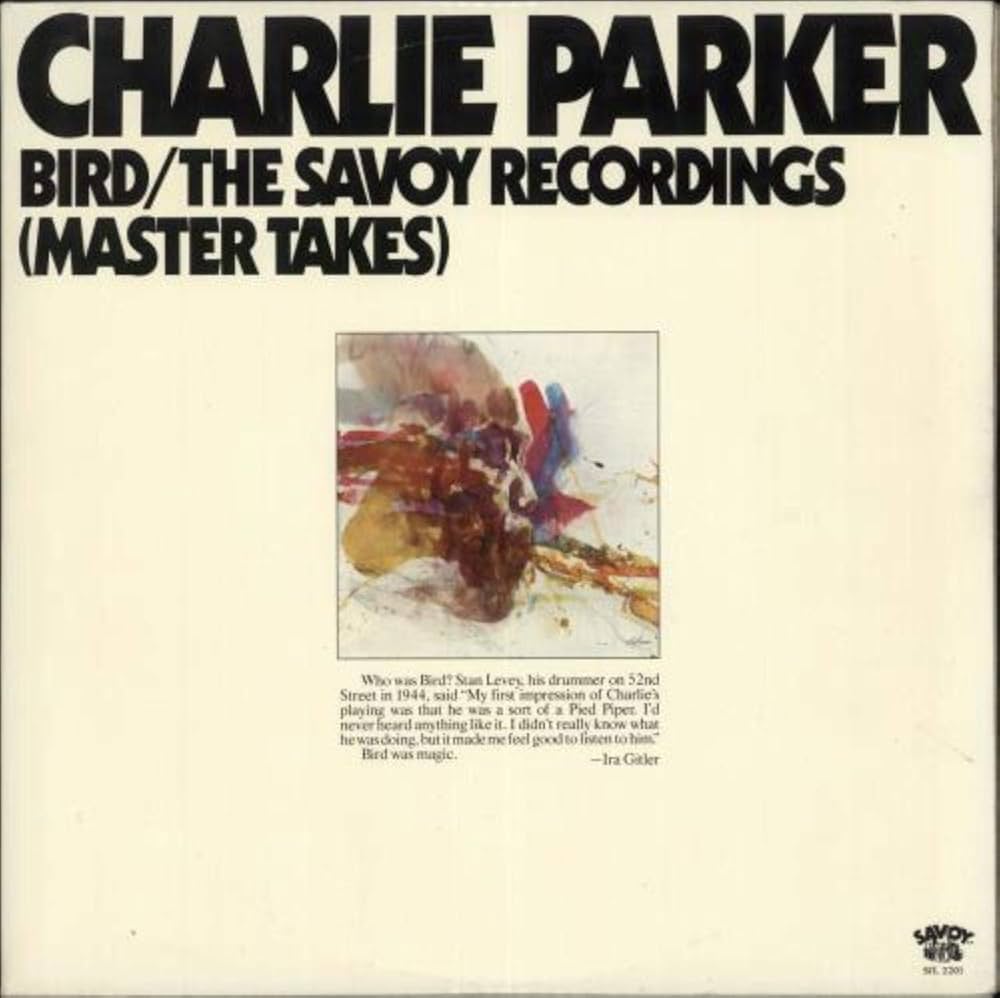
Bird: The Savoy Recordings: Master Takes
(Compilation, 1944 -'48)
This two-record collection of Parker's studio recordings for Savoy, his first sessions as a featured performer, captures definitive versions of nearly all Parker's trademark tunes (most notably the scalding "Koko"). Comparable in importance and innovation to Armstrong's legendary Hot Five and Hot Seven recordings.
 Charlie Parker
The Complete Savoy Live Performances
(Compilation, 1947 -'50)
Parker onstage was Bird in full flight, demonstrated by this more or less complete collection of Bird's live radio broadcasts from NYC's Royal Roost supplemented with other live performances. Presents the genius of Parker in one of his favorite settings, surrounded by utterly complementary musicians, before his deterioration.
 Bud Powell
The Amazing Bud Powell
(Compilation, 1949-'51)
Powell played the pianists' version of Parker, an instrumentalist of almost agonizing intensity ultimately consumed by personal demons. With these sessions Powell assumes his place as heir to virtuoso pianist Art Tatum, soaring "Over the Rainbow" and plumbing the emotionally and musically complex depths of his (autobiographical?) "Un Poco Loco."
 Red Norvo with Tal Farlow and Charles Mingus
The Savoy Sessions
(1951)
Norvo was one of few swing musicians (he often played with Benny Goodman) to swing with the beboppers, and never sounded more inspired than on these trio sides with blossoming bassist Charles Mingus and Tal Farlow, whose electric guitar seemed to telepathically chime in tune with Norvo's vibes. A different sound for cool.
 The Quintet, Vol. 1: The Greatest Jazz Concert Ever (Jazz at Massey Hall)
 (1953)
If there's bebop heaven, here's the house band: Parker, Gillespie, Powell, Roach and bassist Charles Mingus. The first set presents the complete quintet with Parker and Gillespie, who make the most of their final live recording together (particularly Bird in "Salt Peanuts"). Powell leads the rhythm section as a trio for the second set.
 Miles Davis
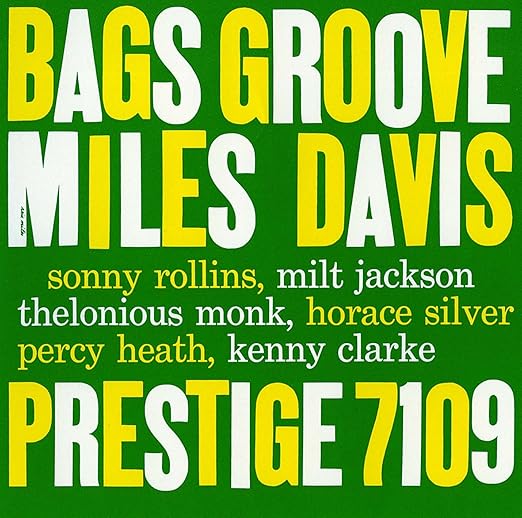
Bags' Groove
(1954)
A mythical Christmas Eve session led by Davis, the cool trumpet antithesis to Gillespie's heat, hosting musicians either already in or just about to entire their prime: pianists Monk and Horace Silver, and saxophonists Sonny Rollins and Jimmy Heath, with the MJQ providing rock solid rhythm. A summit of bebop stars preparing to go modern.
 Art Blakey Quintet
A Night at Birdland Vol. 1
(1954)
The explosive drummer Blakey is a founder of hard bop, the funky heir to bebop, through his soulful and talent-laden Jazz Messengers ensembles. He rocks this pre-JM set in the company of Silver, Lou Donaldson and Clifford Brown, who collectively blow through "A Night in Tunisia" like a runaway locomotive. The shape of bop to come.
 Thelonious Monk
Brilliant Corners
(1956)
The birth of bebop coincides almost precisely with Monk sitting as Minton's house pianist. Here, he accompanies himself on piano with a celeste on "Pannonica," which not only makes it exquisitely beautiful but also illustrates "The onlyest" Monk's inexplicably odd yet undeniable genius. His solo "I Surrender, Dear" remains emotionally powerful. Brilliant.
 Milt Jackson / Wes Montgomery
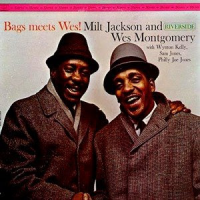
Bags Meets Wes!
(1956)
Inside and outside the MJQ, "Bags" was bebop's most lyrical soloist. This inspired pairing with master guitarist Montgomery and a killer rhythm section (Philly Joe Jones, Sam Jones, and Wynton Kelly) is simply great fun, as both principles trade razor-sharp melodic lines like cool ice skaters gliding across frosty bebop and smooth blues.
 Thelonious Monk
The Complete Blue Note Recordings
(Compilation, 1947 -'57)
Monumental performances: A complete '58 live date with Coltrane at The Five Spot, an amazingly blue "Misterioso" with Jackson, and Monk-ified versions of Gershwin, Hammerstein, etc. More important for its lengthy canon of Monk compositions that have since become standards: "'Round Midnight," "I Mean You," "Evidence," and "Straight, No Chaser" to name merely a few.
 Lambert, Hendricks & Ross
The Hottest New Group In Jazz
(Compilation, 1959 -'62)
Three Columbia albums under this single cover apply the rhythmic and harmonic concepts of bebop to vocal jazz. Jon Hendricks penned witty lyrics and acrobatic arrangements to standards by Ellington, Gillespie, Coltrane and others (plus originals like "Gimme That Wine"), often duplicating instrumental solos note-for-note. Gotta give the singer some!
About Charlie Parker

Tags
PREVIOUS / NEXT


Become a Sustaining Member

Since 1995, All About Jazz has championed jazz as an art form and supported the musicians who create it. Over three decades, it has grown into one of the world's leading jazz resources, serving hundreds of thousands of readers, musicians, presenters and industry professionals each month.
Help Build the Future of All About Jazz
Your support helps us continue building All About Jazz for the next generation—expanding our editorial coverage, preserving jazz history, developing new community features and creating better ways to discover the music and the people behind it.
Become a sustaining member for as little as $20 per year and you'll immediately enjoy an ad-free experience along with access to subscriber features and future articles for a full year.
Together, we're not simply sustaining All About Jazz—we're building its future. Thank you for being part of the journey.