Home » Jazz Articles » Interview » Zela Margossian: Music That Is Healing
Zela Margossian: Music That Is Healing
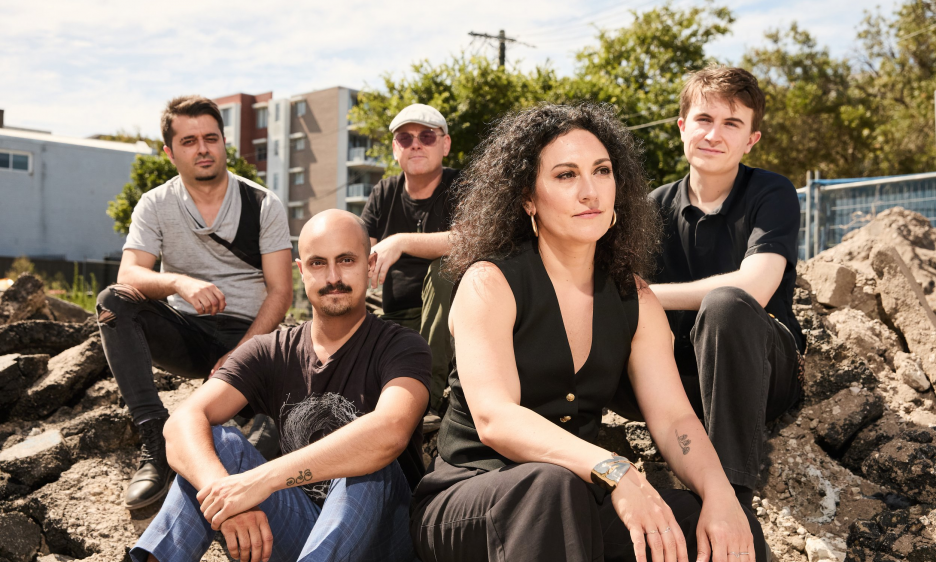
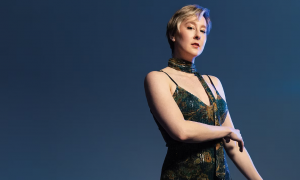
Courtesy Julie Spencer
Music is something that gets you closer to peace and to unity rather than division.
—Zela Margossian
Her music is garnering praise for its varied textures and originality. It carries listeners down interesting pathways. Fans of varied music genres can find something intriguing.
Margossian is of Armenian heritage, and that plays a big part in her art. But she was born in 1980 in Beirut at a time of conflict and upheaval in Lebanon. Her interest in music as a child would grow and guide her through difficulties. Eventually, music carried her to Armenia. And then from Armenia to Sydney, Australia, where she now resides.
Today, her impressive talents continue to fuel a reputation that is on the rise.
"I was born during the wars and conflicts (in Beirut), so lots of places weren't functioning as normal," she says. "For example, the conservatorium was shut down and then reopened again. So it was all mayhem."
There was upheaval in the city, but in her life, music had already become important.
"Mom and dad used to listen to different genres of music. I was introduced to Armenian music through my mom. In the car when they listened to music, that's what I remember hearing, some Armenian music," says Margossian. "I think we have good musical ears in the family, but no one was a trained musician. My grandfather, I never met him, but my mom tells me he was self-taught on violin. My uncle taught himself to play the drums. So there is something in the family, but no one had become a musician. I was the first one.
"When I was two and a half or three, she got me a little keyboard. She said I used to be able to play at home some of the tunes I learned in kindergarten." When she finally got a piano, classical music was the focus of her training. "There were classically trained musicians, more than jazz musicians, in the community that I was in. So I was basically on that path, to become a classical performer."
She studied formally, starting in the late 1980s and continuing into the 1990s. Margossian studied at a musical school in Beirut and then continued at a conservatory. At the same time, the industrious artist earned a bachelor's degree in English literature. Things were still unstable in that country and she moved to Armenia. She was 21.
"What changed me a lot was my studying years in Armenia, where I got more close to the to the culture and the heritage. I was absorbing it so much every day. That's what transformed me," she says.
In Armenia, Margossian studied at the Yerevan Komitas State Conservatory and earned a master's degree in piano performance. She was exposed to some jazz music, but it didn't dominate her musical development. Nor did classical music, with which she had a long association.
"When I said I was transformed in Armenia, I really was unsure of becoming a classical performer. That's when that happened. I started thinking twice about what I want to do as a musician. It was a tough period of decision making, but I continued until I got my master's degree in Armenia. And when I came to Australia, that was the shifting point where I said, 'Okay. This is a new place, a new start, and I have to kind of reinvent myself.'"
Different factors went into choosing Australia. Among them is that she had some family already there.
"For us people in the Middle East, just to escape the conflict or look for a brighter future, it's either America, Australia, or Canada. It was really hard for us, you know, to get a visa or to migrate, to get the papers done and everything," she says. "My uncles moved to Australia. My brother moved six years prior to me. So that was one of the reasons that I said okay to Australia ... I think I made a good decision coming to Australia because it opened up so many opportunities for me."
That was in 2008.
She studied piano at the Sydney Conservatorium of Music, but rather than go full steam ahead into a particular genre, she picked things to study that she knew would help her development. Composing music was one of those avenues.
" I didn't finish the whole degree. I partially studied because that was gonna be my third degree actually. Then due to family circumstances, my dad falling ill and passing away, it was too much for me to take care of everything. My mom had just come to Australia. I studied the units that I needed to cover. Because I knew what was missing in my knowledge to achieve what I wanted to in my head. I knew that I wasn't going to become a jazz standard player or a jazz musician per se ... I knew that I had the ability to compose things, but I had never tried to do it fully."
"My wonderful mentors at the conservatorium, they pushed me. They said, 'If you want to express yourself and sort of tie your identity with your music, you should really consider composing your own stuff,'" she says. So she moved in that direction.
She eventually started the Zela Margossian Quintet, which played all over Australia and New Zealand, including the major jazz festivals throughout the country. It took awhile, but in 2018 the group's first CD, Transition (Art As Catharsis) came out. It received high praise from critics all over. Another followed, The Road (Ropeadope).
And in May, 2026 Remedy (Ropeadope) was released.
Transition is what gave the band momentum in the industry. It was nominated for an ARIA (Australian Recording Industry Association) award for Best World Music Album.
"The first album, I think, was sort of like an experiment or a risk to just see what would happen ... My mentor said, 'You can't take the next step if you don't take the first one. Even if you don't like it, you just have to put it out there.' There was lots of emotion tied to that album. It was called Transition, which was actually my transition from being a classical musician to sort of—I don't even call it jazz. But it was well received. I was shocked that it was a well received album," she says.
She is very appreciative of her bandmates and her comfort level with them contributes to the quality of the music, she says.
"My band members know me so well and understand me so well that they actually bring that music to life. I think that's why I've stuck with them for such a long time, because it has become so much easier now to really sometimes navigate complicated sections and new stuff in the composition, and they just get it on the fly. They are versatile, talented, and also respectful people ... (the album) wouldn't have happened without them."
Margossian's groups play jazz events and the pianist, as well as her mates, do improvise. Some critics have labeled it ethno-jazz, referring to her Armenian folk music influences and jazz influences. But it's not something she is comfortable with. She is a pianist/composer and a true artist.
"To be honest, I don't feel comfortable. I always feel awkward when people introduce me as a jazz musician because I am not a jazz musician. I prefer when people call me composer/pianist, which describes me better."
In terms of genre labeling, she takes a stab at it by saying, "I don't know. Contemporary art music, influenced by jazz? Because some of the concepts of jazz are there. We improvise. But folk music is also improvised. I use the jazz combo to do that, and we don't have any traditional sort of world music instruments in our band. I think that makes it hard for people. Our music is not intended to be, for example, played in a jazz venue where people are there to expect jazz music, as in jamming or drinking. I would rather be in halls and festivals, in venues where people come just to listen."
She has listened to great jazz pianists of the past and is also influenced by classical players.
"A lot of how I compose kind of comes from a mixture of what I've heard or played throughout the years," she says. "I've always been drawn to Rachmaninoff and Brahms. I always love rich harmonies and treating the piano as a rhythmic instrument which Khachaturian does a lot. In jazz, I really adore Chick Corea because he treats the piano also as a percussive instrument. I was drawn to his playing. I love obviously Herbie Hancock and Keith Jarrett too, but Chick Corea for me has a different place in my heart. Some of the people who introduced me to jazz were the ones who gave me Chick's pieces when I was still like 18 or 19, which was great."
As for artists like Oscar Peterson or Thelonious Monk , "all of these people, I kind of pick stuff from each and every one of them. But because my journey (in jazz) started quite late, I have never been that person who transcribes everything and tries to play it exactly."
She notices that many young students, engrossed in transcribing great solos and memorizing them, "really become—let's say, for example—Charlie Parker, when they're playing. But I didn't even have time to do that. So what I did was—I transcribed, of course, but I knew what I liked in each one of them, and that's how I gathered around these influences. But I tried to stick to how I feel when writing something. Because everything is very personal for me, especially for the quintet. It's tied to my life. What's going on around the world. It's just an outlet for me. Sometimes you think, 'Why are we living in this evil world?' But this is my salvation. At least I know that I am doing something that is coming from a good place."
The compositions are part of the magic of Margossian's band and concerts. They are important to her. She isn't relentless in her practice regimen, but she maintains high standards. Laboring through classical music piano exercises is not something she is interested in.
"I had to find my identity as a musician. I was really lost for years not knowing. I knew that I didn't want to practice six, seven hours a day to play a classical repertoire. That was just not me. I've always been active. I've always loved doing everything and (intense practice) sort of limits you to do things in your life. Because u really have to be dedicated in a completely different way when you're a classical performer. I don't think I had the stamina for it, to be honest. So I had to find something that defined me. Otherwise, maybe I would have stopped.
"Changing countries, coming to a new country, was a very important decision for me to make. People tell me 'Zela, your compositions, when we're listening to you, especially live, transport us somewhere else.' I'm really humbled when I hear that because that's what I want the music to do. It gives me more energy and force to continue doing it.
"I criticize myself a lot. Most of the time I don't listen back to my music because I've had enough. I save my energy for the live shows. I feel more comfortable as years are going by. I'm gaining the knowledge, the experience, playing with different people. It's never too late because you can still learn. Some people say, 'Ah, it's too late now. I'm 30. I can't do anything.' But you can. I was 37, 38 when I decided to change something in my life. It wasn't easy, but it's worth it."
Another major project she is involved in is her association with reed player Jeremy Rose in a project called Visions of Nar. The name comes from Armenia mythology and Nar is the goddess of water—the sea and the rain. Daughter of the Seas (Earshift Music) was the first recording in 2023. A new one, Awakening (Earshift Music), will be released in September.
"Jeremy is very prolific and he has done so many things. He kind of pushed me in a very good way to get out of my quintet mode and do something else. That's how we did the first album," she says. The music on the first recording was "mainly through composed and had obviously improvised bits. But the second album we decided to do it more focused on improvisation and just letting the little motif or the theme that we've written take us on a journey for each track. It was quite enjoyable. I hadn't done something like that before, and I was surprised. I said I don't think the second album will be as satisfying as the first one. But it has exceeded my expectations. I really enjoyed recording the second one."
That group includes Bobby Singh on tabla. On the first album with Rose, guitarist Hilary Geddes also contributes.
Margossian was influenced, on the first album, by oud player Dhafer Youssef. Also a large influence on her approach is Dhafer Youssef, an Armenian pianist who combines his native folk music with jazz. "He has been an influence on my thinking about a concept of how I want to express myself," she says.
The pianist wants to bring her music to the world on tours and the U.S. could be an eventual goal if it could be arranged.
"We would love to start touring outside of Australia, but it's so hard to get the financial assistance. We are applying for grants." After her Transition album on the Ropeadope label, there were talks about trips to New York and Philadelphia. But COVID put a stop to it. She has a young son now, which also puts limitations on her schedule, but perhaps 2027 could be the breakout year. "If we get a grant, we will consider playing a few shows in Europe. We'll see which one works. If Europe works, we'll go to Europe. If America works, we'll come to America."
In the meantime, Margossian continues her journey of artistic self expression and is emboldened.
"Music has always been a channel for me to either express myself or be comforted by it. I remember when I was younger, whenever something happened and I was upset it was always music that I went to. Either I put my headphones on, or I laid between the speakers in our living room and played music, and it just soothed me. Now, as an adult, some problems in life you can't solve, but at least you can find healing that will make you carry on. That's what music does to me," she says.
"One is through expressing myself through my music, and the second one is just finding healing in another way by someone else's music. Sometimes I listen to an album of another musician, and it just speaks to you as if someone is saying something to you. There's no words in it, but it's powerful. It's a powerful tool, and I think it's one of the major factors that can bring people together. I truly believe that. So for me, music is something that gets you closer to peace and to unity rather than division."
She adds optimistically, "I just hope that will it will do that to the whole world. A sprinkle of music, and everything becomes better."
 FOLLOW R.J. DeLuke
and get notified whenever a new article published.
FOLLOW R.J. DeLuke
and get notified whenever a new article published.
R.J. DeLuke is an indefatigable jazz fan and arbiter elegantiarum who aspires to ultimate hipness; also an upstate NY freelance writer for various media.
About Zela Margossian

Tags
PREVIOUS / NEXT

Become a Sustaining Member

Since 1995, All About Jazz has championed jazz as an art form and supported the musicians who create it. Over three decades, it has grown into one of the world's leading jazz resources, serving hundreds of thousands of readers, musicians, presenters and industry professionals each month.
Help Build the Future of All About Jazz
Your support helps us continue building All About Jazz for the next generation—expanding our editorial coverage, preserving jazz history, developing new community features and creating better ways to discover the music and the people behind it.
Become a sustaining member for as little as $20 per year and you'll immediately enjoy an ad-free experience along with access to subscriber features and future articles for a full year.
Together, we're not simply sustaining All About Jazz—we're building its future. Thank you for being part of the journey.