Home » Jazz Articles » Interview » Tamara Lukasheva: The Dangerous Beauty of Silence, Slown...
Tamara Lukasheva: The Dangerous Beauty of Silence, Slowness and Modern Jazz
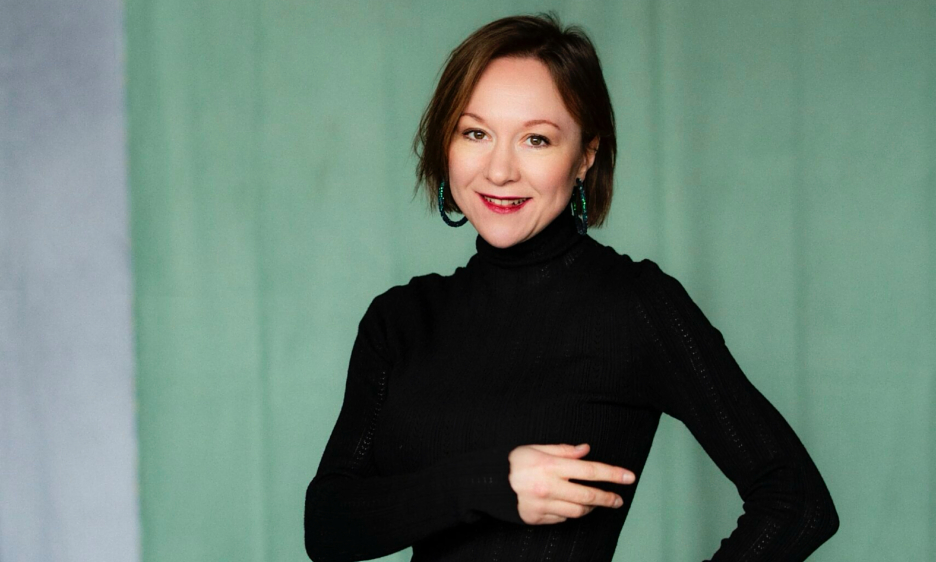
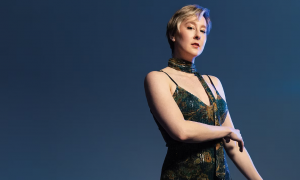
Courtesy Harald Hoffmann
Over time, I realized that I always carry my musical environment with me, no matter where I am. This consists of classical, pop and jazz music from old recordings, as well as experiences of real concerts featuring improvising musicians.
—Tamara Lukasheva
The first thing that struck me listening to Tamara's work was that her voice rarely feels confined to the traditional role of "vocalist" in the usual sense. Sometimes it functions as texture, sometimes as architecture, sometimes as rhythmic movement, and sometimes as something closer to pure interaction unfolding in real time. I found myself drawn not only to the sound of what she was doing, but to the larger ideas underneath it—the search for personal language, the relationship between improvisation and communication, and the question of how artists continue developing deeper and more individual forms of expression over time. Those questions are very much part of what inspired the creation of All About Jazz Media in the first place, and part of why conversations like this feel important to me personally. The more I listened, the more curious I became not only about what Tamara was doing musically, but how she thinks about the act of creating itself.
With that in mind, I wanted to spend some time talking with Tamara not only about the music itself, but about the way she thinks, listens, creates, and navigates the process of developing a truly individual artistic voice.
Musical Identity and Background
All About Jazz: As a Ukrainian artist who has lived and worked across different countries and musical environments, I'm curious where you actually feel your background shows up in the music. Not symbolically, but in the real musical decisions you make.Tamara Lukasheva: That's a very good question that I've been thinking about for a long time. There's no doubt that my background plays a role in how I make, perceive and listen to music, but then the question arises: exactly how, and what does that mean? I was born and raised in a family of musicians and started taking piano lessons at the age of four, learning small academic-style pieces. When I was 11 or 12, jazz came into my life, but a specific kind of jazz. It was more or less modern in style: big band records by Diane Schuur, The Manhattan Transfer... The album Night and Day by Chicago played on repeat in my father's car. It was beautiful music to my ears, but it had already been adapted to modern tastes. Then, as part of my studies, I encountered older recordings by Ella Fitzgerald, Nina Simone (whom I didn't understand at first), and Charlie Parker. The roots of jazz weren't particularly inviting due to the poor sound quality—I couldn't say, "Yes, that's my music"—but seeing the real musicians on stage, free and carefree, full of passion, was extremely inviting. That's what it's all about for me—being free. Everything else came later.
AAJ: Are there things in your phrasing, listening, or compositional instincts that feel connected to where you come from?
TL: Over time, I realized that I always carry my musical environment with me, no matter where I am. This consists of classical, pop and jazz music from old recordings, as well as experiences of real concerts featuring improvising musicians. This probably explains why I value structure and form in music so highly. But it also explains why I love freedom in music. It breathes depending on how I'm feeling that day, but within the given framework.
AAJ: Has living in different places changed your relationship to musical identity?
TL:I think my craft has improved significantly as a result, but my identity has deepened rather than changed. I often observe this phenomenon in my emigrated colleagues and in myself too: as soon as you leave your homeland, you become a foreigner everywhere. Music, or art in general, then becomes a kind of substitute home; it's something you always have with you. It's a kind of safe space.
AAJ: Your work moves through jazz, contemporary composition, improvisation, experimental vocal music, and a lot of spaces in between. Do those categories feel useful to you at all, or do they mostly become limiting once you're actually making music?
TL: I see these as tools that offer different possibilities and give me more opportunities to express how I feel and what I want to share with the audience. It can be limiting when I have to restrict myself to a single genre or category. Although it can also be exciting, like a painter who uses only one or two colors, it's wonderful to be able to use multiple colors. Often, the boundaries between them aren't so strict—one corresponds with the other, arises from the other or is influenced by it.
AAJ: Do you think audiences still need categories more than artists do?
TL:I think it has much more to do with the systems and power structures that exploit music. It has nothing to do with real art—and never has. In order for music to retain its vitality and humanity, it must be allowed to circulate freely.
AAJ: Have you ever felt pressure to define your work more clearly than you wanted to?
TL: Time and again. Whenever I register a new composition, write a project description or announce a concert, I have to categorize my music. Ideally, I would just write 'music,' because that says it all. Together, we experience the present moment through sound and vibration. We tell a story. That's what it's all about for me.
AAJ: One of the things I kept noticing while listening is that your improvisation often doesn't feel like "variation" in the traditional sense—it feels more like composition unfolding in real time. When you're inside those moments, what are you actually listening for?
TL: For me, improvisation is all about coexisting with others. I listen to what's happening musically in the moment and try to fill in the gaps while staying in harmony and taking the others along on the journey. No one knows how it will end. I often find myself doing this, and those are the most beautiful moments for me. It's as if it weren't me at all. I used to listen to and transcribe improvisations by many jazz musicians. Hearing a good solo is still very exciting, but now I also open my ears to the sounds of nature: birdsong, the rustling of the wind and the sounds of the street. All of those sounds can be music, too, if I choose to listen to them.
AAJ: Is there a difference for you psychologically between composing and improvising?
TL: When I'm composing, I think about it much more. Sometimes the idea for a composition comes from improvisation, but to develop it into a piece, I need more time and a lot of repetition to understand where the piece is going.
AAJ: How much of what happens is instinct versus conscious structural awareness?
TL: If I define instinct as listening and thinking as structure, then I would say that the two work in harmony, like the pedals of a bicycle. Sometimes one takes the lead and the next moment it steps back to make room for the other. I believe that instinct is incredibly powerful, but without structure, it is formless. It's like fresh honey in a jar—without the jar, the honey is everywhere, but you can't do anything with it. Likewise, a jar without honey is empty and meaningless.
AAJ: When you're developing a piece, how do you decide what needs to remain fixed and what needs to stay open? I was especially taken with your performance of "Prelude No. 5 / Hope"—the way it moves with that fast waltz or almost 6/8 feeling, while still allowing the harmony and melody to keep shifting and opening up, felt very distinctive to me. I'd love to hear how that piece came together creatively, and what you feel makes it unique within your own musical language.
TL: That's a very important question that I ask myself every time I start writing a piece. However, my view of the composing process also plays a part in this. I don't see it as creating something, but rather as discovering something that's already there. It's a process of drawing closer to a piece. I have to listen very carefully to understand where it wants to go. It may sound strange, but sometimes it seems to me that a piece of music has a soul of its own. If I force it in the wrong direction, it rebels. These are often moments of crisis when you don't know how the music should continue. A dead end. But I know that now. I pause for a moment and take a few musical steps back to understand where I went wrong. Once I've figured it out, the music flows again, like a river. With this piece in particular, I really wanted to emphasize the challenging parts and let that feeling guide me. The technical aspects usually fall into place naturally.
AAJ: Did the rhythmic character of the piece come first, or did it grow out of the harmony and melody?
TL: It's more about getting a feel for a piece or an idea that I then want to develop. Sometimes it's a little melody, the sound of a particular instrument or a specific harmonic progression that won't leave me alone. I never have a set formula for that!
AAJ: Are there moments where structure itself begins emerging from improvisation?
TL: Improvisation is really important here because that's when the ideas I find most exciting to develop further come to mind.
AAJ: Listening to your work, your voice often feels less like a featured element and more like part of the way the music itself is unfolding. When you're working, does your voice feel more like an instrument inside the music, or more like part of the compositional process itself?
TL: Both. I like to think of the voice as the most natural element of music. So much can be achieved with the voice. My first experience of music was through the voice, and it's something that comes from within me but is also part of me. However, both are true: I want what I compose to be singable, yet I'm also ambitious about developing my vocal skills, so I write pieces that aren't so easy to sing, giving me something to practice. Surprisingly, the simplest melodies are a real challenge because I want them to be as simple and clear as possible. This requires me to use a specific vocal technique, whereby my muscles respond to the most subtle demands.
AAJ: Has your relationship to your own voice changed over time?
TL: There's a constant dialogue between me and my voice. Even though it's mine, sometimes I feel like it has a mind of its own. If it doesn't want to cooperate, there's nothing I can do about it. The better I understand myself, though, the better my relationship with my voice becomes. But aside from technique and muscles, it's also influenced by my emotional state. Over the years, I've learned—as paradoxical as it may sound—to listen to my own voice. In every sense. I don't think you get very far by forcing it.
AAJ: Are there sounds or textures you're drawn to that go beyond traditional vocal language?
TL: These days, an increasing number of singers are using their voices in ways that differ from the norm. My technique is the product of my own long journey of discovery, which is still ongoing. Once I realized who I am, I also realized who I am not, and this has had a corresponding effect on the way I sing. I like a clear, pure and carefree sound where only the essentials remain. It's as if a clarinet or flute were playing.
AAJ: Your work moves fluidly between language, texture, sound, abstraction, and sometimes pure phonetic expression. How do you know when meaning matters and when sound alone is enough?
TL: It comes from a feeling. Working with a single word in any language can be both limiting and liberating. Then, of course, there's the melody and rhythm of the language itself to consider. The key question is whether it fits the musical idea—does it enhance or hinder it? In my view, some melodies don't need words, while others lose their power and beauty without them. It matters, of course, whether I'm setting a poem to music or coming up with lyrics to fit the motif. When setting a poem to music, the music is subordinate to the text; the opposite is true when creating lyrics to fit a motif.
AAJ: Do words sometimes get in the way of musical communication?
TL: Sometimes, in music, they serve a different purpose to that in everyday life. Rather than appealing to the senses, they create rhythm and give shape to sounds, making them easier to sing. I often find them too distracting and prefer it when lyrics convey something meaningful. If I can do without them, I'd rather do so.
AAJ: Are there moments where abstraction feels more emotionally honest than literal language?
TL: Absolutely! It's something that everyone around the world can relate to and feel. It then becomes a universal language in the truest sense.
AAJ: One of the things I keep thinking about while listening to artists who work this way is how rare it's becoming for musicians to have space to develop deeply personal languages that aren't driven entirely by genre, algorithms, or the pressure to immediately define and market what they do. As someone who spends a great deal of time thinking about creative ecosystems, production environments, and how difficult it can be for artistic communities to sustain themselves over time, I find myself increasingly interested in what it actually takes for artists to protect spaces where experimentation, listening, and deeper forms of expression can continue evolving naturally. Has your experience over the years changed the way you think about the deeper purpose of improvisation, creativity, or artistic exploration itself?
TL: Yes, it often feels like a battle against the world. Fortunately, you always find people who support you, but it does sometimes feel like audiences are becoming less open to embracing things they don't know. I've often thought about creating something more accessible, but then I slip back into my musical mindset and realize that for me, there's only one path. The good thing is that I don't feel any competition; this path is mine, and no one can take that away from me. But that also means there's less helpful advice—I have to figure it all out on my own. It's exciting, beautiful and terrifying.
AAJ: Has the pace of modern culture changed the way artists develop?
Yes, absolutely. It has become much harder to find the peace and quiet necessary for creative ideas to develop. We always have to do so much ourselves. Just the pressure to constantly post on social media is enough. These days, an artist can't afford to be introverted—everything has to be put out there. This is often detrimental, particularly to the creative process. You have to come up with new strategies all the time to protect yourself from the aggressiveness of the outside world. And silence. It's so absent in so many places. We need it to find ourselves and to be able to look inward.
AAJ: Are there things improvising or experimental artists need today that are becoming harder to sustain?
TL: Yes, many. You have to take the time for music. You have to keep producing; otherwise, you'll quickly be forgotten. We're all stuck in this rat race because it's just as difficult for us to find peace and create as it is for the audience to find peace and listen. That's why everything is getting louder and more intense, with images flashing by wildly. In order to enjoy slowness, you first have to find your center, and that's a process. From that state of slowness, your perception becomes sharper and more precise. You're able to notice and enjoy the subtleties, and you realize how little you actually need. In today's capitalist zeitgeist, this idea is very dangerous because you realize that the immaterial, like music, is like the water of life. It fills you up. Not at all like a new piece of clothing, jewelry or whatever it is.
AAJ: Artists are often expected to reflect the realities surrounding them, especially when audiences begin associating the work with questions of identity or place. Is that something you feel connected to in your own music, or do you resist that expectation?
TL: I believe it must grow naturally from an artist's inner desire and need. Only then is it authentic and genuine; otherwise, there is a risk of misusing the subject matter. Ultimately, it is up to each artist to decide whether or not to reflect on it. In a way, it's always about the reality we find ourselves in. If music avoids openly reflecting on a subject and instead deals with something else, that's also a statement. What I don't say carries just as much weight as what I do say. Escaping a very specific reality doesn't mean that the other side of life doesn't exist; it may mean, however, that something else exists alongside what we see in the news.
AAJ: Do audiences sometimes project ideas onto artists based on nationality or identity?
TL: This happens sometimes and is unavoidable. We live in a complex and chaotic world that is anything but straightforward. In order to cope, we develop mental frameworks that help us to make sense of what and how we perceive things. It's not ideal, but it's understandable. Of course, this is the opposite of what I want from the audience, but I understand it and try to do something about it. I believe that, as an artist, I can influence how people perceive me to a small extent if they give me just a little of their time and attention.
AAJ: Can abstraction sometimes communicate reality more honestly than direct political expression?
TL: To me, political statements are often more abstract than artistic abstraction. Or, at least, they are just as abstract. There are many emotions behind political statements. They are often very subjective, irrational and emotional, so they are really similar to artistic abstractions. However, art always leaves more room for people to think and come to terms with things. It opens up space for interpretation, whereas a political statement can be rigid and unquestionable. Besides, it's very close to propaganda, and that's where I draw the line, no matter what it's about.
AAJ: Improvisation involves risk, but not every risk is musically meaningful. At this point in your life, what kinds of risks still feel important for you to take artistically?
TL: These days, being yourself can seem like a huge risk. Not because you're hated or threatened, though. The deadliest weapon for an artist today is ignorance. You're afraid of being uninteresting to others because your appeal isn't necessarily mainstream. This goes hand in hand with existential fears, of course.
AAJ: Has your definition of artistic risk changed over time?
TL: When I left my home country in 2010, I knew exactly why I was doing it. It wasn't for a better life; it was for music and personal growth. I made my decision then, and no matter how difficult it was or gets, I've never regretted it. Even back then, I knew what mattered to me, so I accepted the risk, confronted my fears and kept going.
AAJ: Are there moments when you know something is truly working in performance?
TL: No, those are moments of true joy. For me, the most important musical experiences happen when I'm working on a project. Seeing how it grows and takes shape is totally fascinating. I feel as though I'm creating a parallel world, one in which everything is far more beautiful than what I usually experience in everyday life. Then, when it's finished, I swing between the joy of sharing it and the fear that it won't be understood. But, in a way, it doesn't really belong to me, so I've learned to let it go over time.
AAJ: People often describe improvisation as "conversation," but I don't think that's always accurate. Some performances feel interactive while others feel genuinely alive. What do you personally listen for that tells you something real is happening musically?
TL: For me, it feels like a truly alive performance when I stop analyzing what's happening musically and instead go with the flow of the music, allowing myself to be carried along effortlessly. It then becomes a physical experience.
AAJ: Can deep listening be taught, or does it mostly develop through experience?
TL: I think it has a lot to do with being present in the moment. But having that knowledge also helps you to be a good listener. After all, that's one of the most important things for a musician.
AAJ: Are silence and space as important as sound for you?
TL: It's incredibly important. Silence is cleansing and essential for rediscovering oneself, gaining clarity and coming to terms with oneself. The older I get, the more I enjoy it.
AAJ: What feels most alive or important in your creative world right now?
TL: I now have a strong desire to keep things simple. I like its beauty and elegance. I want to create music that is interesting for the professional music world, but does not require great knowledge to appreciate. Currently, I'm very inspired by Brazilian music and its combination of complexity and accessibility. It's very interesting.
AAJ: Are there projects or collaborations you feel especially connected to at the moment?
TL: I am continuing to develop my solo project and, recently, during a concert, I felt that I was really relaxed and happy when I was alone with the music. It's a dialogue between me and the audience, me and myself, voice and piano. I find my freedom within it. I also love collaborating with different people and listening to what they bring to the music. When it comes to collaborations, there are more and more extremes—from working with a symphony orchestra, where everything is written down, to working on some duo or trio pieces based on poetry, where there is almost complete freedom. Although I love structure, I'm also curious to see what others bring to the music and what I don't or can't know.
AAJ: When you look ahead creatively, what do you hope you continue discovering or moving toward as an artist?
TL: I'm interested in many different subjects, such as philosophy, history and psychology, but no matter what I'm exploring at the time, I always come back to music. This is why, even when it comes to life in the broadest sense, music ultimately emerges as the most important thing for me, and I think that's beautiful. What matters to me is going through the world with an open mind and sharing what you love or find fascinating with others. I also like to let myself be surprised.
AAJ: Are there things you still feel you haven't explored yet musically?
TL: Oh, far too many! I find it hard to say that I've fully explored any one piece. Music is like an ocean: the deeper you dive, the more undiscovered treasures you find. As I change, I hear the same piece differently. Suddenly, a new perspective emerges that you couldn't perceive before. It's an exciting, endless process. You may change the way you make music, but if you truly love it, it will always move you in a positive way.
AAJ: Before we wrap up, I'd love to give you a little space to talk about what's currently happening in your creative world that people should know about. Are there projects, recordings, performances, collaborations, residencies, or upcoming work you'd like people to explore or pay attention to? And for people who connect with what you're doing artistically, what are the best ways for them to support your work and stay connected moving forward?
TL: I recently released my second solo album, on which I set the poems of Rainer Maria Rilke, a wonderful German-speaking poet who lived 150 years ago, to music. It's become a one-hour performance without a break, titled "Rilke Vertont Solo."" I don't even drink water during the performance because it would break the tension. I basically use my voice (singing and speaking) and my piano skills to convey the different states of mind, from despair and anger to deep melancholy and rising love, and finally to a peaceful end with a humble understanding of our fragility. I see it as the prayer of a modern human who is not religious and has never learnt a specific prayer, but who finds themselves sitting in a church because it is open and quiet, and suddenly all their thoughts come out. I love experiencing this process from start to finish, feeling how the audience listens and how we all stay in this moment of peaceful togetherness.
I'm also proud of the orchestral album <Anima (Tangible Music, 2024 ), which was recorded in autumn 2023 during the ongoing war in Ukraine. Everyone did their best, and to me, this is more than just music. It's a time capsule, capturing a period when we all tried to live life despite everything, finding beauty and joy despite everything, embracing melancholy and sensitivity, and simply being human.
Final thoughts
What stayed with me most after this conversation with Tamara was not simply the uniqueness of her music, but the clarity and humanity underneath the way she thinks about art itself. Again and again, the discussion returned to listening, silence, risk, freedom, and the difficult process of developing an honest artistic voice in a culture increasingly driven by speed, visibility, and categorization.What also struck me was the way she spoke about identity, displacement, and the experience of being a Ukrainian artist living through an extraordinarily complex moment in history—not through slogans or simplification, but through nuance, reflection, and humanity. That same depth exists throughout her music.
Conversations like this are part of why All About Jazz Media exists in the first place: not simply to promote artists, but to create space for deeper dialogue about why music matters, how artists develop personal language, and how improvisation, listening, and creativity continue helping people remain connected to something human.
I'm sincerely grateful to Tamara for her openness, thoughtfulness, and generosity throughout this conversation.
 FOLLOW John March
and get notified whenever a new article published.
FOLLOW John March
and get notified whenever a new article published.
John March is the owner of JM Media Services LLC, Producer, Sound Mixer, Sound Designer, Social and environmental activist and the new Creative Director and Head of Production for the new division All About Jazz Media.
About Tamara Lukasheva

Tags
PREVIOUS / NEXT

Tamara Lukasheva Concerts
Become a Sustaining Member

Since 1995, All About Jazz has championed jazz as an art form and supported the musicians who create it. Over three decades, it has grown into one of the world's leading jazz resources, serving hundreds of thousands of readers, musicians, presenters and industry professionals each month.
Help Build the Future of All About Jazz
Your support helps us continue building All About Jazz for the next generation—expanding our editorial coverage, preserving jazz history, developing new community features and creating better ways to discover the music and the people behind it.
Become a sustaining member for as little as $20 per year and you'll immediately enjoy an ad-free experience along with access to subscriber features and future articles for a full year.
Together, we're not simply sustaining All About Jazz—we're building its future. Thank you for being part of the journey.