Home » Jazz Articles » Interview » Jasur Khalilov: From Falak to Fusion
Jasur Khalilov: From Falak to Fusion
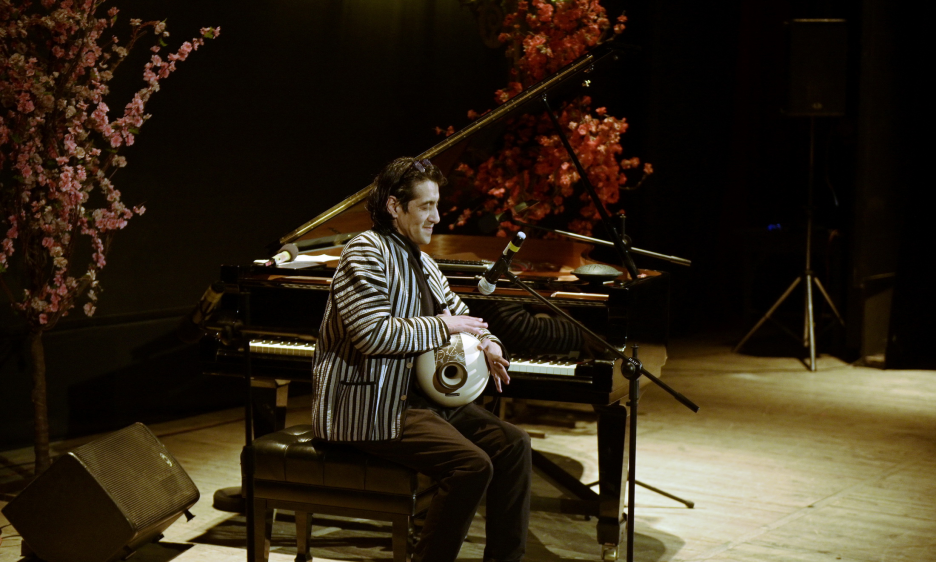
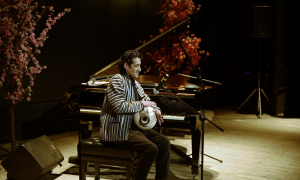
Courtesy Rustam Yuldashev
Jazz itself is deeply connected to folk music. Folk traditions contain the very elements that define jazz: improvisation, rhythmic diversity, and freedom of expression. Looking at the history of jazz, we can see that it draws inspiration from both folk and classical music. That is why I believe it is far more interesting to develop contemporary music on the foundation of traditional musical heritage.
—Jasur Khalilov
For musician, educator, and artistic director Jasur Khalilov, the connection between jazz and traditional music is not simply a stylistic experiment but a way of creating a distinctive contemporary voice. Drawing inspiration from traditions such as falak and Shashmaqam, he believes that the rhythmic complexity, melodic richness, and improvisational spirit of Tajik music offer fertile ground for new forms of expression.
In this interview, Khalilov discusses the history and future of the Dushanbe International Jazz Festival, the challenges of sustaining cultural initiatives, and the role of jazz as a bridge between communities. He also reflects on his own musical journey and shares his vision of how musicians can transform inherited traditions into something new, creating a dialogue between the past and the future through improvisation and creativity. The festival, however, has faced its own challenges, with little public information available about its activities after 2023.
All About Jazz: I could not find any information about the festival after 2023. Could you tell me what happened to it?
Jasur Khalilov: The main issue is that sponsorship has become more difficult. There is no longer the same level of financial support. In the past, the festival was backed by international organizations. The first donor, organizer, and driving force behind the festival was the Swiss Cooperation Office in Dushanbe. From the very beginning, it supported the festival financially, helped organize it, and was behind the idea of bringing the festival to Dushanbe. Other organizations and embassies also provided support. The situation has changed because the Swiss Cooperation Office has shifted its focus to other projects, at least for the next year or two. They are waiting for the right moment to return to the project. They fully understand that the festival was one of their most successful and impactful investments in cultural development. At the same time, they would like to see local institutions take on more responsibility. The support is still there, but they would like local organizations to play a more active role.
After all, jazz is performed all over the world, and festivals are held in many countries. I believe that, in time, the situation will improve and the festival will return on a larger scale. I know how festivals are organized in Bishkek, Kyrgyzstan; Almaty, Kazakhstan; and Tashkent, Uzbekistan. Without the support of international organizations, it is very difficult to stage an international jazz festival. In Bishkek, for example, embassies are actively involved in supporting the festival, which helps it maintain its international character. In Uzbekistan, UNESCO provides support, making it possible to bring in a large number of internationally renowned musicians. Over the past two years, major jazz events there have been held with the backing of international organizations.
I believe that, over time, things will stabilize and our festival will continue to grow and develop as well. Of course, I would like that to happen sooner and with greater certainty, but the process is moving forward. Even if the festival is not held next year, we will continue promoting and developing jazz in the country.
AAJ: How many editions of the festival have taken place altogether? Have you been involved from the very beginning? How did the idea for the festival come about?
JK: I was involved from the beginning as a music critic and the festival's musical curator. Other people handled the organizational side. My role was to select the performers. At first, it was an Asian festival, featuring musicians from countries in the region, including Kazakhstan, Uzbekistan, Turkmenistan, and Kyrgyzstan. The first festival took place in 2009, and then there was another one in 2010, if I remember correctly. After that, we decided to hold the festival every two years. So, between 2011 and 2023, we organized seven international editions.
Starting with the second festival, we began inviting performers from outside the region. We hosted groups from Switzerland and musicians from Germany, the Netherlands, and France, and later participants from the United States as well. Gradually, the festival became more international. A lot depends on the embassies in Kyrgyzstan, Tajikistan, and other countries. When they have the opportunity, they help bring musicians from their respective countries. When we have sponsorship and financial support, we also suggest artists we would like to invite. Nowadays, musicians often contact us themselves and express interest in participating. We consider the different possibilities and select the performers. That is the part I am responsible for.
AAJ: The festival is called an Ethno-Jazz Festival. Was that concept there from the beginning, or did it develop over time?
JK: When I was invited to join the project as a music critic and someone with expertise in music, I took part in meetings and roundtable discussions. It was my proposal to reshape the festival so that it would promote our own musical traditions and contemporary creativity rooted in them. That idea received strong support. We could have called it a fusion festival, but we felt it was important to emphasize the distinctive national character and cultural identity reflected in the music.
I have traveled extensively and attended festivals in Bishkek, Almaty, and many other cities. That experience convinced me that national roots must remain an essential part of the music. It is not simply about adding a folk instrument for decorative effect. We have our own unique musical heritage: our national culture, our performance traditions, and a remarkable variety of traditional instruments, including the rubab, Kashgar rubab, chang, nay, ghijak, and many others. It is an extraordinary cultural legacy.
Jazz itself is deeply connected to folk music. Folk traditions contain the very elements that define jazz: improvisation, rhythmic diversity, and freedom of expression. Looking at the history of jazz, we can see that it draws inspiration from both folk and classical music. That is why I believe it is far more interesting to develop contemporary music on the foundation of traditional musical heritage. On the one hand, audiences already have a connection to their own ethnic musical roots. On the other, they are introduced to jazz as an artistic language. The exchange works in both directions.
AAJ: How receptive are audiences to this kind of music? How popular is traditional music among the public?
JK: Traditional music is the music of the people, and Tajik folk music has ancient roots. There are countless songs that virtually everyone knows. The tradition of falak is especially well developed. Recently, an international symposium on falak was held, where participants discussed preserving the tradition, developing the art form, and advancing scholarly research in this field.
There is also Shashmaqam, which represents an immense body of musical scholarship and cultural heritage. Tajik music has been systematically documented in multi-volume publications and transcribed into musical notation. Tajikistan also has distinct regional musical traditions. Falak is primarily associated with the southern part of the country, while Shashmaqam belongs more to the musical culture of the north.
It is an exceptionally rich and sophisticated musical tradition. It features complex meters such as 5/8 and 7/8, transitions between 6/8 and 7/8, and shifts between 3/4 and 4/4. If you examine maqam scores, you immediately see how intricate their rhythmic structure is. The rhythmic foundation itself is fascinating. Take the doira, for example—the traditional Tajik frame drum. It is part of an extraordinarily rich musical and aesthetic tradition.
AAJ: Was there already a jazz scene before the festival, or did the festival become its starting point?
JK: Yes, absolutely. The development of jazz in Tajikistan began quite a long time ago. There was the state ensemble Gulshan (AAJ note: Gulshan means "flower garden" in Persian and is also a common female given name in Persian-speaking cultures), an orchestral pop ensemble. It was founded in 1964, and by the late 1960s and early 1970s elements of jazz had begun to appear in its music.
These included jazz harmony, riffs influenced by jazz-rock and fusion, sophisticated harmonic ideas, syncopated rhythms, and improvisation. Tajik music is inherently rich in rhythmic complexity, and by the mid-1970s jazz influences had become clearly audible.
As for the more recent period, even before the festival there was a group called Avesto. Their music represented a much more authentic fusion of jazz and traditional music, combining brass instruments with traditional instruments, jazz harmonic structures, and improvisation. The group even released a fusion album before the festival was established.
AAJ: Before the festival, were there venues, jazz clubs, or other places where people could go specifically to listen to jazz?
JK: Certainly. There was already a jazz scene, and there still is today. Music is a creative process, so places where people gather to play and listen to music can always emerge. Of course, I would like to see more such venues, because competition encourages growth and helps the scene develop.
Over time, a number of venues and clubs became interested in jazz. But, as everywhere else, everything ultimately depends on the people involved in music, those with a musical education, and those who are genuinely interested in the arts. They may be members of the intelligentsia, writers, artists, musicians, or simply listeners who appreciate live music and jazz. The conservatory also plays an important role. It offers courses in jazz history, jazz harmony, and improvisation. I teach these subjects there myself.
AAJ: From 2009 until the last festival in 2023, did you notice the audience growing? Did new audiences begin to attend?
JK: Absolutely. The audience changes over time as new generations come along. Some young people want to learn to play jazz, others are already performing it. I am speaking here primarily from a musical perspective. Although jazz is often regarded as music for intellectuals, artists, and people with a deep interest in culture, it is, above all, musicians' music. The depth with which a musician understands jazz is something quite different. Anyone can say, "This is beautiful," "This is wonderful," "The musicians are incredibly skilled," or "That was an interesting composition." But it is musicians who truly understand the subtleties of the music. And those can be musicians from any background, as long as they appreciate improvisational music.
Over time, more people become familiar with jazz. There are regular listeners who attend every festival. There are people who come because they want to discover something new. There is a younger generation eager to learn or simply to listen. And there are, of course, music lovers in general. Altogether, they create quite a broad audience. That said, I would add one more thing: jazz is not really intended for mass audiences. Of course, there have been exceptions: Miles Davis performed in stadiums and attracted thousands of listeners. But that was a different era and a different kind of jazz.
In my view, jazz remains, to some extent, an intimate art form. It requires a certain closeness between the performers and the audience. I have released albums in Germany and performed concerts there, and my experience has shown me that you do not need a huge concert hall. It does not have to be a venue for a thousand people. You can perform for one hundred and fifty people, seventy, or even fifty listeners. When people are seated around the piano, close to the musician, the atmosphere is completely different. It creates a different level of communication and mutual understanding between the performer and the audience.
AAJ: How is the Dushanbe festival organized in terms of venues? What is the seating capacity of the venues?
JK: The main concerts take place in the large concert hall. It has around one thousand seats. It is a well-equipped venue with good lighting and a screen. Some concerts are also held at the conservatory. Naturally, the audience there is smaller, but usually around 350-450 people attend. Master classes usually attract around 80-90 participants. They may include musicians, students, children, or simply listeners who are interested in learning more about music. But personally, I think jazz is still a more intimate art form. It requires direct participation from the audience, understanding, and close interaction. This is especially important and interesting for musicians.
AAJ: I see that you approach the festival primarily as a musician. But a festival also involves organization, economics, and practical matters. Is there someone who is responsible for the financial side?
JK: Yes, there are people who handle the organizational aspects. I am responsible exclusively for the artistic side. A festival can include many different elements: festival branding, CDs if the performers bring them, and other related activities. Ticket prices are usually kept quite low. However, the festival is not intended to generate profit. Commercial success is not the main goal. The priority is development and creating opportunities for musicians to express themselves.
For example, it is important to give performers from Kazakhstan, Uzbekistan, and other countries the opportunity to present their work. In addition to concerts, there is always an educational program. One of the most important parts is the master classes held at the conservatory. Participants can meet musicians, communicate directly with performers, learn about their approach to music, and acquire new skills. Of course, it is impossible to learn everything in one or two hours, but such sessions can provide inspiration and motivation for further development. I believe that the educational program is the foundation of the festival. The festival also always includes jam sessions, concerts, and the opening ceremony. Usually, the festival lasts three days.
AAJ: The lineups of musicians often overlap between festivals in Bishkek, Almaty, Tashkent, and Dushanbe.
JK: Yes, that is exactly how it works. We are constantly in contact with festival directors in Kazakhstan, Kyrgyzstan, and other countries. When someone invites a performer from Europe, for example, from the Czech Republic, Italy, or Austria, it often happens that the musicians say: "We will already be in the region, so we have the opportunity to perform somewhere else as well." Then the organizers contact each other. It is convenient for everyone. Embassies also often provide support. For example, the French or German embassy may help bring musicians to the country. This is how the system works in many places.
AAJ: Do local musicians also take an active part in the festival?
JK: Of course. Selecting participants and musicians is part of my responsibility. I would like to see new faces emerging. A festival should always include debuts and new names. Local musicians are an essential part of the program because, ultimately, this is about development. How can we develop if new faces, new compositions, new musicians, and new performers do not appear? Of course, it is challenging. Jazz is a form of music that is somewhat more difficult to understand. How can I explain it? It is a more intellectual form of music. Not everyone understands it immediately. In fact, not every musician can immediately understand another musician's approach. A listener may feel the music emotionally, but fully understanding how it is constructed and appreciating all its subtleties requires a different level of knowledge. Our task is to develop music based specifically on local national traditions. I would not describe it simply as "jazz"; rather, it is the creation of contemporary music based on national characteristics. For example, as I mentioned earlier, falak and other forms of Tajik folk music have a rich cultural heritage and deep historical roots. New musical directions can be created on this foundation by combining Eastern musical traditions with the achievements of jazz. This applies to all elements of jazz culture: harmony, polyphony, improvisation, and a sense of freedom.
There is another interesting idea that we developed: the concept of a collective festival composition. I came up with this idea myself. When we begin negotiations with prospective festival participants, we send them a specific piece in advance. It becomes a kind of musical assignment for them. It is a genuine Tajik melody. It can be a folk melody. For example, we used falak. Folk songs are easier to interpret in a jazz context.
The idea is that one composition runs throughout the entire festival. It is performed by different musicians: from Germany, Kazakhstan, Uzbekistan, and other countries. Each musician creates their own interpretation. I always ask all the performers at the master classes to talk about it: how they approached the composition, why they chose a particular solution, how they changed the harmony, how they altered the rhythm, and what improvisational ideas they used.
Every musician has their own perspective on music. One may change the harmonic structure. Another may focus on the rhythm. Someone else may add new riffs. Each person completes this musical assignment in their own way. As a result, we get an international dialogue through a single Tajik melody, expressed through individual interpretation and improvisation.
This is interesting, first and foremost, for the development of our own music. On the one hand, it helps us understand how, for example, Swiss musicians might approach and transform this melody. On the other hand, it allows us to hear how different performers from Austria, the Netherlands, and other countries interpret it.
There was one group that performed the piece for about half an hour. The motif kept returning, but each time in a completely different form, in an avant-garde, free-jazz style. They would return to the melody again and again, developing it through improvisation. Over those 30 to 35 minutes, the audience could hear the same theme transformed into many different versions. At one point, it might reappear after three minutes, then disappear, only to return later through the sounds of local instruments, drums, and guitar. It was a fascinating interpretation of a single composition. It was simply one possible way of developing the piece. Some musicians take one approach, while others choose a completely different one. And that is what makes it interesting: it makes us realize that the same piece of music can be interpreted in so many different ways. Sometimes we think, "Oh, this is not correct." But, on the other hand, this is the vision of a particular musician. That is the whole idea behind it.
AAJ: To what extent are young people, students at the conservatory, choosing jazz repertoire today?
JK: Becoming a jazz performer requires enormous dedication. A musician who wants to become a jazz artist must not only study all the required subjects but also master an instrument: guitar, bass guitar, drums, piano. They have to work on it every day because jazz requires improvisation, an understanding of harmony, and a strong sense of rhythm. There is a field of popular music, and there is the jazz tradition. These are different things. The programs and approaches are very different.
Of course, there are people with exceptional talent. Some immediately feel improvisation, some have outstanding technique, and some possess a natural musical intuition. Sometimes you can recognize right away: "This person has the potential to become a great performer." But there are not many such people.
In addition, national musical culture also influences the development of jazz. Tajik music has very deep roots. It has its own songs, folk traditions, and a complex system of melody and rhythm. That is exactly why I am interested in combining jazz with this cultural heritage. What I like about jazz is its freedom and its possibilities for improvisation. But how can we make improvisation sound in a more Eastern musical language? That is what interests me.
Today there are countless outstanding jazz musicians who perform standards with incredible virtuosity. It is extremely difficult to create something completely new within an already established tradition. But when you play while taking into account the national characteristics of your own culture, that becomes something different. It distinguishes you from other musicians. It creates the feeling that you are playing your own music. I have always supported original music. I believe that a person should create something of their own, something that did not exist before.
Of course, first you need to go through the fundamentals: know the history of jazz, its styles, its different movements, and its standards. Without technical mastery, it is impossible to create something new. But for me, the new and original is what is most interesting. I think that is precisely why this festival was created: to give it its own identity and its own distinctive character. Rich ethnic musical traditions can contribute to the development of jazz. Are you familiar with an instrument called the daf? It is an ethnic percussion instrument from Badakhshan (AAJ note: Badakhshan is a mountainous region of Central Asia, divided between Tajikistan and Afghanistan. It is known for its distinctive cultural and musical traditions.) In their folk tradition, women can gather as a group, for example, seven people, and perform different rhythmic patterns simultaneously. Each person plays their own part, but together they create a unified groove. It sounds very modern, almost like fusion. There is also the setar, tanbur, and other traditional instruments. I love folk music and listen to it often. I take ideas from it. I do not simply copy it; instead, I absorb it, process it through my own understanding, and think about how it can be connected to contemporary music. I am especially interested in the melodic line: how it is constructed and why it sounds the way it does. Then I think about how these ideas can be applied in an ensemble, a trio, or a contemporary composition. This gives me confidence that I am moving in the right direction, but at the same time it shows me how much there is still to learn. Folk music is an enormous field of knowledge. The same is true of jazz. Jazz itself also emerged from folk music, specifically from the African American tradition. People worked during the day and gathered in the evening to sing, dance, and play percussion instruments. Gradually, through spiritual songs and interaction with European classical music, jazz developed into the form we know today.
AAJ: How did you personally come to jazz? Was jazz something you listened to at home with your family?
JK: No, we did not listen to jazz at home. I came to it through popular music. I was fortunate because I encountered different musical schools. I listened to Chick Corea, Alex Acuña, the drummer, and different instrumental traditions. Later, recordings by George Benson, Ella Fitzgerald, Miles Davis, and others appeared. All of this came to me through popular music with a jazz influence.
AAJ: So there was no single source or person who introduced you to jazz?
JK: No. I have to be honest: during my time, there were no jazz teachers. My teachers were the recordings I listened to. Gradually, I began exploring more jazz: Dizzy Gillespie, John Coltrane, Mel Torme, and other musicians.
There was no jazz department at that time. I received an academic music education, but I was always interested in composition. Even now, I believe that harmony and composition are among the most important subjects. I was fortunate with my teachers. Even in music school, they allowed me to look for my own solutions in harmony exercises. Of course, there were rules of academic harmony, but I was interested in exploring alternative approaches. I still write music today, and I have my own album. I was offered the opportunity to release it in the Czech Republic, but in the end, I chose Germany.
AAJ: Tell me about your album. How did the creative process work? Is everything fully composed, or is there a lot of improvisation?
JK: There are different types of compositions. Some are fully written out, while others contain only the melody and harmonic structure. Out of the 15 compositions, about half have a significant improvisational element. We were prepared and had already performed this music, so recording in the studio was quite straightforward. There are compositions where the piano part is completely written out. There are also compositions where there is only the theme and harmony, and then the improvisation develops from there. In the trio format, about seven or eight pieces are built in this way: there is a theme, and then the improvisation begins. For now, I have not released it on streaming platforms; it is available only in physical format.
AAJ: You work with different approaches and traditions in your music. More broadly, do you think jazz can serve as a cultural bridge?
JK: Absolutely. I would even say that music has been doing this for a long time. Music has no borders. You can play without words, purely instrumentally, and people can still understand each other. Jazz especially has this quality because it is a music of interaction: improvisation, jam sessions, and the collective creation of music. It brings people together.
AAJ: And speaking of bringing people together, when can we expect the next festival in Dushanbe?
JK: At the moment, there is no exact plan. We are discussing it. But I would like to emphasize that the festival is only one part of the development process. What happens between festivals is equally important. For example, people can go to a club, hear a musician, and see what they are working on. A festival creates opportunities, but it also has its limitations. Sometimes festivals simply become platforms where people want to present themselves, stand out, or make an impression. What is much more important is creating something new and building a foundation for the future. That, in my opinion, is the most important thing.
 FOLLOW Anastasia Bogomolets
and get notified whenever a new article published.
FOLLOW Anastasia Bogomolets
and get notified whenever a new article published.
Anastasia is an avid jazz enthusiast and explorer who's passionate about attending live jazz events to experience their unique vibe. She firmly believes that jazz fosters intercultural communication and contributes to making the world a better place.
About Jasur Khalilov
Tags
PREVIOUS / NEXT

Become a Sustaining Member

Since 1995, All About Jazz has championed jazz as an art form and supported the musicians who create it. Over three decades, it has grown into one of the world's leading jazz resources, serving hundreds of thousands of readers, musicians, presenters and industry professionals each month.
Help Build the Future of All About Jazz
Your support helps us continue building All About Jazz for the next generation—expanding our editorial coverage, preserving jazz history, developing new community features and creating better ways to discover the music and the people behind it.
Become a sustaining member for as little as $20 per year and you'll immediately enjoy an ad-free experience along with access to subscriber features and future articles for a full year.
Together, we're not simply sustaining All About Jazz—we're building its future. Thank you for being part of the journey.