Home » Jazz Articles » Interview » Hugues Kieffer: Marseille, Five Continents, One Jazz
Hugues Kieffer: Marseille, Five Continents, One Jazz
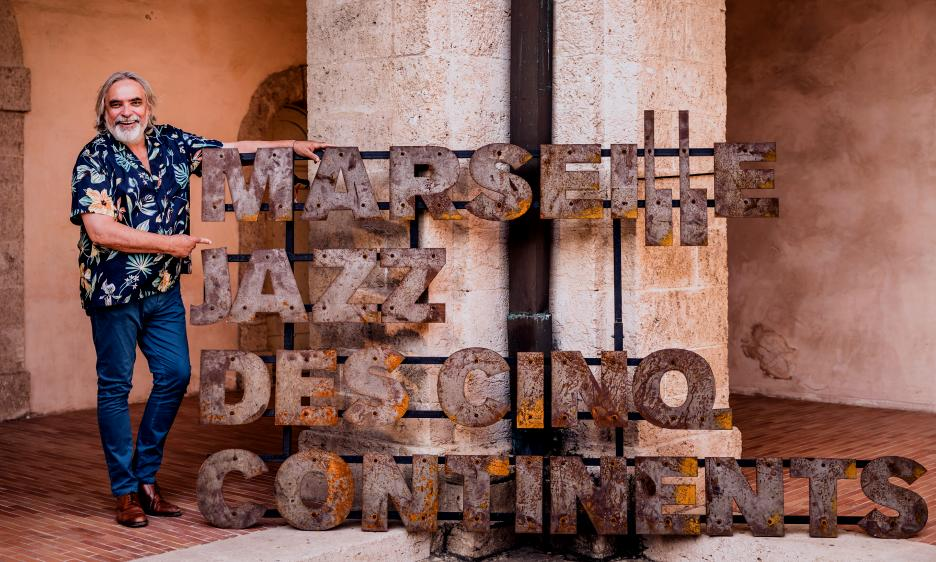

Jazz is a form of expression rooted in confidence in one's own individuality and in the freedom to improvise. But it is also about listening to others, because only then can dialogue become genuine. I'm convinced that the only way to save the world is for people to truly listen to one another, to express what they have to express, and to respect each other. That's why I say jazz can save the world.
—Hugues Kieffer
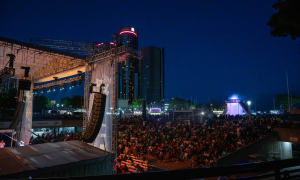
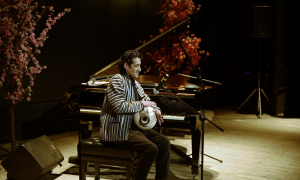
The festival unfolds over eight months across numerous venues, encompassing free performances, concerts in schools and neighboring municipalities, brass bands, cine-concerts, exhibitions, installations, and even guided musical meditation experiences. Its beating heart, however, unfolds over two summer weeks between June and July, when audiences can attend two or three concerts each day in a variety of settings, each offering a distinct listening experience. The Centre de la Vieille Charité, in the historic Panier district, provides incomparable acoustics and atmosphere; La Friche la Belle de Mai, a former tobacco factory turned into a cultural center, hosts the festival's most adventurous performances; while the Conservatoire Pierre Barbizet and Parc Henri Fabre—a three-hectare green space along the Huveaune River—complete the festival's remarkable constellation of venues.
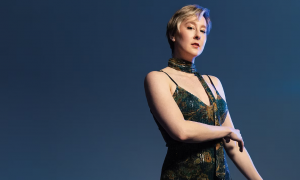
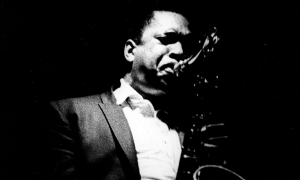
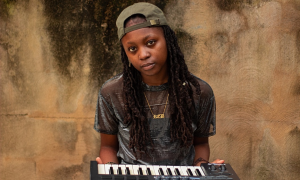
This year's edition opens and closes its central week by celebrating Miles Davis' centennial with a reimagining of Sketches of Spain, conceived by trumpeter Michael Leonhart and flamenco dancer Israel Galván, and concludes with Marcus Miller's We Want Miles! In between, the program ranges from the Sun Ra Arkestra to the Ezra Collective, from GoGo Penguin to Kyoto Jazz Massive, while showcasing a strong presence of women artists (China Moses, Julie Campiche, Leïla Olivesi, Tania Giannouli, Célia Kameni), along with countless other highlights, all under the banner of freedom, experimentation, authenticity, and energy.
We spoke with Hugues Kieffer, who has directed the Marseille festival since 2016 with passion, humility, and just about the right balance of experimentation and boldness that comes from placing oneself in the service of both the music and its audience.
All About Jazz: Who is the festival's audience?
Hugues Kieffer: When we started, our audience was almost entirely local. The festival was created to give the people of Marseille the opportunity to hear great jazz musicians without having to travel to festivals like those held in Juan-les-Pins or Nice. That was its original purpose.
Year after year, however, the artistic vision expanded, and so did the audience. At the same time, Marseille itself underwent a profound transformation. Ten years ago, it was widely perceived as dangerous, dirty, and in decline. Today it's safer, more vibrant, more welcoming, and has become a highly desirable destination. More and more visitors are looking for meaningful cultural experiences, and we're ready to welcome them.
Demographically, we've also been working to attract younger audiences, particularly people between the ages of 30 and 50, and we're beginning to see the results. Our audience remains highly diverse, but over the years we've fundamentally renewed our programming, the way we communicate—including through social media—and, more broadly, the message the festival seeks to convey.
AAJ: Marseille Jazz des Cinq Continents brings together a remarkable number of musicians, municipalities, and venues, while presenting a program that extends well beyond the main concerts and continues through November. How do you manage to organize something on this scale?
HK: We organize more than 100 concerts every year. It's a project that grows and improves with each edition, but our way of working has remained remarkably consistent. We present concerts in many different venues. Some are seated events; others are standing-room performances where people come not only to listen but also to dance. We want the festival to offer many different ways of experiencing music.
Every year we also look in new directions, building fresh partnerships, including collaborations with other artistic disciplines, as we did this year with the circus arts. We have to remain open so we can embrace what contemporary culture asks of us—and what it has to offer.
AAJ: That represents an enormous undertaking, financially as well. How is the festival funded?
HK: We are a nonprofit organization and receive support from both the City of Marseille and the regional government to produce the festival and all of our activities—not only for jazz audiences, but also for schools, community groups, and many other sectors of society.
We also help young musicians develop professionally. In addition, we collaborate with a number of healthcare organizations that support projects focused on social inclusion and public health. Every year is different, which means we have to reshape our financial plan according to the artistic vision we want to pursue. It's never easy.
Then there are ticket sales. Even so, we work hard to keep admission affordable. This year, approximately 40 percent of our revenue comes from ticket sales and 60 percent from public funding. Our goal is eventually to reach a fifty-fifty balance, which would allow us to make tickets even more affordable.
AAJ: The program is remarkably diverse and inclusive. What vision does the festival seek to convey? And how does Marseille itself shape the festival's identity?
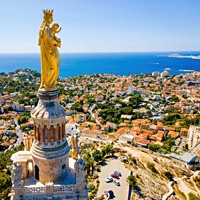
HK: Marseille has a plural identity, shaped by its history. They call it the Gateway to the East. It opens onto the Mediterranean—it is, in every sense, a Mediterranean city—and throughout history it has served as one of the principal routes through which northern Europe connected with the Global South. It is a city of passage, but also a city of friction. As it grew, it welcomed communities from very different backgrounds that eventually made it their home: Italians, Spaniards, Algerians, North Africans, Armenians. Countless communities have contributed to forging Marseille's identity. You could say they came together to build not only a city, but a cultural environment that reflects them all.
It is not like many British cities, where different communities settled in separate neighborhoods. Marseille is, instead, a true melting pot. There is something unique that radiates from people who arrived here from every corner of the world and who, above all else, consider themselves Marseillais. From one perspective, that can make things difficult, because the world's conflicts inevitably find echoes within the city. At the same time, Marseille stands as one of the places that demonstrates that integration is possible. Perhaps Marseille is a kind of laboratory, showing the world that people can live together without fighting, killing one another, or giving in to hatred.
AAJ: The festival clearly reflects that spirit of cultural cross-pollination. One of its most inspiring aspects—and one of its greatest musical strengths—is the extraordinary range of sounds and traditions presented each evening. Which naturally leads to the question: What is jazz?
HK: For me, and for the history of this festival, jazz is the music that emerged a century ago in the United States under racial segregation, created by people striving for freedom. It is music of emancipation, resistance and self-expression. And it succeeded.
Jazz is a form of expression rooted in confidence in one's own individuality and in the freedom to improvise. But it is also about listening to others, because only then can dialogue become genuine. So there are three essential elements: freedom, self-expression and collective awareness. That is jazz.
Born in New Orleans with this spirit of struggle and liberation, jazz later encountered other communities throughout the world living under different forms of oppression. That is also why our festival is called Jazz des Cinq Continents [jazz from five continents].
That spirit eventually reached Europe, returned to Africa, traveled across Asia, and entered into dialogue with other instruments, repertoires and musical traditions. Many artists embraced that message of freedom, transforming it into entirely new musical languages. Even when these musics no longer resemble the jazz of New Orleans, they continue to be animated by its spirit. In that sense, jazz transcends both time and geography while remaining true to its original essence.
That is the vision we defend through Marseille Jazz des Cinq Continents: a contemporary jazz that speaks to today's world. We are not interested in recreating the jazz of one hundred years ago, or even the jazz of the 1960s or bebop. We are interested in today's jazz—the music created by artists who have absorbed that tradition and transformed it into something deeply personal.
Urban music, techno, pop, folk and rap all engage in dialogue with jazz and its spirit. That is why we seek out artists who embody this vision and invite them to Marseille, where they can meet audiences who share those same aspirations.
AAJ: So where do you draw the boundaries of what can be included in a jazz festival?
HK: I don't draw boundaries. Musicians on today's creative music scene are so open-minded that those kinds of limits hardly occur to them. For me, it's about expanding our field of vision as much as possible—wandering through the landscape that music offers us and sharing that richness of experience and experimentation with our audience. That's what truly matters.
Every year we also try to construct a narrative that begins with opening night and reaches its conclusion with the festival's final concert. If you follow the festival from beginning to end, you really grasp the full arc of each edition's narrative.
This year, for example, we drew inspiration from the legacy of Miles Davis and his extraordinary openness of mind. From there unfolds a journey across generations and musical languages, while also striving for a meaningful balance between male and female artists. I'm especially pleased to be presenting the Orchestre National de Jazz. It is perhaps the ensemble most closely connected to the historical jazz tradition, yet it fully embodies that same spirit of openness and absence of boundaries.
I listen to a great deal of music. I attend other festivals, exchange ideas with colleagues and artists, I read extensively, and then I let inspiration guide me. Of course, reality always has the final say: budgets, touring schedules and artists' availability all come into play. Someone traveling from overseas may not be in Europe during the festival period, may only be available for a few days, or may already have other commitments. As a result, the festival we eventually present is always different from the one we first imagined.
Every year I begin by writing down the names of the artists I'd like to invite. Then I spend months revising the list, crossing out names and replacing them with others. But in the end, I'm always happy with the result.
AAJ: How do you reconcile your own personal taste with what is "right" for the festival?
HK: I've learned to set my personal taste aside. Perhaps it helps that I'm not a musician. Before becoming the festival's director and artistic director, I focuse on the technical side and the logistics. Still, I had to learn that lesson. The first edition I programmed reflected my own tastes, but I soon realized that wasn't the right approach.
When I want to listen to the music I love most, I do so privately. But when I build the festival program, I have to think about the audience. I have to think about the music that best expresses the spirit of our time, about the flow of the program and the overall organization. Even so, I genuinely love every artist I choose to invite.
AAJ: Beyond popularity, what qualities make you decide to invite an artist?
HK: Spirit. I want to know that the artists on stage are capable of establishing a genuine connection with the audience—that they perform for the people in front of them, not for themselves, not for money, and not for any other reason. After all, we're working to celebrate and preserve the experience of live music.
I want to be certain that every artist on the program has the ability to bring people together, and to do so as inclusively as possible.
AAJ: Today's musical landscape—not just jazz, but popular music as well—draws heavily from classical and contemporary music. Which cross-pollinations do you find most compelling? What is changing?
HK: I trust the artists. I'm not a musician—they're the ones doing the work in the field, exploring new territories and deciding what is worth playing. They're the ones creating projects and finding new ways to bring classical music, jazz and sonic exploration into conversation, weaving together different influences to create something authentic, personal and relevant to our time.
Of course I listen to a great deal of music, but above all I listen to the artists themselves—to what they have to say and the way they choose to express it. They are the ones shaping today's musical universe. I'm only a small part of that process, and I simply try to serve as a bridge. A festival cannot determine the course of artistic evolution; if it succeeds in reflecting it, then it has already fulfilled its purpose.
Naturally there are disappointments as well. Some artists work with extraordinary dedication and create music of the highest quality, yet never manage to reach a broader audience. Not because they lack talent or commitment, but simply because their music remains confined to a relatively small circle. That's unfortunate, but it's part of reality.
AAJ: There are many women artists on this year's program, which is particularly encouraging. Even today, women at jazz festivals often appear primarily as vocalists, whereas your lineup demonstrates the remarkable number of outstanding female instrumentalists working today. Is it difficult to find them, or is it simply a matter of making the effort?
HK: No, it's not difficult. They're there, even if jazz has not yet reached gender parity. You simply have to look for them, listen to them and hear them perform live.
A few years ago we joined the European Jazz Network, which introduced a declaration committing its members to pursuing greater gender balance. My first reaction was, "Of course, I'll do that." Then I returned to my office, started working on the festival program and quickly realized it would be much harder than I had imagined.
I was wrong, of course. At the time, I simply didn't yet have the tools to tackle that challenge properly. That was in 2014. Beginning in 2016 we started working seriously toward that goal, but for several years women were still represented primarily as singers, with relatively few instrumentalists. It was really after the pandemic—beginning around 2020—that the festival underwent a genuine transformation.
Women musicians are often less well known, and within the industry there's a persistent belief that they sell fewer tickets. To some extent that may even be true. But the answer cannot be to stop programming them. Of course it's much easier to build a lineup that is overwhelmingly male. That's precisely why we have to resist that way of thinking, while at the same time remaining mindful of the economic realities every festival faces.
To make that happen, we first had to change our own mindset and genuinely commit ourselves to discovering new artists. Only then did the results begin to appear. We simply try to do the best job we can. This year we've achieved a good balance among the artists we've invited. But if you look at the total number of musicians on stage, we're still at roughly 70 percent men and 30 percent women. There's still a long way to go. We have to keep working at it, and gradually things will change—along with the music itself and with jazz education. As more young girls see women performing on stage, they'll begin to think, "So it really is possible."
In fact, that change has already begun. More and more women have something important to say, and they're saying it through their instruments all over the world—from the United States to Eastern and Northern Europe, from France to the United Kingdom. Things are changing, little by little.
AAJ: Some time ago you said that jazz can save the world. Do you still believe that? And if so, why?
HK: Because I'm convinced that the only way to save the world is for people to truly listen to one another, to express what they have to express, and to respect each other. That's why I say jazz can save the world—and it can do so with a smile, because at its heart it's a simple idea.
I know, unfortunately, that the world is not nearly so simple. But the principle is. If you're aware of yourself, aware of your place in the world around you, and equally aware of others, then everything functions through balance, respect and harmony. I'm convinced of that. If we all embraced that way of living and relating to one another, we really could change our world.
AAJ: It's simple.
HK: It's simple. Not easy—but simple.
AAJ: The three words you've chosen to describe this year's festival are authenticity, boldness and energy. What do you mean?
HK: Those words were first used by my friends at the Cully Jazz Festival in Switzerland. I follow their work closely, and when I saw their announcement I thought, "They're describing us!" So I called the festival director and asked whether I could borrow them as well. He replied, "Of course—go ahead!"
Authenticity sums up everything we've been talking about. It's our primary objective. Boldness isn't always a positive quality—it depends on how you use it—but it's indispensable if you want to move beyond the ordinary. And then there's energy. Today we talk constantly about energy: nuclear energy, fossil energy, human energy. Music, in the end, is energy too. They're just three words, but they also describe a way of engaging with the world and creating connections. And that, ultimately, is what a festival is all about.
AAJ: You also have a program specifically designed for children. How is it structured?
HK: It's actually very simple. Our mission is to support the local community, contribute to its well-being and create employment opportunities for artists who live here. That's why we connect people who need music—schools, for example—with the people who create it. We place artists within educational projects and provide schools with the materials they need. For many children, it's the first time they've ever seen a musician perform live. Before we even begin talking about jazz—which means very little to a nine-or ten-year-old—we offer them a direct experience of music itself. Hearing an instrument played live, trying it themselves, drawing, interacting with an artist—all of these experiences can leave a lasting impression.
Perhaps they won't become musicians. But they'll have discovered something they otherwise might never have encountered. If we don't at least offer them that opportunity, they won't even have the chance to choose.
AAJ: This is the festival's twenty-sixth edition. How has it changed over the years, and how do you envision its future?
HK: Everything has changed: the team, the number of concerts, the way we work. What we present today is very different from the festival's first edition. We have to evolve alongside the world around us, seeking out new collaborations, new venues and new artists every year if we want to remain a reflection of the present. What hasn't changed is our vision. Marseille Jazz remains the "Jazz from five Continents." That is the festival's identity, and it continues to be the principle that guides everything we do.
AAJ: One final question. Marseille Jazz des Cinq Continents is now widely recognized as one of Europe's leading jazz festivals. When do you feel you have fulfilled your mission?
HK: That's a difficult question, because I'm never completely satisfied. We simply try to do the very best we can. The first sign comes from the audience: seeing people genuinely happy to attend the concerts and fully engage with what we've created. The same is true when we see children in schools become excited by music. I feel we've accomplished our purpose when we're able to present the festival as we imagined it, and people leave with the feeling that they've experienced something truly meaningful.
We're one of many jazz festivals in Europe. We're not the same as the others, but neither are we completely different. We simply strive to do our work as well as we possibly can in Marseille—a city with an extraordinarily strong identity—and to share with the world the story that this city has to tell.
About Miles Davis

Tags
PREVIOUS / NEXT

Become a Sustaining Member

Since 1995, All About Jazz has championed jazz as an art form and supported the musicians who create it. Over three decades, it has grown into one of the world's leading jazz resources, serving hundreds of thousands of readers, musicians, presenters and industry professionals each month.
Help Build the Future of All About Jazz
Your support helps us continue building All About Jazz for the next generation—expanding our editorial coverage, preserving jazz history, developing new community features and creating better ways to discover the music and the people behind it.
Become a sustaining member for as little as $20 per year and you'll immediately enjoy an ad-free experience along with access to subscriber features and future articles for a full year.
Together, we're not simply sustaining All About Jazz—we're building its future. Thank you for being part of the journey.