Home » Jazz Articles » Album Review » Steve Swallow: Winter Songs
Steve Swallow: Winter Songs

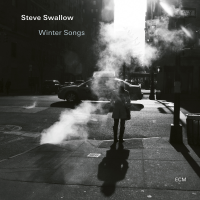
About the music, Swallow wrote: "I was there when this music was written. In fact my hand held the pencil. I began with the need to do something to fill each long day, and music rushed forward to sustain me. Before Winter Songs I had given music whatever I could, but as I made this album the tables turned: it gave me what I needed. Music is elemental, like the air we breathe," he says. "This recording rose out of a spontaneous community—my dear friends the players and our engineer, the piano tuner, the guy who brought us sandwiches, the harried clerk who checked me into my hotel room on 48th street... The cast grew to contain multitudes. Music is pervasive, and I'm not surprised that Winter Songs has found its way to you."
All the musicians here have worked alongside Swallow and Bley over the years and carry vivid memories of that long association; inevitably, the music is overlaid with their own reminiscences and references.
Swallow decided that titles might draw attention away from the music itself. Words are elusive in ways that numbers are not, and having worked closely with the poet Robert Creeley, Swallow is acutely aware of how words can seduce.
Gil Goldstein has a key role, his playing running throughout the record and binding it together as he blends with both Cardenas and Swallow. On the opening track, the piano sets the mood; Swallow's electric bass—warm, personal, played with his signature pick—lays down a melodic line that the horns then pick up.
The rhythmic heart of the album belongs to Adam Nussbaum. His subtlety and percussive nuance are evident across most of the tracks, since the rhythms shift continually; where the pulse becomes more overt, as on "Four," Nussbaum drives a jaunty swing and supports Swallow, who seems to be working in something close to a Freddie Green manner. The tune is perky, humorous and eloquent, and the jokiness carries through to a surprise ending.
"Six," the longest track and the most rhythmically active, finds Cheek at his most inventive and adventurous, taking chromatic leaps; Nussbaum, while still restrained, has more to say here too.
"Seven" opens with bass guitar alone and is almost elegiac, Swallow's lines blending closely with Cardenas's guitar.
"Eight" belongs to Chris Cheek. His phrasing, almost Stan Getz-ian, feels entirely unpretentious; he steps deliberately away from flashes of empty, virtuosic speed, preferring to let notes linger and give the music room to breathe. There is more soft swing here, and Cheek favours a melodic, conversational approach—patient and unforced rather than hard-edged.
Mike Rodriguez is on "Nine." His playing is tinged with sadness, the trumpet lyrical as it explores a simple melody. His core sound is focused and rich, and his solo unfolds with a natural, conversational shape. His restraint on this album lends his sound a particular gentleness; throughout, he blends with Chris Cheek to provide a cushion of sound.
Goldstein's presence is felt throughout, while Cardenas stays restrained, cleverly merging his sound with Swallow and Goldstein rather than asserting himself. No one here sets out to be a virtuoso. Since the whole band has played with Swallow and Bley over the years, it is not fanciful to imagine that much of this playing is tinged with melancholy.
This is an album about texture and composure: the gentle power of a harmonious ensemble playing toward a common goal, musical conversation, and sadness. It is chamber jazz, with the emphasis on emotional connection rather than overt statement. The Swallow-Bley body of work was never a place to look for the obvious.
Track Listing
One; Two; Three; Four; Five; Six; Seven; Eight; Nine.
Personnel

Steve Swallow
bass
Chris Cheek
saxophone
Mike Rodriguez
trumpet
Steve Cardenas
guitar
Gil Goldstein
piano
Adam Nussbaum
drumsAlbum information
Title: Winter Songs | Year Released: 2026 | Record Label: ECM Records
About Steve Swallow
Tags
PREVIOUS / NEXT

Become a Sustaining Member

Since 1995, All About Jazz has championed jazz as an art form and supported the musicians who create it. Over three decades, it has grown into one of the world's leading jazz resources, serving hundreds of thousands of readers, musicians, presenters and industry professionals each month.
Help Build the Future of All About Jazz
Your support helps us continue building All About Jazz for the next generation—expanding our editorial coverage, preserving jazz history, developing new community features and creating better ways to discover the music and the people behind it.
Become a sustaining member for as little as $20 per year and you'll immediately enjoy an ad-free experience along with access to subscriber features and future articles for a full year.
Together, we're not simply sustaining All About Jazz—we're building its future. Thank you for being part of the journey.