Home » Jazz Articles » Record Label Profile » Calligram Records: Chicago Meets the World
Calligram Records: Chicago Meets the World
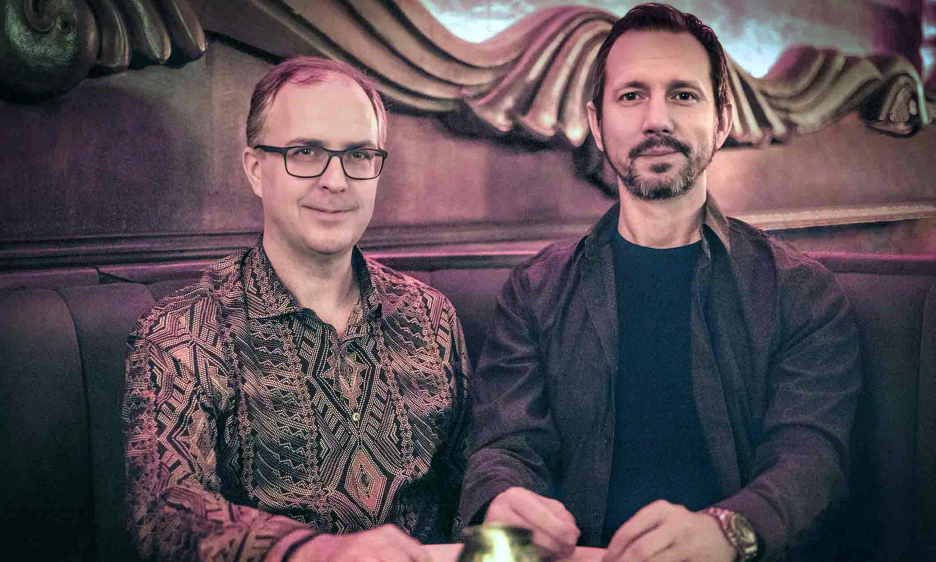
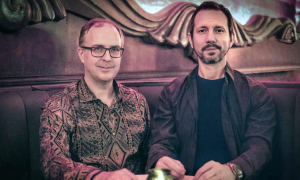
Courtesy Michael Jackson
We don't do six degrees of separation. We do one degree of separation. You could point to every record, even the ones that are furthest away, where there's somebody we know personally and have a relationship with on that record.
—Geof Bradfield
All About Jazz: How did you get into the record label business?
Geof Bradfield: I'll answer this first, then I'm going to hand it over to Chad, because he's been in the record label business on both ends of it way longer than I have. I have been on several different independent record labels like Origin, Delmark Records and a handful of others over the years. I just wanted to have complete control over when my records were coming out, how they were presented, returning emails promptly when people like you wanted to do an interview, not having to filter through somebody else. Some of those record labels were a really positive experience, some were more of a mixed bag.
So I approached Chad and asked if he would like to do something together with the initial idea of just putting out our own releases. He was the one who suggested that we expand a little beyond that.
Chad McCullough: I started working at Origin Records, a label in Seattle run by Matt Jorgensen and John Bishop, in 2006. I worked really closely with both of those guys, especially John. I learned a lot about the industry, I learned a lot about graphic design, I learned a lot about the good, the bad and the ugly of the whole thing. When I moved to Chicago, I did a little work for Greenleaf. I have always done design work for different people, various projects, CDs, posters and so on.
When Geof and I were talking, we figured out that we had different and complementary skill sets, and that we could make this be something that is uniquely us. At that time there seemed to be a hole in the Chicago scene for something like this. To the surprise of both of us, it has been well received and has had some good successes.
AAJ: How did you arrive at the name Calligram?
GB: A calligram, as you might know, is a poem that is shaped like its subject. I imagined a logo that we never made, a vinyl record that is a calligram, with all of the artists and history, putting the liner notes in the shape of a record. We ended up not doing that—it falls into the category of things that are too precious and it certainly does not translate to thumbnail images online. But the name worked. It's fun to say, it sounds like it means something even though most people don't know exactly what it means. It sounds familiar in some way. We thought that was a good jumping-off point. And we make music on these recordings that are representations of what they really are, right? They are that same degree of removal that the mustache-shaped poem about a mustache is.
AAJ: How would you describe your focus as a label? Chicago comes into it, right?
CM: One thing that it has become is a label of things that Geof and I like. Or a label of things that Geof and I have had a part in. It's work that only Geof and I could have put together through our contacts and so on. It started with a focus on the Chicago jazz creative scene, and that's largely where the heart is, but it has become something more. For example, Atlantic Road Trip, where those guys—apart from me—are not from Chicago, but it's partially my project, so it made sense to release it on the label.
GB: We don't do six degrees of separation. We do one degree of separation. You could point to every record, even the ones that are furthest away, where there's somebody we know personally and have a relationship with on that record. Another example: Canadian guitarist Kevin Brunkhorst's record After the Fire. I don't know any of those guys, but Chad knows Paul Tynan who's playing trumpet there. It's great, and I wasn't familiar with it. I think it's in our aesthetic wheelhouse.
AAJ: It has never been easier for musicians to release their own work. What's the upside of teaming up with a label like yours?
GB: I think there are several upsides. It's the same as when Chad was working at Origin. He would say, "I'm working at this cool record label, if you ever want to put out a record, let me know." I looked at who else was on the label, I looked at the fact that they had some online presence, and radio stations were playing Origin Records, and people were reviewing Origin Records. I was like, well, those are all good reasons to do that instead of doing it all myself from the bootstraps up.
Since we're focused on Chicago, there's a tie-in with the community here. There's a lot of crossover in terms of rhythm sections and musicians in general. We like to joke that Dana Hall and Clark Sommers are the Calligram house rhythm section. They've shown up on so many records.
Then there's also the question with any artist. Do you have time to make your art and do all this other stuff too? Or do you want to free up some space to make your music and then put it in the hands of somebody you trust to treat it as if it was their own?
CM: This is like a family. It's a community of people that we respect, that we know and care about, and we want their music to do well. If you can have more people in your corner helping you and your music get out there, then that's better. At the same time, I also understand that a lot of people are totally capable and do a great job of self-releasing. I don't think that one is better than the other. But given that we have different skill sets, it makes a ton of sense, and I think it makes sense for a lot of artists.
GB: Chad has actual skills that I don't have, like graphic design, and what I have is this willingness to do the stuff that no one wants to do. I keep the books straight. I'm the person who boxes up CDs, I write the press releases, I send things out to reviewers and to radio, I keep our mailing lists up to date. Those are skills of a sort, but mainly they're just stuff you do over and over. We have an intern this summer, which is going to be fantastic.
AAJ: You are both working musicians. How much time does the label take versus your musical lives?
CM: We are not doing a huge volume of releases. It comes in spurts. Around the beginning of the year, I was doing 12-hour days of working on some of this stuff, then nothing for a couple weeks, then it would be busy again. It makes it so that we can also focus on performing, touring and teaching—all the different facets of a professional music career.
GB: With good time management, it's possible to fit into the spurty nature of being a working musician. You're intensely busy sometimes and don't have time to sleep or eat or whatever, and then there are other times when it's like, wow, am I ever gonna work again? It's been two weeks since they called me. And you can cram label work into those two weeks and still feel like a working musician.
AAJ: What does it mean to be a record label in 2026? Do you release hard copy as well as digital?
CM: Yes, we do. I feel like for critics and radio stations, a CD as a cost per unit is pretty low, and part of the label thing is the visual aesthetic. To have an actual physical thing in front of you that looks a certain way, hopefully looking good, unifies the whole label. It helps you form a relationship with somebody, a radio station or whoever. It's saying, "please pay attention." I think there is value in that, and it is different from, hey, you can just download this if you want it, and then it's gone immediately.
GB: I just don't have the same relationship with streaming or downloaded music that I do with music I can hold in my hands on vinyl or CD. And of course that's a function of my age to some extent. I'm 56 years old, I grew up working in record stores. I like to hold the physical thing and read the liner notes and see who's on it, and if I can't do that, it feels a little abstract to me.
It's not that I never stream—it's a great convenience. I mean, it's taking money out of all our pockets, but it's a terrific convenience, but it's not the same. I don't remember that streamed record the same way as I remember the records I own physically.
AAJ: Do you also do vinyl?
CM: We have a handful of vinyl releases, and that's up to the artists. Jeff has one or two out on vinyl. The Myra Melford record will appear on vinyl. And Juan Pastor, Brian Citro and the Chicago Soul Jazz Collective.
GB: So it will be a little over half a dozen by the end of this year. Most of them are 2026, so maybe it's trending up a bit.
AAJ: What do you think of the streaming ecosystem?
GB: Ecosystem's a funny word for a sewer.
CM: I don't even know that it's a necessary evil, but as a tool, it's great. I can preview a lot of music right away and decide if I want to buy it, and that's great. Do people do that? No. It's very easy to only take a penny and not leave a penny.
GB: I still like going to the record store and maybe taking a chance on one record I'm going to buy. The problem now is you might pay $35 for a vinyl record. It's an expensive chance. It was one thing when you could go to Rose Records and buy something from the budget bin for $2.99, but that just is not a scene anymore.
CM: I don't mind streaming so that I can listen to what other people are doing and then buy it. I've always been a big advocate of buying music, even just on CD. I want to own it. It's funny now, there are times that I buy from artists who are my heroes. A lot of times I'll get a note from them just saying, "thanks for buying!" I am on both sides of it, and I know how much it actually means for someone to just say, "here's $12."
GB: I teach at Northern Illinois University. The president of the university ordered my record the other day from the label. She didn't even tell me she was ordering it, and she sent it to a friend, a colleague of hers at another college in New York. And she paid twice what I was asking for. That's really nice. It means that people still value it. She didn't send them a download card, she sent an actual record. Some people love to give gift cards, and cool, that's fine, but I'd rather somebody thought about what they were going to get me.
AAJ: It looks like Bandcamp is central to your operations.
CM: It's a great platform. It's easy to use, it's easy to integrate with other websites, it has high-quality downloads, and it allows for a lot of flexibility. I know there's some gray area now that they've been sold. So maybe they're not quite as independent Mom and Pop as we would like. But it's a great platform for a lot of independent artists and labels. They also have excellent writers, excellent critics at Bandcamp, like Dave Sumner, who writes for The Jazz Page. He's excellent, and you probably won't be able to get him because he's writing a lot of stuff for them.
GB: You probably won't be able to get your record reviewed by him unless it is on Bandcamp. Best of Bandcamp for the month, Best of Bandcamp for the year, that's become a thing. It's like getting a review in All About Jazz or other respected online platforms, because it sends people right to your site to buy the record. You can see streaming tick up, you can see sales tick up when one of those comes out.
AAJ: How do you pick projects and artists?
CM: Geof and I like what we like, and I think there's a lot of overlap. We like a really good, high-quality project that somebody put a lot of care and thought into. We've had to turn down a lot of those just because we're not cranking out five albums a month. It has to fit with our schedule.
GB: Yeah, we might say no to something we like just because the artist is on a faster timeline than we can accommodate given what else is already in the queue. That's not a great feeling. We want to say yes to all the stuff we like. But if I say yes to all the stuff I like... you know that thing about the goldfish growing to whatever size its bowl is? That's what happens. If you keep saying yes, it'll just get as big as you want it to get.
AAJ: Do people come to you with a finished product or earlier in the process?
CM: We've had some of both. I was in Macedonia last weekend working on a new project with a quartet with additional woodwinds and strings. The last record with those guys came out on Calligram, so we talked about that a little bit, our release timeline and how that would work with the label. So there are some things where there is a through line the entire time. Sometimes people in town will reach out to us and say, hey, I'm working on this thing this summer, are you guys interested? And of course it's always like, yeah, send it on over and we'll see what we can do.
AAJ: What's your Scottish connection?
CM: Paul Towndrow! Geof, you went over there first, right? Then I made the connection with Paul during COVID.
GB: My child went to the Royal Conservatoire of Scotland in Glasgow starting in 2021. They are still there. They just finished an extra year and are playing around Glasgow with their band Mother Tongues, so they're very much enjoying being in the UK and being in Scotland.
AAJ: You also have Alyn Cosker's album Onta (Calligram Records, 2025) on your label.
CM: Alyn was on the first Atlantic Road Trip album, and we had toured together, and when he was in the early stages with his album, we talked about mixing and production. So I think when he was looking to release his album, it made a ton of sense.
GB: That's a good example of something that Chad really brought to fruition. It wasn't a finished product. He mixed a lot of it here, and he did some remote stuff.
AAJ: Looking back, what releases on Calligram have given you particular satisfaction?
CM: I am very proud of the photo that I took for Ben Waltzer's cover on The Point (Calligram Records, 2024) . It's of an area down the South Side of Chicago by the South Shore Cultural Center.
GB: It's easy for me to like other people's records. I am really proud of my own record Colossal Abundance (Calligram Records, 2024). It took so many years to put that together—it's 12 people. It was a lot of funding and writing, and it was the first thing where I really integrated the Shona instrument, the mbira, or thumb piano. It was a lot of different things coming together for me, about five years of work.
I also really love the recent Atlantic Road Trip record Watch As The Echo Falls (Calligram Records, 2026). I think it's awesome. The critics are saying it has this sort of ECM vibe to it—Chad's playing a lot of synthesizers. It's a gorgeous, soundscape-y record. It just got an awesome review from DownBeat.
AAJ: Any artists coming up that we should look out for?
CM: We have a great pianist in Chicago, Tommy Muellner, who has a record coming out called Solitary Moon. Geof mentioned Clark Sommers. He's got a great album WaBaSH with Geof coming out in August. Arman Sangalang, a great Filipino American tenor player, also has a record coming out called Waypoints. Geof has a record with Myra Melford, Ben Goldberg and Dana Hall. It's a bassless quartet—two clarinets, saxophones, piano—recorded live at the Green Mill called Open or Close. That will be out in September.
GB: And guitarist Kenny Reichert's new album Colours will be really worth hearing.
AAJ: And it will be your third anniversary soon. How are you marking the occasion?
CM: From July 29 to August 1, 2026, we are taking over Andy's Jazz Club in Chicago for a celebration festival. There will be 2-3 bands per night and you can view the entire schedule here.
Listening Guide: Calligram Records in six recordings
 Geof Bradfield Colossal Abundance Calligram Records 2024
 Geof Bradfield's Colossal Abundance is a thrilling, idea rich large ensemble statement that turns the "power of 12" into a creative engine. Drawing on African rhythmic cycles, chromatic totalism, and the combinatorial energy of a 12 piece band, Bradfield shapes music that's both unpredictable and deeply coherent. From the intimate mbira berimbau opening to the swirling reimagining of Coltrane's "Lonnie's Lament," the album balances intellect and exuberance. It's an expansive and compelling achievement.
 Atlantic Road Trip ONE Calligram Records 2023
 Atlantic Road Trip's ONE is the kind of debut that feels both improbable and completely inevitable: Paul Towndrow, Miro Herák and Chad McCullough meeting in the middle of the map and sounding like they've been a band for years. Towndrow's alto and whistle has that quicksilver bite, Herák's percussion folds Balkan edges into jazz time with a grin, and McCullough floats above it all with cool, melodic poise. It's sharp, stylish, rhythmically restless and keeps up the pace and promise.
 Russ Johnson Reveal Calligram Records 2023
 Reveal is a reminder of how compelling a no-piano quartet can be when the chemistry is this sharp. With Mark Feldman's violin slicing, sighing and shadowing Johnson's trumpet lines, the music feels both chamberlike and fiercely open. Ethan Philion and Timothy Daisy keep the ground shifting—sometimes a deep groove, sometimes a restless churn—giving Johnson's nine originals room to oscillate between hush and heat. It's a vivid, beautifully balanced album from a leader who deserves more time in the spotlight.
 Neal Alger Old Souls Calligram Records 2024
 Old Souls don't always sound this awake. Neal Alger leans into classic textures, pairing his clean, quietly assertive guitar work with a band that knows how to stir the pot. The tunes move with an easy swagger—part post bop polish, part late night Chicago grit—and Alger's writing gives everyone space to stretch without drifting into indulgence. There's warmth, bite and just enough attitude to keep things lively. A smart set also featuring Calligram's 'house rhythm section' Clark Sommers (bass) and Dana Hall (drums).
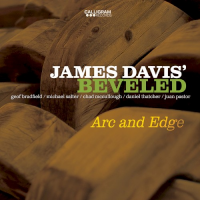 James Davis Arc and Edge Calligram Records 2025
 Beveled edges cut smooth, and Arc and Edge does exactly that—rounding modern jazz sharpness into something warm, dark hued and quietly arresting. James Davis builds the sound around two flugelhorns and two bass clarinets, with Chad McCullough, Geof Bradfield and Michael Salter deepening the ensemble's velvety blend. Daniel Thatcher (bass) and Juan Pastor (drums) keep the pulse subtle but alive, giving the chamber like writing room to breathe. It's lyrical, textural and thoughtfully sculpted—an elegant rethink of what a sextet can feel like.
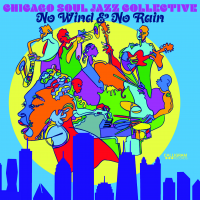 John Fournier No Wind & No Rain Calligram Records 2026
 Chicago Soul Jazz Collective's No Wind & No Rain taps straight into the lineage—Gene Ammons' churchy swagger, Eddie Harris' street smart ingenuity, Ramsey Lewis' feel good uplift—while sounding unmistakably like the full flowering of a band that has graduated from bar-room to headliner. Dee Alexander brings the vocal fire, the horns led by John Fournier preach with purpose, and Larry Brown Jr.'s production keeps everything crisp, gritty and deeply grooving. The band's seven piece engine moves with confidence and heart, turning perseverance into a party. Summer is here!
 FOLLOW Mark McKergow
and get notified whenever a new article published.
FOLLOW Mark McKergow
and get notified whenever a new article published.
Saxophonist, clarinetist and writer living in Edinburgh, Scotland
About Chad McCullough

Tags
PREVIOUS / NEXT


Chad McCullough Concerts
Become a Sustaining Member

Since 1995, All About Jazz has championed jazz as an art form and supported the musicians who create it. Over three decades, it has grown into one of the world's leading jazz resources, serving hundreds of thousands of readers, musicians, presenters and industry professionals each month.
Help Build the Future of All About Jazz
Your support helps us continue building All About Jazz for the next generation—expanding our editorial coverage, preserving jazz history, developing new community features and creating better ways to discover the music and the people behind it.
Become a sustaining member for as little as $20 per year and you'll immediately enjoy an ad-free experience along with access to subscriber features and future articles for a full year.
Together, we're not simply sustaining All About Jazz—we're building its future. Thank you for being part of the journey.