Home » Jazz Articles » The Jazz Life » Bob Graf: A St. Louis Tenor Voice the World Almost Missed
Bob Graf: A St. Louis Tenor Voice the World Almost Missed
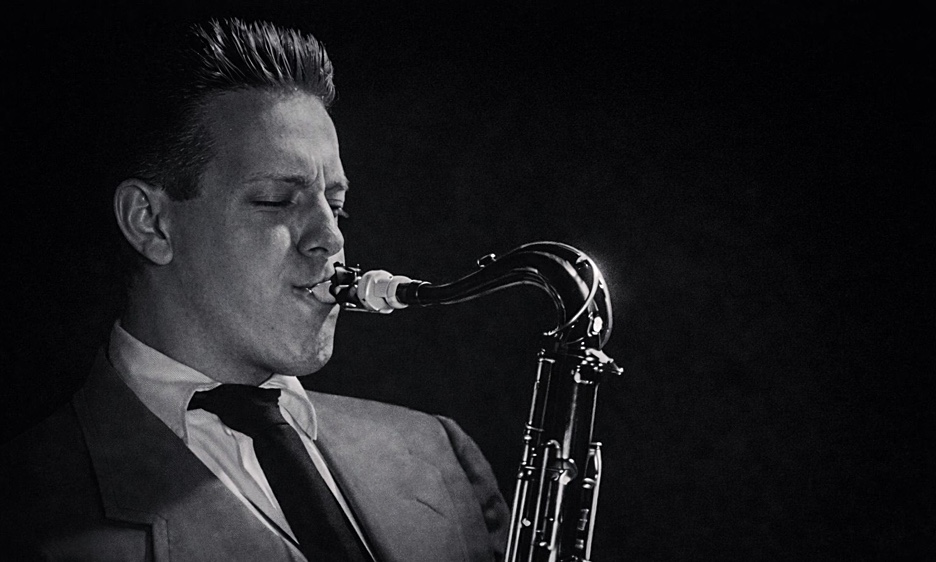
A St. Louis Voice
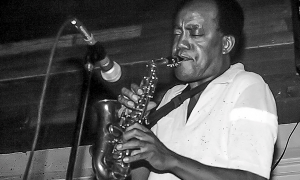
Robert Paul Graf was born on April 16, 1927, in St. Louis, Missouri. He came of age in a city that produced more than its share of jazz talent, and one of his closest musical friendships was with a fellow St. Louisan named Clark Terry—a trumpeter who would go on to become one of the most celebrated voices of the postwar era, and who would give Bob Graf his first major break.Music was not something Graf did. It was something he was. He kept a baby grand piano in the house and played it constantly, picking up everything by ear. He could hear a song and simply play it—a gift he passed down through the generations. He described his saxophone as another limb, an extension of his body. Those who heard him understood exactly what he meant. His tone was soft and airy, yet precise—unhurried and melodic in the way of his idol, Lester Young, but with a hard bop edge underneath that let you know this was a man who had played with the best.
Recommended to Count Basie
It was Clark Terry who recommended Graf to Count Basie. In 1948, barely in his twenties, Graf and Terry were both members of Basie's small group—a formation that placed the young tenor saxophonist in about as rarefied company as jazz had to offer. Graf did not record with the unit and was replaced by Wardell Gray in early 1950, but his presence in that group spoke unmistakably to his abilities. You do not get recommended to Count Basie at that age by accident.The Herds and the Lighthouse
After the Basie organization, Graf joined Woody Herman's band. He recorded eight sides for the Capitol label in June of 1950, and four more for MGM in January of 1951—documented sessions that place him squarely within one of the most forward-thinking big bands of the era.He was also a member of Howard Rumsey's Lighthouse All Stars, the legendary ensemble that for most of the 1950s held court every Sunday at the Lighthouse Cafe in Hermosa Beach, California—one of the defining institutions of West Coast jazz, a club that shaped the sound of an era. For a musician who preferred to stay close to home, Graf's reach was remarkably wide.
Chet Baker and the Pacific Jazz Years
In 1956 Graf appeared with Chet Baker's short-lived big band, recording for Pacific Jazz and taking solos on several tunes. Baker was one of the most celebrated names in jazz at the time, and this association placed Graf within the orbit of the West Coast movement even as his roots remained firmly in the Midwest.At Westminster: The Document
On January 11, 1958, Bob Graf walked into Westminster College in St. Louis for a concert that would produce the most significant recorded document of his career. The session was produced by Robert Koester for his Delmar label—the first modern jazz record Koester would produce for what would eventually become Delmark Records, one of the great independent jazz labels in American history.The album features Graf leading a quintet alongside tenor saxophonist and flutist Ron Ruff, pianist Jimmy Williams, bassist Bob Maisel—who had previously played with Serge Chaloff and Dick Twardzik and was a member of the St. Louis Symphony Orchestra—and drummer Al St. James, who had played with Charlie Parker in Chicago. The concert was originally planned around experimental compositions, but when trumpeter Bill Buxton was unable to appear, the group shifted to familiar standards, and Graf was given a prominent feature throughout.
The result rewards careful listening. As liner notes author Len Bukowski wrote, Graf's playing displays a familiarity with Lester Young's lyricism while the strength of his tone shows his grasp of the hard bop style prevalent at the time. "Street of Dreams," Bukowski noted, showcases what may be Graf's finest recorded solo. The album was reissued on CD by Delmark in 1992 as part of their Underground Heroes series and remains available today.
Hollywood, and the Road Back Home
That same year, Graf's union card opened another door entirely. As a member of Local 2-197 of the American Federation of Musicians—the credential that governed who could perform on Hollywood film sets—Graf appeared as a performing musician on the Universal Pictures production The Big Beat, starring Gogi Grant and William Reynolds. In the 1950s, studios were required to use AFM union members for live musical performance, and Graf's membership placed him on that lot. It captured him doing exactly what he did best.The St. Louis Years
In December of 1959, Graf formed a group with guitarist Grant Green and pianist Sam Lazar that played at the Holy Barbarian—a beatnik coffee house at 572 De Baliviere in St. Louis—as part of a week-long stand that would later be documented and released. Green was in his formative years before his landmark recordings for Blue Note Records, and his presence in Graf's group speaks to the caliber of musician Graf was attracting. NPR, in a 2013 profile of Grant Green, noted Graf's role in the St. Louis scene during this period.Also from this period, Graf recorded You Go to My Head live at St. Stephens House in St. Louis with vocalist Bev Kelly on November 21, 1959—a session that sat unreleased for more than two decades before finally appearing on VGM Records in 1981, the same year Graf died. Among the visiting musicians who sought him out was Gerry Mulligan, who called on Graf to play with his big band in the 1960s.
The Measure of a Career
Bob Graf was not fond of traveling, preferring to stay home. That choice—deeply human—may be the single biggest reason his name never achieved the national recognition his talent warranted. He worked in a music store through the 1960s and 1970s, repairing instruments and giving impromptu lessons. And he never stopped playing. The piano was always going in the house, his saxophone always within reach.He was also, by all accounts, a man fully at ease in the world—confident, fearless, with a ready wit and the kind of calm that only comes from knowing exactly who you are. He could talk to anyone. He never seemed to worry about anything.
On August 27, 1981, after a short hospital stay, Bob Graf died. He was 54 years old.
The Delmark liner notes for At Westminster open with words that apply perfectly to him: "In jazz, as in every art form, not every participant is a major innovator. Many jazz musicians are journeymen, never reaching the pinnacle of their trade. Local legends, underground heroes, or competent sidemen in big bands, they would work diligently at their craft, yet were destined never to achieve renown."
Bob Graf was all of those things. He played with the best musicians of his generation. He left recordings that still reward careful listening. And somewhere, on a YouTube recording of The Big Beat, if you listen carefully, you can still hear him—soft and airy, precise and unhurried, the saxophone an extension of his body, just as he always said it was.
His story is finally being told.
 FOLLOW Melodi Graf McCraine
and get notified whenever a new article published.
FOLLOW Melodi Graf McCraine
and get notified whenever a new article published.
St. Louis music advocate preserving the legacy of jazz tenor saxophonist Bob Graf.
About Bob Graf

Tags
PREVIOUS / NEXT


Become a Sustaining Member

Since 1995, All About Jazz has championed jazz as an art form and supported the musicians who create it. Over three decades, it has grown into one of the world's leading jazz resources, serving hundreds of thousands of readers, musicians, presenters and industry professionals each month.
Help Build the Future of All About Jazz
Your support helps us continue building All About Jazz for the next generation—expanding our editorial coverage, preserving jazz history, developing new community features and creating better ways to discover the music and the people behind it.
Become a sustaining member for as little as $20 per year and you'll immediately enjoy an ad-free experience along with access to subscriber features and future articles for a full year.
Together, we're not simply sustaining All About Jazz—we're building its future. Thank you for being part of the journey.