Home » Jazz Articles » Interview » Vance Thompson's Reinvention
Vance Thompson's Reinvention
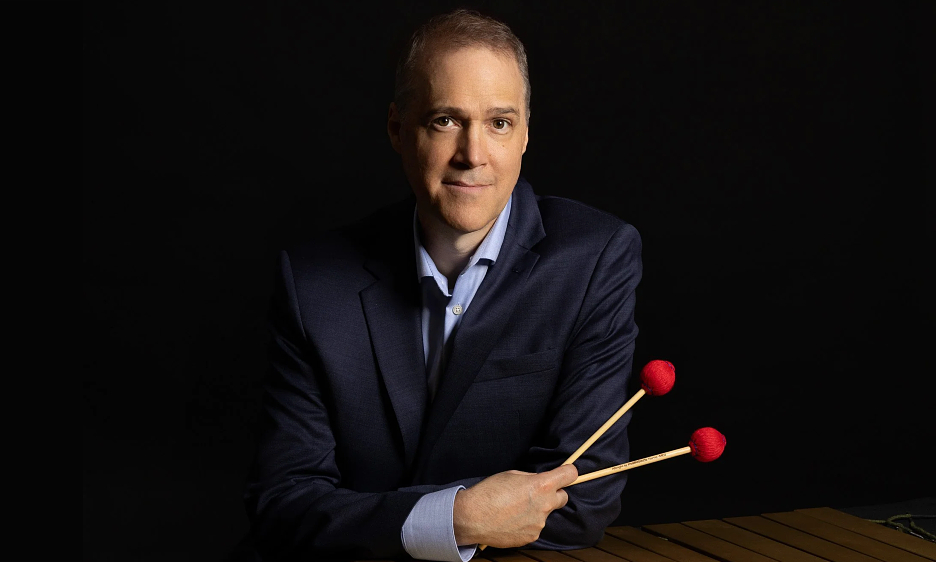
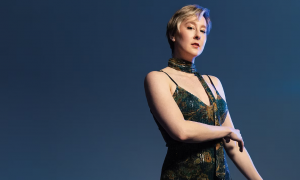
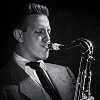
Courtesy Eric Smith

The instrument doesn’t really have much to do with it. Music is inside you, and the instrument is just a means of getting it out. The more comfortable and fluid you are on an instrument, the more of your ideas you can express.
—Vance Thompson
All About Jazz: How are you doing, just in general? How's life?
Vance Thompson: It's good. I'm busy doing things that I love doing.
AAJ: Did you imagine, when you were a music student, that you would be able to pull something like what you've been able to pull off?
VT: No. I didn't really have a clear thought in my head apart from wanting to play in Art Blakey's band. I thought that might be possible. I don't know where I got that idea, but Art died when I was still at UT. I went to Chicago for a while, but I didn't have any thought of being a bandleader or what my career might look like other than wanting to get good at music and have the opportunity to play music that I really loved.
AAJ: Why Art Blakey's band?
VT: That was the first jazz band I really fell in love with when I was in high school. The first teacher I had at UT was Donald Brown, who had been in Art Blakey's band. Those records, particularly with Freddie Hubbard—Caravan (Riverside, 1963) especially—were some of my favorites.
He was always carrying trumpet players. The summer between my freshman and sophomore years, I went to New York, and Art's band was playing there. I saw him and had a lesson with his trumpet player. In hindsight, it wasn't very realistic, but he was alive, he was performing, and it was music that I really liked.
AAJ: There are so many things I love about your new record, but perhaps my favorite thing is the songwriting—the composition. Did you already have all this material?
VT: I had some of it. I had the beginnings of what became Lost and Found (Self Produced, 2026), which I started before I stopped playing trumpet. I had the song "Sleight of Hand," which was finished and had been performed once on trumpet. The others I didn't have yet. The inspiration for recording came from playing a Jazz on the Square gig in Knoxville with that rhythm section.
It was one of those magical things where, when you play with certain people, it feels like your instrument is playing itself. I got that feeling playing with them. A few people had joked with me about doing a vibes record, and I always took it as a joke. But when I played with them, I realized I actually could do this with this group.
Once I made the decision to do it, I think I may have written a couple of tunes in preparation for that gig, but I don't remember exactly. I do remember that the first track on the record, "Tell It Like It Is," was inspired by a Dollar Brand recording I heard on WUOT while I was driving. I got home and started fooling around at the piano based on something I'd heard him do and came up with that tune
AAJ: So how did you find this particular lineup to begin with?
VT: Taber Gable was someone I was already playing with on a regular basis. I play a lot with Tommy Sauter through the Knoxville Jazz Orchestra, so I tried him next. He's a close friend, and I really like his playing.
I don't remember what reminded me about Marcus Finnie. I played with him years ago. He came over and played once with the big band at 4620, and I played a couple of gigs with him and Donald Brown back in the early 2000s. Then we lost touch. He's been busy in Nashville and touring, but he came over and did a Live at Lucille's gig with Rahsaan Barber, and I reconnected with him. I remembered how amazing he is, so I reached out to see if he was available.
I also knew that he and Tommy were both from Memphis and had been there around the same time, although I later found out they didn't know each other then. That Jazz on the Square gig was actually the first time they met. As soon as they started playing together, they both told me how much they liked the other one's playing and said, "Man, this guy is great."
AAJ: They lock in so well on this recording. I was listening to it and thought these guys have probably been playing together forever...Taber and Steve Kovalcheck—everybody. It sounds like something that's been played a lot, but that's probably not the case.
VT: Definitely not. The first time we all played together was on the recording. That may have been one of the first times I'd ever played with Steve. I didn't know him well, but I knew his playing and respected it. After we did the quartet thing, I thought, "This is going to be the band." Once I started getting the material together and thinking it through, I realized that having a second voice on the melody so I could do harmonies would really add something.
AAJ: I really like what you did arrangement wise. Did you have a lot of fun thinking, "I'm going to add guitar to this—what am I going to do?"
VT: Absolutely. Another funny thing about that is that I've done a lot of arranging, but I'd never written a specific guitar part for a small group. I've written guitar parts for big band and even had lines for guitar in those settings, but I'd never written for guitar in a small group. It reminded me that I didn't really know the range or where the sweet spot was.
I had to call Steve a couple of times and say, "I'm going to send you a PDF. Is this possible? And is it in a range where it's going to sound good?"
AAJ: Will this hurt?
VT: Yeah. All the answers were, "That works. It's fine." Once we got into the studio, though, we did adjust some things—trying things down an octave, up an octave, moving things around. We made those adjustments once we could actually hear them.
Trumpet and tenor I could do in my sleep because I'd done that for so long. But when I started thinking about guitar and vibes, I had to stop and think about what it was going to do.
AAJ: Is guitar your next instrument?
VT: (laughs) No. I think I'm done.
AAJ: No?
VT: Well, marimba might be next.
AAJ: I love Steve's playing. It has a great root in the blues.
VT: Absolutely.
AAJ: But it's also very musical, interesting, and surprising.
VT: He comes from a lot of different places. He can play the blues, sound very country, do metal, and he's also a very high level jazz musician who can play in many different styles. He's an unbelievable musician.
AAJ: One of my favorite things about the record is how it starts in this very acoustic space. Then, as it goes along, you suddenly notice Taber Gable on electric piano.
VT: Right.
AAJ: I love him on electric piano. He really knows what to do with that instrument. Then all of a sudden the guitar gets a little more distorted. Was that intentional from the beginning?
VT: Not exactly. As I was getting the material together, I knew from playing with Marcus that he's a great straight-ahead drummer. But I also knew from his reputation and from hearing recordings and seeing videos that, in groove-based music, he's as good as it gets.
AAJ: I love how you sequenced it.
VT: That was the challenge. It took a long time to figure out. I remember Tommy asking me in the studio, "Is this going on the same record?" I thought it would work, but I didn't know how. It took several weeks of thinking about what should go first and how everything fit together before I figured out the sequence.
I think it works well.
AAJ: I love being surprised, and this record surprises me in a lot of ways. I'm glad you ventured out to do it. If I had made this record, I would be extremely happy with it. How do you feel?
VT: I'm proud of it. I'm definitely proud of it. A big part of the itch to do it was that I feel like I'm in a new stage of my life with this instrument, and I wanted to document that. This feels like a new era, and it was just for me as much as anything else.
But once I heard some of it and got into it, I thought, maybe other people will actually like this.
AAJ: I know you've only been playing vibes for a couple of years. Is it okay if I call them the vibes?
VT: Yeah.
AAJ: It sounds like someone who's been playing a long time, especially your intro into Somewhere Over the Rainbow.
VT: Thank you.
AAJ: That's one of my favorite moments on the record. It's a really nice use of the instrument, and it's a fun, fascinating little preinterlude, if that's a word.
VT: Vibraphone is an easy instrument to get started on, and that was part of the reason I tried it. I remembered watching a Gary Burton instructional video years ago where he mentioned offhand that vibraphone is the easiest instrument in the world. I wondered if that was true.
It is much easier than wind instruments when you're starting out, because the instrument makes a beautiful sound for you. You barely have to do anything. It's a difficult instrument to be Stefon Harris on, as you can imagine.
AAJ: Yes.
VT: He's one of one. There are a lot of great vibraphone masters, and it's difficult to reach that level of expression. But just getting started and making music isn't hard in that respect.
AAJ: For those who don't know, you started out on the trumpet. You had a great career as a trumpet player, including as the leader of the Knoxville Jazz Orchestra. What was the change? Why not trumpet anymore?
VT: So in 2017—it had been going on longer, but in 2017—I developed the symptoms of a neurological condition called focal dystonia. I still remember very clearly the first time I felt a spasm in my face. I thought, "Whoa, that was weird." Within a week, it was happening every time I tried to play.
For all intents and purposes, I couldn't perform anymore because I had no control over what was going to come out. That was the fall of 2017, in September. I was still touring with Jerry Douglas, and I kept trying to play. He was incredibly understanding, supportive, and great about it.
All through that fall, I kept trying to do gigs. I thought it was just a rough patch that would sort itself out, or that if I practiced harder, I'd get through it. I'd heard of focal dystonia, but I didn't know what it was. One night I looked it up and saw descriptions of exactly what was happening to me.
There are people online who coach musicians through it, and some people are able to retrain and resume their careers. I worked with several of those people. I started in January of 2018 with my first coach, and by the spring of 2022, I was completely over it.
My trumpet skills kept getting worse and worse. That first fall, I could still play over the whole range of the instrument, but I had no control over when notes would start. If I tried to start a note, it might not come out, or a different note might come out. If I was playing by myself in a rubato fashion, I could still play from the bottom to the top of the instrument with the same sound I'd always had.
I just couldn't get a note to start. As I went through retraining and tried to change my technique and approach the instrument differently, it only got worse. By 2022, I couldn't play anything. I sounded like someone who had just picked up a trumpet for the first time every day.
AAJ: That had to be crushing.
VT: It was awful. It was really hard to live through. At the same time, I knew I still had a pretty great life. I have a great family. Everyone's healthy. I have two jobs that aren't connected to performing that I enjoy and feel good at. I have enough money to support our lifestyle.
I had a lot of good things going for me, but I was miserable. I started thinking that maybe if I set the trumpet down for a minute and made peace with not trying to play it every day, my life would be better. I'd gotten to a point where I was constantly angry and depressed.
I went to counseling, and the first thing the counselor suggested was seeing a psychiatrist and trying medication. I did, and I had all the side effects immediately. I went back and told him everything that had happened, and he said, "Wow, that's all of them."
AAJ: You've always been thorough.
VT: Yeah. I told him that I felt like if I stopped playing the trumpet, I'd feel better, and he said, "Yes. You should try that."
At that point, I was still trying to play trumpet four hours a day. I was doing retraining exercises for hours every day, all through the pandemic, which was a really dark time. On the one hand, I didn't have to go out and be reminded that I couldn't do it anymore. Every KJO rehearsal felt like that. This is why I started the band, and I can't do it. I didn't want to conduct.
We'd had the band for 17 to almost 20 years, and we never had a conductor because we didn't need one. Suddenly, I was supposed to be the conductor. That made me angry.
I realized I wasn't going to be able to stop unless I found something else to put my energy into. I'd set the trumpet down for a few days and then pick it back up again. It felt like an addiction—spending all this time on the instrument and beating my head against the wall.
My wife was incredibly patient and supportive most of the time, but there were moments when she asked, "Is there nothing else in this world that you can do other than play the trumpet?" That made me angry at first, but later I realized it was an honest question. I needed to see if there was an answer.
That's one of the reasons I started vibes. It was something I could do that wasn't trumpet, something that still felt like music practice. I told myself I wasn't quitting the trumpet—I was just trying something new and seeing what happened.
I got a set of mallets and went to Keith Brown at UT and asked if I could try vibes and get access to a vibraphone over the summer. He said yes, took me down, loaned me mallets, and showed me how to hold them and use the pedal.
The next day I was there for four hours, and the next day after that. I started coming in every morning and spending about four hours a day just fooling around. Almost immediately I thought, "I think I could do this."
AAJ: When you started playing vibraphone, did part of you realize there were things you could do on it that you couldn't do on trumpet?
VT: Yeah. Almost immediately I realized that. Another thing I realized right away was that I'd thought about other instruments when I decided maybe I should put the trumpet down and try something else. I've always played a little piano—arranger's piano—but I was very intimidated to try that because there are so many great pianists in town.
Also, as a trumpet player, I'd been a single-note instrument my whole career. If I was going to play piano and do gigs, I couldn't just be a single-note pianist. I would have had to learn how to accompany and develop a whole new vocabulary that I didn't have. If I went to another single-note instrument, the vocabulary I already had would transfer over once I figured out how to get around the instrument.
That was part of it. And having two mallets and a sustain pedal, I realized I could make chords. Another thing I noticed was that the range of the vibraphone is almost exactly the same as the trumpet. The trumpet goes down to low E, and high F on vibes is roughly like a high G on trumpet, which I could squeak out. I can play it much more easily on the vibraphone. It's basically the same range I'd been working with on trumpet all those years.
AAJ: Was there ever a moment where it hit you, "This is going to be okay. I feel a lot better about all of it?"
VT: Almost immediately. For a long time, every few weeks I would still pick up the trumpet to see if anything had changed. Part of me thought that if I set it down for a while and came back to it when I wasn't so wound up and angry, maybe I'd make more progress.
But it was always the same. I sounded like I'd just picked it up for the first time. After a while, once I started making music with other people again and felt like I was feeding that urge to connect with sound and with people, the desire to do that through the trumpet gradually went away.
AAJ: Have you completely moved on from your ex musical girlfriend?
VT: Pretty much. I still teach trumpet players at UT, and there are times when I wish I could demonstrate certain things. I still feel conflicted about that part of it to some extent, but not enough to want to pick up the trumpet and keep trying. I don't want to. I think that ship has sailed.
AAJ: What has that taught you? This is a pretty dramatic evolution.
VT: For one thing, I'm better at practicing now than I used to be. I have a better understanding of what healthy practice is and what a healthy relationship to music looks like.
On a broader level, it taught me that the instrument doesn't really have much to do with it. Music is inside you, and the instrument is just a means of getting it out. The more comfortable and fluid you are on an instrument, the more of your ideas you can express. But it reminded me of something I knew intellectually and never really felt as a trumpet player.
If anything, the trumpet felt like a limitation—a barrier to making music—and that feeling only grew over time. In some ways, I think the experience has made me more patient. In other ways, when I was going through it, I was definitely less patient. I don't know.
It also forced me to find new ways to relate to my students, because I couldn't play trumpet in lessons anymore. I had to do something different, and I feel like what I'm doing with them now is more beneficial than what I was doing when I could play trumpet.
I actually think I have better students now, and I feel like I've been able to help them more as a non-trumpet player than I did as a trumpet player.
AAJ: Looking forward, what kind of path do you want to carve out?
VT: I want to continue to stretch myself as a musician. One of the nice things about playing vibes—and one of the things I hated about playing trumpet, which all trumpet players hate to some extent—is the amount of time you have to spend just maintaining the instrument. A lot of that work isn't directly related to musicmaking, especially the aspects that make you a better improviser.
Things like stretching your ear, your harmonic understanding, and your rhythmic understanding don't take nearly as much maintenance time on vibraphone. I can start practicing music as soon as I start playing vibes—working on the things I want to get better at as a musician. My biggest goal is just to continue to improve my overall musical skills. I want to improve my performance skills—my ability to communicate. I'm such a fan of jazz music and of great jazz artists and what they can transmit to an audience, and I've always wanted to be able to do more of that. I want to represent what the art form can be at a high level.
A lot of my focus now is on deepening my skills and getting rid of the things that get in the way of really being able to communicate feeling through music. Career wise, my career is what it is. I have a great career for somebody who can barely play their instrument.
When you look at the trajectory of most jazz musicians—even the best players in the world—they all have teaching careers. Nobody is out there just performing jazz music all the time. There's an educational component, which is a totally different thing, but it's also extremely rewarding, especially if you're doing it with the right mindset.
I have the opportunity to perform music I really enjoy through the Knoxville Jazz Orchestra, both in small groups and big band. I also have a great position at the university where I get to interact with talented students and pass along what I'm working on now and what I've learned over the years. I can't really ask for much more than that.
AAJ: It was great to catch up.
VT: Thank you. Thanks for having me.
About Vance Thompson
Tags
PREVIOUS / NEXT

Become a Sustaining Member

Since 1995, All About Jazz has championed jazz as an art form and supported the musicians who create it. Over three decades, it has grown into one of the world's leading jazz resources, serving hundreds of thousands of readers, musicians, presenters and industry professionals each month.
Help Build the Future of All About Jazz
Your support helps us continue building All About Jazz for the next generation—expanding our editorial coverage, preserving jazz history, developing new community features and creating better ways to discover the music and the people behind it.
Become a sustaining member for as little as $20 per year and you'll immediately enjoy an ad-free experience along with access to subscriber features and future articles for a full year.
Together, we're not simply sustaining All About Jazz—we're building its future. Thank you for being part of the journey.