Home » Jazz Articles » Multiple Reviews » At Ease in Moodsville: More Sweet Sounds from 1960
At Ease in Moodsville: More Sweet Sounds from 1960
Moodsville’s albums work perfectly well as beautiful background music for a romantic evening, but as the best tracks by masters such as Garland, Flanagan, Hawkins, Scott and Davis show, they can repay careful listening when these great players find an opening to let loose and turn up the swing.
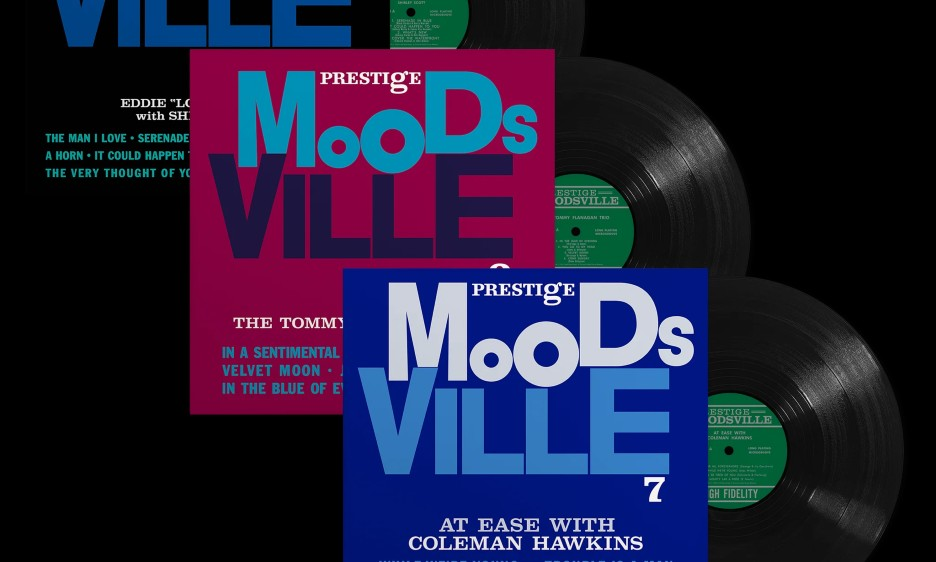
Craft Recordings is again partnering with Acoustic Sounds, the renowned audiophile company, to reissue a series of original Moodsville recordings (see https://www.allaboutjazz.com/new-reissue-series-offers-a-first-class-ticket-to-moodsville). Featuring all-analog (AAA) remastering from the original tapes by Matthew Lutthans, the albums are pressed on 180-gram vinyl and housed in sturdy tip-on jackets that reproduce all original art and liner notes. Additionally, every title in the series will be delivered to digital platforms in hi-resolution audio. The second trio of releases in November, 2026 include Moodsville Volume 9 (Prestige Records, 1960) by The Tommy Flanagan Trio, At Ease with Coleman Hawkins (Prestige Records, 1960) and Moodsville Volume 4 (Prestige Records, 1960) by Eddie "Lockjaw" Davis with Shirley Scott. As with other Craft/Acoustic Sounds reissue series, the sound quality is stunning and the pressing and packaging impeccable.
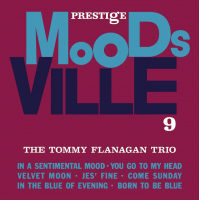 Moodsville Volume 9
Tommy Flanagan
Prestige Records
1960
Detroit pianist Tommy Flanagan was the quintessential in-demand sideman. He released few records as a leader, but the list of classic—and in some cases epochal—albums he played on is astonishing: John Coltrane's Giant Steps (Atlantic Records, 1960); Sonny Rollins's Saxophone Colossus (Prestige, 1956); and Roy Haynes's Out Of The Afternoon (Impulse!, 1962), to name but three. He also served for 13 years as Ella Fitzgerald's full-time accompanist, widely praised for the elegance of his playing. This quality is on display here, with Flanagan joined by bassist Tommy Potter and drummer Haynes on six ballads, including two by Duke Ellington, plus one original blues. Among the highlights of the set is the Coots/Gillespie standard "You Go to My Head," the intriguing harmonic ambiguity of which Flanagan ably exploits in his expansive treatment. Ellington's "Come Sunday," part of his "Black, Brown, and Beige" orchestral suite, is performed solo. Flanagan's playing is beautifully reverent, embodying the prayerful lyrics Ellington had added for Mahalia Jackson to sing on his recording of the suite (Black, Brown And Beige (Columbia Records, 1958)). Even if slightly out of the Moodsville bag, Flanagan's "Jes' Fine" is the best thing here. Haynes' impeccable swing on brushes and Potter's propulsive walking bass anchor Flanagan's down-home blues piano. It's perfect, and it encapsulates the absolute mastery of the soft-spoken pianist beloved by the many artists who called upon him.
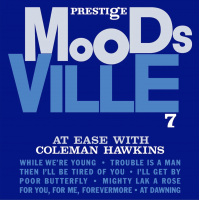 At Ease with Coleman Hawkins
Coleman Hawkins
Prestige Records
1960
Flanagan also features on this quartet album, which finds Hawkins plowing a furrow similar to that of The Hawk Relaxes (Prestige Records, 1961), released in the first tranche of Moodsville reissues. Although he could play aggressively, Hawkins' tone was huge and warm, with an emotional vibrato well suited to the kinds of ballads featured on Moodsville's albums. In fact, Miles Davis himself has been quoted as saying "When I heard Hawk, I learned to play ballads." Opener "For You, For Me, Forevermore," a lesser-known Gerwshin tune, exemplifies Hawkins' smoochy appeal, firmly supported by Flanagan's comping and drummer Osie Johnson's gently swinging brushes. "While We're Young" begins with a "Caravan"-like Latin beat but soon settles into a strolling swing ably underpinned by bassist Wendell Marshall, who was Jimmy Blanton's cousin. "Mighty Like a Rose" is a highlight for the way Hawkins caresses the melody, his tone round and firm but breathy at the edges, wonderfully captured by Van Gelder. It is all lovely, but at this point things are getting a bit monotonous as one slow ballad follows the next. The final two tracks offer a welcome respite. "Poor Butterfly," a 1916 tune inspired by Puccini's opera Madame Butterfly, picks up the swing a little. After a Hawkins solo that takes the melodic invention up a notch, the floor is given over to Flanagan, his solo enhanced by the unmistakable natural reverb of Van Gelder's high-ceilinged studio. Closer "I'll Get By" is a sprightly affair, with Johnson doubling up the time on his snare drum, Marshall strolling, and Hawkins eschewing a straight statement of the vocal melody in favor of a well-phrased swing-era jazz solo. Flanagan then takes things up further with his best solo on the album, bringing the proceedings to a rousing finish.
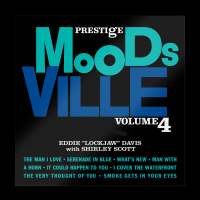 Moodsville Volume 4
Eddie "Lockjaw" Davis
Prestige Records
1960
Though Shirley Scott is best known as Philly's "Queen of the Organ," she is featured here on piano with Davis, whose big-boned bluesy tone was a highlight of the Red Garland Trio's Moodsville, Volume 1 (Prestige Records, 1960), reissued in the first batch from Craft/Acoustic Sounds. Davis and Scott were married at one point, and released 14 LPs together, including a well-known trilogy of "Eddie 'Lockjaw' Davis Cookbook" albums between 1958 and 1961. Here, the duo is supported by frequent companions bassist George Duvivier and drummer Arthur Edgehill, who is also known for his role on the classic Kenny Dorham live album 'Round About Midnight At The Cafe Bohemia (Blue Note Records, 1956). Scott opens up the Van Heusen / Burke standard "It Could Happen to You" with a pretty introduction before Davis embarks on a fluent solo that goes beyond the melody without ever losing sight of it. Scott's tasteful piano solo shows that she doesn't need electricity to command the listener's attention. The Green/Heyman tune "I Cover the Waterfront" is a highlight here, its blues feel providing fertile soil for Davis' brand of tenor gymnastics, aided again by that beautiful Van Gelder reverberation and by the sweet groove that Duvivier and Edgehill lock into. Also top-notch is the long take on "The Very Thought of You." The tune is well-suited to Davis' bluesy treatment and he plays his best solo on the record, followed by Scott, whose rolling piano takes on a touch of stride as she stays tight with Duvivier and Edgehill.
Moodsville's albums work perfectly well as beautiful background music for a romantic evening, but as the best tracks by masters such as Garland, Flanagan, Hawkins, Scott and Davis show, they can repay careful listening when these great players find an opening to let loose and turn up the swing.
Tracks and Personnel
Moodsville Volume 9Tracks: In the Blue of the Evening; You Go to My Head; Velvet Moon; Come Sunday; Born to be Blue; Jes' Fine; In a Sentimental Mood
Personnel: Tommy Flanagan: piano; Tommy Potter: bass; Roy Haynes: drums
At Ease With Coleman Hawkins
Tracks: For You, For Me, Forevermore; While We're Young; Then I'll Be Tired of You; Mighty Like a Rose; At Dawning; Trouble Is a Man; Poor Butterfly; I'll Get By
Personnel: Coleman Hawkins: tenor saxophone; Tommy Flanagan: piano; Wendell Marshall: bass; Osie Johnson: drums
Moodsville Volume 4
Tracks: Serenade in Blue; It Could Happen to You; What's New; I Cover the Waterfront; The Man I Love; Smoke Gets in Your Eyes; The Very Thought of You; Man With a Horn
Personnel: Eddie "Lockjaw" Davis: tenor saxophone; Shirley Scott: piano; George Duvivier: bass; Arthur Edgehill: drums
 FOLLOW Joshua Weiner
and get notified whenever a new article published.
Joshua Weiner enjoys his day job as a professor and dean but wishes it left more time for music.
Tags
PREVIOUS / NEXT

Become a Sustaining Member

Since 1995, All About Jazz has championed jazz as an art form and supported the musicians who create it. Over three decades, it has grown into one of the world's leading jazz resources, serving hundreds of thousands of readers, musicians, presenters and industry professionals each month.
Help Build the Future of All About Jazz
Your support helps us continue building All About Jazz for the next generation—expanding our editorial coverage, preserving jazz history, developing new community features and creating better ways to discover the music and the people behind it.
Become a sustaining member for as little as $20 per year and you'll immediately enjoy an ad-free experience along with access to subscriber features and future articles for a full year.
Together, we're not simply sustaining All About Jazz—we're building its future. Thank you for being part of the journey.