Home » Jazz Articles » Live Review » South African Freedom Day! McCoy Mrubata And Siyabulela ...
South African Freedom Day! McCoy Mrubata And Siyabulela With Special Guest Steve Turre at Dizzy's Club
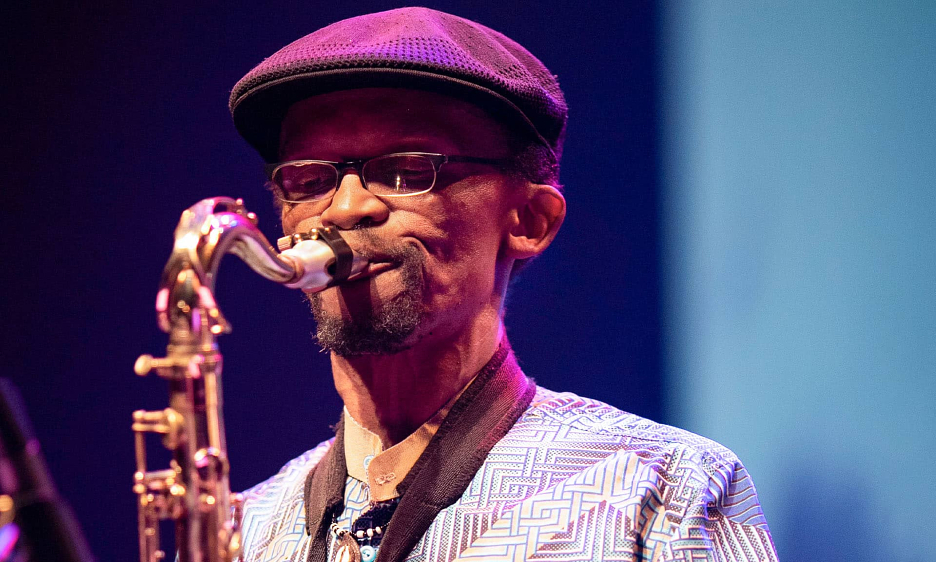
Apart from its power to blend the individual with the collective, jazz is also the language of protest...
Dizzy's Club
New York, NY
April 25, 2026
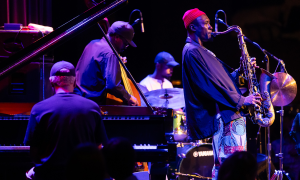
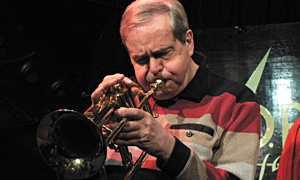
Jazz at Lincoln Center in New York was the venue for McCoy Mrubata and his band for the recent South Africa 'Freedom Day' celebrations hosted by Dizzy's Club. Mrubata, the 66-year-old South African jazz grandmaster, was on stage with his impressive band, Siyabulela. For this concert Siyabulela featured Steve Turre, one of the world's most eminent trombonists and seashellists, and pianist Helen Sung, who has previously toured with Herbie Hancock and the late Wayne Shorter.
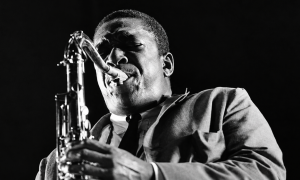
Dizzy's Club is a fitting venue to celebrate Freedom Day. Recalling Dizzy Gillespie's contemporary, Duke Ellington, JALC director Wynton Marsalis has often reminded us over the years that jazz is a "barometer of democracy." To him, jazz shows how harmony can be found by working together to create a more inclusive, kinder, and more equitable art form, but still make space for independence, individualism, and improvisation. Apart from its power to blend the individual with the collective, jazz is also the language of protest—think of Louis Armstrong's "(What Did I Do To Be So) Black and Blue" (1929), Billie Holiday's "Strange Fruit" (1939), John Coltrane's "Alabama" (1963), and Nina Simone's "Mississippi Goddam" (1964) in the United States; and in South Africa, Strike Vilakazi's "Meadowlands" (1956) and Abdullah Ibrahim's "Mannenberg" (1974) served the same purpose. Freedom of speech—including protest—is democracy's life blood and is so important that it can blot out all else,
Mrubata chose to open the evening with "June 16," honoring those lost to South African police action in the massacre in Soweto of school children on 16 June 1976. This is also the opening track of his album Children on the Frontline ( Makotopong Sound Studios, 2026). The date is remembered as Youth Day every year in South Africa, commemorating the children whose opposition of peaceful protest to the institutionalized acts of segregated education ended in bloodshed. This protest has been memorialized by Sam Nzima's iconic photograph of Hector Pieterson—one of the victims. Mrubata, born in Langa, was 16 years old at the time of the Soweto massacre, which coincidentally was the year that his music career started. Opening the evening with this performance was fitting, not least because it gave Zoe Obadia on alto saxophone the opportunity for a transcendent, spectral, wistful solo that recalled the events of that fateful day.
The band continued with "Jazzy Jive," from Mrubata's 2024 album Lullaby for Khayoyo (Ropeadope) This uplifting and refreshing vibe was delivered with red-meat precision, highlighting Mrubata's upbringing in his grandparents' house living between the chants and drums of sangomas and the emotional anthems of the Zion Church. "Jazzy Jive" brought audience members to their feet and gave Cedric Easton the chance to demonstrate his lean, propulsive, and disciplined drumbeats, a masterclass in saying more with less that lasted the whole evening.
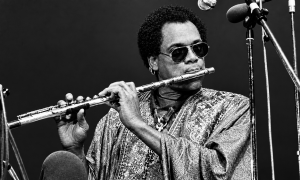
Performances of "Bra Ntemi's Special," "Shukuma (dedicated to Dr Moses Ngwenya"), and "Oh Yhini," in honor of Winston Mankunku Ngozi with whom Mrubata had studied, gave the audience a taste of the distinctive Cape Town jazz sound, accompanied by Turre's riveting shells performance and an impromptu appearance by award-winning South African jazz vocalist and Fulbright Scholar, Vuyo Sotashe. Mrubata's virtuosic performances on the penny whistle and the flute—an instrument he has played since 1978, thanks to his mother—filled the room with radiant and ethereal sound. In every number he was supported by Daniel Song's commanding delivery on the double bass, with its rich, woody tone.
The evening ended with the performance of an unnamed tune which has the working title: "Saxophone Shout." Exceptional solo performances by Tim Sullivan on the baritone saxophone brought to the fore the funk-feel of his style, including a saxophone "slap" reminiscent of the slap technique that has become common practice amongst bass guitarists. Every so often, Helen Sung's piano solos brought to mind Joe Sample, who has been described as having a "holistic sense of the piano." This applies just as well to Sung, whose brilliance pervaded the evening against the backdrop of the New York skyline.
Today, there are aspects of South Africa which are in a state of dangerous and impatient dysfunction. It struggles to free itself from the constraints imposed by apartheid—housing conditions that cannot inspire a young population to greatness, educational gaps that limit the capacity to dream, a lack of unqualified mutual respect amongst citizens that restricts the ambitions of neighbours. The capacity of jazz to blend, to unite, to include, shone through all evening and acted as a gentle reminder of what accomplishment can look like for the individual and the collective.
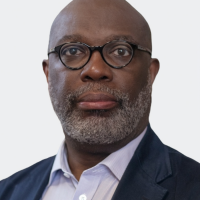 FOLLOW Kofi Adjepong-Boateng
and get notified whenever a new article published.
FOLLOW Kofi Adjepong-Boateng
and get notified whenever a new article published.
I grew up to Louis Armstrong, which says it all.
About McCoy Mrubata

Tags
PREVIOUS / NEXT
Become a Sustaining Member

Since 1995, All About Jazz has championed jazz as an art form and supported the musicians who create it. Over three decades, it has grown into one of the world's leading jazz resources, serving hundreds of thousands of readers, musicians, presenters and industry professionals each month.
Help Build the Future of All About Jazz
Your support helps us continue building All About Jazz for the next generation—expanding our editorial coverage, preserving jazz history, developing new community features and creating better ways to discover the music and the people behind it.
Become a sustaining member for as little as $20 per year and you'll immediately enjoy an ad-free experience along with access to subscriber features and future articles for a full year.
Together, we're not simply sustaining All About Jazz—we're building its future. Thank you for being part of the journey.