Home » Jazz Articles » Interview » Oscar Rossignoli: Expanding His Musical Journey
Oscar Rossignoli: Expanding His Musical Journey
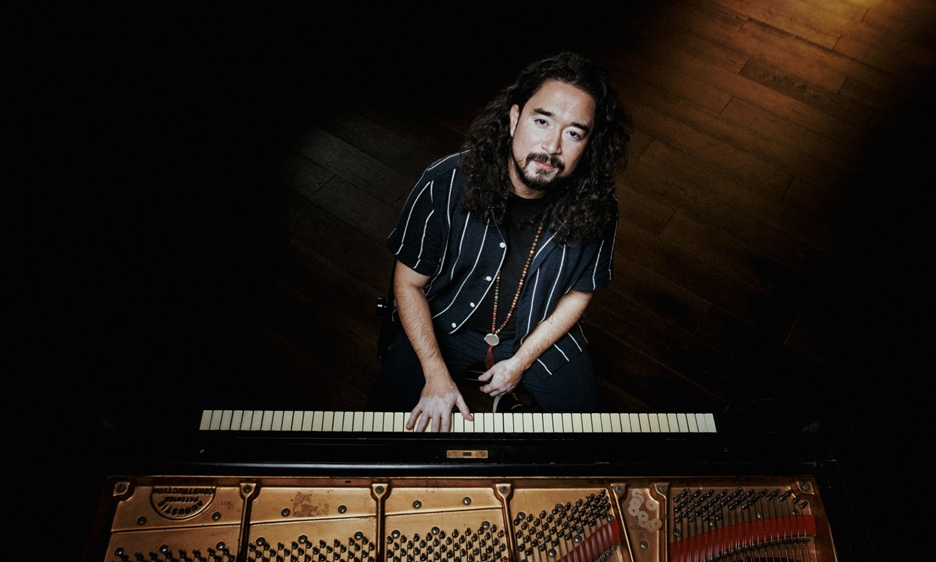
Courtesy Noe Cugny
Improvisation has been a tool to discover myself, to discover who I am and to break a lot of barriers.
The church services featured a band. His father, while not really a professional musician, was the bassist. Music was frequently played in his home in the city of San Pedro Sula, and it was a source of joy.
"The music that I was exposed to from the beginning was church music," said Rossignoli. "I remember being super attracted to the drums. That was my first fascination."
But when it came time to pick an instrument for the elementary school's music program, there was no drum set. "It was very classical-music oriented, a Western classical conservatory kind of place. So they didn't have a drum set," Rossignoli said. "One of the teachers told me, 'Well, the thing that we have closest to that is a piano.' It requires a lot of coordination, has a lot to do with rhythm and all that. So they gave me that instead of drums." He loved it and stuck with it.
Today, he is a pianist extraordinaire, with immense talent in both classical and jazz genres, and he composes some music that has elements of both.
Once Rossignoli played piano, he didn't look back. He was fueled by a desire to excel, but as he advanced, it wasn't jazz music that was his inspiration.
"I saw myself as becoming some kind of concert pianist, touring with orchestras and playing classical music all over the world," he said recently from New Orleans, where he has lived for many years.
In Honduras, there were a lot of musical activities in an elementary school that had a strong music program. "We would play in choirs," he says. "But it's not like New Orleans, for example, where I'm living now, where you see brass bands on every corner and people playing in the streets. It was not quite that."
"I was exposed to classical music. But I was also exposed to a lot of different styles because of church music," said the pianist. "Our church was very eclectic in that way, from hymns to modern gospel to more Hispanic pop music oriented. At first I watched orchestras and my peers, and then anything that was coming from the church."
There were very early signs that his desire to play—not just for fun, but as a professional-was something he was feeling at a very early age.
"It's funny, man, because there's documentation," he recalls. "My dad used to record all of us siblings when we were really little, when we started to say some words. He would record these conversations. And he asked me, 'What do you want to be when you grow up?' I was like five or six, and I said I wanted to be a player, meaning playing music."
As his playing progressed, he played at smaller events, but not for money. "It was more like church concerts, because I started playing keyboards at church when I was 12 or 13. You had concerts, presentations, going to radio and things like that. The school had every year concerts and presentations as well. The gigs came later on during my high school years, when I was starting to play for private events and weddings and things of that nature," Rossignoli said.
Also in high school, he discovered something on his instrument that would change his life: Improvisation.
"During my high school years, I remember one day I was walking down the hallway. My friends called me to a practice room. They were listening to this CD and they told me, 'Oscar, come check this out.' And I was blown away by what I was hearing. I couldn't believe it. So I asked them, 'You think I can get the sheet music for this online somewhere?' And some somebody said, 'No, man. He's improvising.' I just couldn't believe it. I was like, there's no way you can just make that stuff up in the moment, and from that moment on, I started trying, wanting to know more about improvisation.
"In my personal experience, improvisation has been a tool to discover myself, to discover who I am and to break a lot of barriers that we impose on ourselves growing up in the environment," he said with reverence. "We're always told what we should be or who we should be, and you should be like this, you should sound like that. To me, exploring music in this way with improvisation has opened up a whole different side of myself that I didn't know existed."
Classmates started him listening to jazz and his first influences were in the Latin and Afro-Cuban tradition. He listened to Chucho Valdes, Michel Camilo, Gonzalo Rubalcaba and others. "That was the music I was exposed to at first, before I knew what jazz was. I was drawn to that kind of energy and the act of improvisation, making your stuff your own thing. That seemed to me very interesting. So I started doing that at home. We were a group of friends at school, conservatory school (National School of Music Conservatory in Tegucigalpa), where we would stay after hours trying to figure out from recordings, and just to try to learn this music."
Once the path was clear, "I started listening to as many recordings from them as I could," he said. "It was a shift ... it changed things and changed my dynamic in education as well."
Among his peers as far back as elementary school, Rossignoli recalls hearing classmates talk about relatives or people they knew who were traveling to the U.S. for musical education and opportunities.
"I thought, 'Wow, that's really fascinating.' I heard people and friends and other older musicians say they would take that route, and I thought that was fun and very exciting."
When he read abut his musical heroes, he learned that many attended Berklee College of Music in Boston. That stuck in his mind and he made a visit to the school in 2009. He was so new to the U.S. that he didn't speak any English and needed a translator.
Still, Rossignoli's audition went well, and he got accepted. However, Berklee's tuition was not affordable. Some friends in Honduras suggested Louisiana State University because there were more opportunities. He followed through and got into the program on a scholarship.
"That's how I came (to the U.S.) in 2011," he says. At LSU, he found kindred musical spirits. He immersed himself in his studies and enjoyed learning from colleagues.
"When I got to LSU, I liked it, man. It was mainly very exciting for me to come to a new country, learning, having to learn the language, the challenges that you go through," said Rossignoli. "At the same time, I was enjoying getting to know people that were as passionate as I was with this kind of music, with improvisation, something that I didn't experience back at home. I learned a lot. I ended up studying classical music for my undergrad program there, while at the same time I was playing with big dance and jazz combos as part of my scholarship duties. So I was kind of keeping those two things at the same time."
An important event for Rossignoli was when, in 2012, the stellar bassist Rufus Reid came to LSU to conduct the school's big band.
"He was touring the States and presenting his compositions. He came to LSU. We had a fantastic week rehearsing with him at a concert. After the concert, he asked me, 'Hey, man, what are you doing this summer?' I said, 'I'm not doing anything. What's going on?' He recruited me—at the time, it was only by invitation—to the Ravinia Festival (in Chicago). The Steans Institute had musicians for a week-long program for jazz students. That was the first time that I got to spend a whole week with people my own age that were already better than me. They were coming from New York, from L.A., from all these places, to study music and learn from people like Rufus Reid, Danny Barker, Curtis Fuller. They were part of it at that time. So that was my first exposure to that environment."
He stayed in touch with the people he met there. Some were valuable connections. At LSU, there were great opportunities to play with outstanding jazz musicians. He stayed in Louisiana after earning his degree at LSU.
"Another important part of this journey for me was just moving to New Orleans, which I did, almost just as a vacation. I thought of New Orleans as my one sabbatical year before I started my master's degree. I said, 'Let me spend one year in New Orleans, getting to know the scene, playing some gigs, have some fun. And then I'll go somewhere else, like New York or Boston, or somewhere else for my master's degree.
"Little did I know the impact that New Orleans was going to have on me. New Orleans was going to be my most important influence after those days in Honduras. I started having some serious performances with some serious musicians, such as Herlin Riley, Jason Marsalis, percussionist Bill Summers. They were here in town, and I was getting calls that I think put me in the middle of this energy, this energetic Black American music world. It was the beginning of that level."
At LSU there were gigs in town but there were important master classes with people like Fred Hersch and Robert Glasper. "I got to see McCoy Tyner. I think it was an important time for me to just receive and get to listen to a lot of these people in person."
Rossignoli has now been in New Orleans for 12 years.
Among the things he did was join colleagues to become part of a cooperative jazz trio called Extended. His career trajectory was gradual. He played with musicians like Brian Blade, Nicholas Payton, Donald Harrison, Dee Dee Bridgewater and Victor Goines. And there have been appearances with the Louisiana Philharmonic Orchestra as well.
Extended, he said, "was more of an equal collaboration between these other musicians, bassist Matt Booth and drummer Brad Webb. We met in Baton Rouge. We'd been playing different gigs, so we knew each other as friends, and we just decided to get a put a trio together. We had a lot of original music that we thought was gonna fit. With that project we got to do four albums, and that was a good laboratory for me to try my own compositions with my own voice. It was a very exciting project."
Also, in 2021 he put out the album solo piano album Inertia (Rossignoli Music, 2021) consisting of original compositions and some arrangements of Honduran songs. It shows remarkable creativity, technique and sensitivity.
His work with Extended helped lay the groundwork for him to transition to a bandleader and musical director. "These projects taught me a lot about just having a band and conducting a band, and what is required to write music for a band that is a dedicated band," he said. Rossignoli did extended West Coast and Midwest tours, which he described as, "a good school for me to experience a touring life. We would just get in a van and drive for a long time to these places. That definitely was a teaching moment for me, in what it takes to have a band and keep it together and be creative."
In May 2026, Rossignoli was in the studio to record his first piano trio album under his name and direction. Mar Adentro (Euclid Jazz, 2026) is comprised of seven songs. Bassist Lex Warshawsky and drummer Peter Varnado round out the trio.
"It's mainly my music. It's almost biographical, at least to me, because a lot of the pieces in this album are either brand new or some of them I had written 12 years ago, something like that. Those pieces have gone through a transformation over the years," he said. "These are pieces that I have performed with my friends for different bands and different projects in town. But I never had a chance to actually record them. So it almost tells the story of my time here in the U.S."
Rossignoli says a short documentary on the making of the recording is also in the works, done by a friend in New Orleans. "Marion Hill is a fantastic filmmaker, and we have worked on different projects here in New Orleans, either her projects or my musical projects ... I wanted Marion to be the person to do it, because I love her aesthetics and her vision. That is definitely something that's gonna come out when the album is out as well."
The pianist says he is quite self-critical, but he feels good about his Mar Adentro creation.
"Usually, especially among jazz musicians, there's this constant, never-ending perfectionism. We always need to practice more. We always need to improve. Which is true. This is what's beautiful about this journey is that you never end. You always can improve and branch out to other avenues. I tend to be really tough on myself and be a perfectionist. But this project, this album, the way it came out, I feel very comfortable about everybody's sound and how the trio came together. Mainly because even though it's a studio album, it reflects really well how we play in a live setting. For me, having an audience in the room changes the dynamic completely, makes us play differently. Everything can go in different ways when you are in the live setting. But I think this album captures our sound truthfully."
Once the music is released, Rossignoli is hoping to tour.
"We're working on West Coast and East Coast performance opportunities. My idea for this band is definitely to take it out many places. One of my biggest dreams is to be able to take my music all over the world. To different stages, different cultures. And to also be impacted by different kinds of cultures and people that we encounter. Definitely a tour is coming up."
But there's no rest for the weary. "We are so excited about this project that I'm already thinking about the next one. I feel like the goal is always to improve and to grow in whatever we're doing," he says. "Of course I would love to record more music, to release more albums, and maybe collaborate with more people. I'm hoping that this kind of endeavor takes us to different networks, that our network kind of expands, so I can collaborate with other musicians from other places. And be able to travel with my musicians and meet different people. I want to do what I'm doing, but in a larger way, if that makes sense."
Rossignoli plans to stay busy, continuing to make music and find creative outlets. But he also relishes peaceful times for reading and spending quality time with his wife and dog. Quiet pleasures.
"I'm filming and recording and producing, I'm writing. All those are big goals of mine," he said. On his journey, he plans to, he said, "keep an open mind and keep a learning attitude., an attitude of, Oh, I haven't reached anything. I'm still growing, and there's still more to explore. Wherever that takes me—to different stages all over the world, or to different divisions in different levels of life—that would be fantastic."
 FOLLOW R.J. DeLuke
and get notified whenever a new article published.
FOLLOW R.J. DeLuke
and get notified whenever a new article published.
R.J. DeLuke is an indefatigable jazz fan and arbiter elegantiarum who aspires to ultimate hipness; also an upstate NY freelance writer for various media.
About Oscar Rossignoli

Tags
PREVIOUS / NEXT

Become a Sustaining Member

Since 1995, All About Jazz has championed jazz as an art form and supported the musicians who create it. Over three decades, it has grown into one of the world's leading jazz resources, serving hundreds of thousands of readers, musicians, presenters and industry professionals each month.
Help Build the Future of All About Jazz
Your support helps us continue building All About Jazz for the next generation—expanding our editorial coverage, preserving jazz history, developing new community features and creating better ways to discover the music and the people behind it.
Become a sustaining member for as little as $20 per year and you'll immediately enjoy an ad-free experience along with access to subscriber features and future articles for a full year.
Together, we're not simply sustaining All About Jazz—we're building its future. Thank you for being part of the journey.