Home » Jazz Articles » Catching Up With » Michael League: Lighting the Spark of Snarky Puppy
Michael League: Lighting the Spark of Snarky Puppy
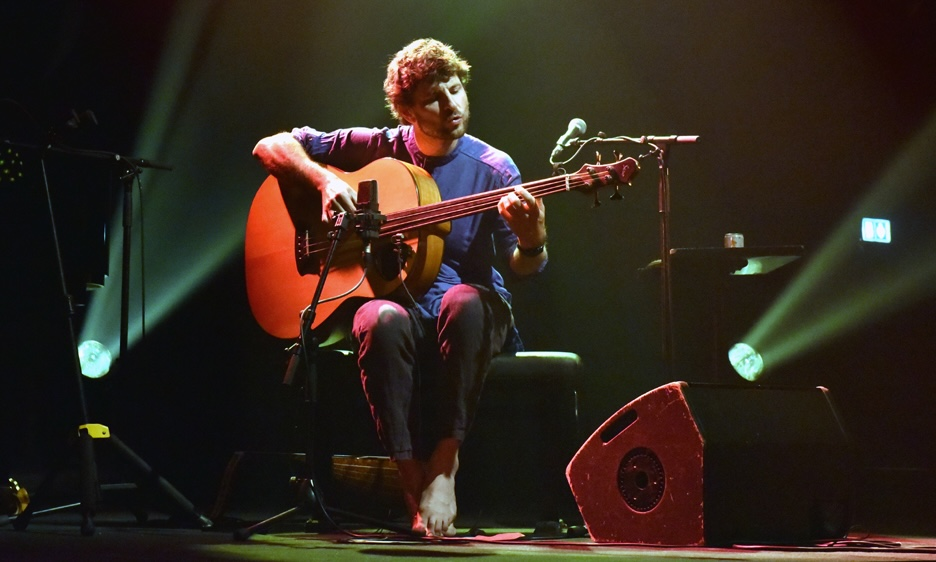
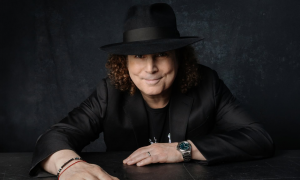
Courtesy Flaroulandie
When the [Metropole Orkest] is playing with us, it's rich. The textures are much more varied. The dynamic range is much bigger. It's more powerful, but also softer. It's really incredible. ...But when they're not there, [Snarky Puppy] can do whatever we want spontaneously in the middle of a song.
—Michael League
As much as the ensemble is referred to as a large family (where guests are always welcome), one member is the spark for Snarky Puppy's creativity. During the 2026 Spring-to-Winter tour across forty venues in the U.S and Europe, group founder and leader Michael League shared the inside story of producing the ambitious album, Somni (GroundUP Music, 2025), with the Metropole Orkest. He also revealed the secrets to creative re-invention, spoke about life on the road and offered some advice for wanna-be bassists.
The Making Of Somni
All About Jazz: Welcome, Michael. Snarky Puppy's album, Somni, is highly ambitious and co-features the Metropole Orkest. What was it like putting the music and the logistics together?Michael League: It was the biggest project we've ever done, for sure. We had 72 people playing, a lighting crew and something like 12 cameras. And, we were doing the whole recorded-before-an-audience-in-the-studio thing. To tape the project, we played in front of 300 listeners per set, two sets per night, for several nights.
AAJ: How difficult was it to pull off?
ML: It was massive, but ironically it felt like the least stressful Snarky Puppy record we ever made. Part of it was that we've had lots of experience with live recording. It was also helpful that the Metropole Orkest have an incredible organization in place. The responsibilities were shared.
Usually, I'm writing music until the last second before hitting the studio. And in the deeper past, we didn't have any money for production, so everything was held together by scotch tape. Somni may be the first recording project that I ever genuinely enjoyed because I wasn't stressed.
AAJ: Who wrote and arranged the music?
ML: I wrote all the music, but the arrangements were done by Jules Buckley, Sam Gale, Jochen Neuffer and myself over a three-day period in Berlin. The four of us got together in a studio and structured a kind of old-school arranging factory. We would assign specific tasks to certain people and simultaneously everyone would be working and I'd bounce around between rooms and give feedback.
I had developed some of the arranging before meeting up, as I felt very strongly about what needed to be specific. But, there was a lot that was not arranged beforehand; it was intentionally left open so that those three guys could show their personalities and do what they do best over.
AAJ: Once you had rehearsed Snarky Puppy with the Metropole, how many takes were needed to get all of the songs in the can?
ML: We taped the material before a live audience for two sets per night. Each song was recorded five to six times, but it wasn't consecutive takes. If we didn't like a version of a song that we did that night, well, hopefully the next show went better.
AAJ: How unique is Metropole Orkest as a classical/jazz/pop-blending orchestra?
ML: I think most people would say that as established orchestras go, the Metropole is the most versatile and the most comfortable playing in modern styles. They're most able to groove with their guest collaborators.
AAJ: I have read that the pieces on Somni take the band and its fans in an evolving direction, inspired more by the imaginary and subconscious than prior albums.
ML: That's one way of saying it. Some of songs are coming from the dream world. I mean, certain songs have more specific meaning than others, and that meaning is baked into the composition. For example, "As You Are But Not As You Were" is about face-shifting, which happens a lot when I dream, where someone's appearance will change over and over, but their identity remains the same. I tried to express that by writing certain motifs and moving them around the orchestra and perpetually having those motifs going. So there's some material that's highly specific, and some stuff that's more just like a feeling. When you're in the world of instrumental music, assigning meaning or naming pieces can be very literal or very abstract.
AAM: You're taking the album on the road with your traditional band format. Were there challenges in trying to down-orchestrate the large, soundscape arrangements?
ML: They actually adapted really quickly and easily; this was intentional. We didn't want to have the problem of touring without the orchestra and being made to perform music purely from older albums. So I was very conscious about writing music that would fit either format.
It's two very different kinds of gigs. When the orchestra is playing with us, it's rich. The textures are much more varied. The dynamic range is much bigger. It's more powerful, but also softer. It's really incredible. But when they're not there, we can do whatever we want spontaneously in the middle of a song. So I like both situations.
How Snarky Puppy Operates
AAJ: The collective of musicians that are active playing or who are on call for Snarky Puppy has been described as a family. To what degree is the band democratic versus how much do you play final arbiter of direction?ML: I would say that everyone's opinion is always welcome. I would add that a voice is almost always heard because the members of the band have very strong personalities and very strong artistic visions. There's a lot of trust and precedent for people expressing themselves. So everybody definitely makes themselves heard. In the end, I do make final decisions, but they're going to be in the best interests of the whole band. Each player has their own projects and understands what that's like. With that said, in 23 years I can't remember a time where I went against the majority in a decision.
AAJ: In terms of the guest performers who have played with Snarky Puppy, do you have favorites?
ML: Oh, there are many, many. I mean, I would never want to say that there's a favorite. Many—most—of our guests have helped create special moments. But if you ask me for a few that come to mind, Lalah Hathaway's performance was very special. And our collaboration with the Metropole has been one of the most fruitful and one of the most inspiring because we've been working with them on and off for the last 11 years now. So it's always like hanging out with an old friend when we play with them.
Creative Re-invention
AAJ: How does the band keep re-inventing itself with each project?ML: I would like to think that with every record we've done our best to push forward and try new things and explore without losing our sound. So sure, Somni is with the same instrumentation, more or less, as Sylva (Impulse! Records, 2015) ten years earlier. But I would like to think that musically it's very, very different. Compositionally for sure, but also orchestrationally. That was a conscious decision involving four arrangers, whereas Sylva was really done by just me and Jules. I guess I'm glad that it was done that way, in a sense, because I did it and I know what that sounds like now. But I just feel like the sound we got with Somni was so much richer having had the input of four different arrangers who were really given the freedom to express themselves. I can't say enough about how grateful I am for their contributions to the record, because I think it was massive.
AAJ: You've done some solo work and duo work in the last couple of years, and there is a synthesizer wall of sound, as well as a global percussion sound, to that. How did you accomplish that?
ML: I mean, mastering an instrument is very different from understanding how to record it well for effect. The world is full of producers who would never play drum set or congas or banjo on a live gig for 90 minutes, but they really understand how to sit down and make those instruments serve a song.
In the context of my solo record, So Many Me (GroundUp Music, 2021), I wanted to create some sounds and textures that most producers, western or otherwise, wouldn't. I wanted to create grooves that from a conceptual place were coming more from the western world, but from a sonic place were coming from all around the world. So I used a lot of Moroccan percussion, a lot of Turkish percussion. Also, synths and guitars. And I was using a lot of weird instruments, a fretless baritone electric guitar and strange pedals. I wanted to see what I was capable of when using instruments that are normally played in a folkloric context, because in the end this is a pop album.
AAJ: On the current tour, are you playing some of the most popular songs from earlier releases?
ML: Occasionally. We change the set every night. On some gigs, we'll play the whole new record, Somni, and nothing else. On some gigs, we will do 50-60% Somni and then 50% songs from other records. It's different every night. I don't like for the band to feel at 5 or 6 p.m. that they know what they're going to play at 9 p.m.
AAJ: Is it still fun when an audience yells for a classic song like "Lingus" or "Shofukan?"
ML: Honestly, no. I only get joy out of playing a song if I feel like playing it. I think the band can get pretty deflated when we're doing something out of duty. It's just not in the fabric of our group. I think there have been times where people have chanted the name of a song for 30 minutes and we just didn't play it because we didn't want to.
The Snarky "Army"
ML: People are Snarky Puppy fans not because of "Lingus." That's not why they go to a gig. Maybe "Lingus" is how they discovered the band, but I think people who become fans of the group are fans of the whole mentality. And that mentality is to constantly change and explore. Also, we've written a lot of songs. I think people are there for the portfolio of songs, not any one song.AAJ: Do you think there's a demographic group out there that doesn't know about your music still and would fall all over it?
ML: I feel like we've reached most of the people in this world that are predisposed to liking us. We have a lot of fans who are jazz heads. We have a lot of fans who are into metal and prog. We have a lot of fans who are into indie rock and folk. We have a lot of classical fans. We've reached a lot of people. As time goes on, it's very interesting because I notice our fan base getting younger, which is a great sign for us. The first few rows of the gigs now are almost always under 25, which is interesting, even if the majority of the audience is older.
Finding Joy (as a Bassist)
AAJ: Does the band have any time for fun and to de-stress when it's on the road?ML: We make time for it. A couple of the guys play tennis while on the road. The band has touring down to an art, because we've been doing it since 2004, 2005. So we understand how to enjoy ourselves, even when the travel schedule is rigorous or when things are stressful. We've gone through pretty much anything a band can go through, so that we have this kind of calmness when we're on the road.
AAJ: I read that you switched from guitar to bass in later high school years then continued with it in college. Early on, did you encounter the same obstacles that other guitar-to-bass converts have had to face: low expectations for musicality, simple song parts, considered a supporting instrument?
ML: No, I enjoyed every second of taking up the bass. As soon as I was asked to switch to bass, I really got into it. And, the influence of my guitar playing still lasts. I approach the bass from a harmonic perspective—chord notes and intervals—especially when I'm improvising. I think my approach has maybe created more of a niche for myself.
AAJ: Michael, thanks for your insights.
 FOLLOW Scott Lichtman
and get notified whenever a new article published.
FOLLOW Scott Lichtman
and get notified whenever a new article published.
Jazz/fusion keyboardist & autograph collector in Stamford CT.
About Snarky Puppy

Tags
PREVIOUS / NEXT

Snarky Puppy Concerts
Become a Sustaining Member

Since 1995, All About Jazz has championed jazz as an art form and supported the musicians who create it. Over three decades, it has grown into one of the world's leading jazz resources, serving hundreds of thousands of readers, musicians, presenters and industry professionals each month.
Help Build the Future of All About Jazz
Your support helps us continue building All About Jazz for the next generation—expanding our editorial coverage, preserving jazz history, developing new community features and creating better ways to discover the music and the people behind it.
Become a sustaining member for as little as $20 per year and you'll immediately enjoy an ad-free experience along with access to subscriber features and future articles for a full year.
Together, we're not simply sustaining All About Jazz—we're building its future. Thank you for being part of the journey.