Home » Jazz Articles » Live Review » Marilyn Crispell at the National Jazz Museum in Harlem
Marilyn Crispell at the National Jazz Museum in Harlem
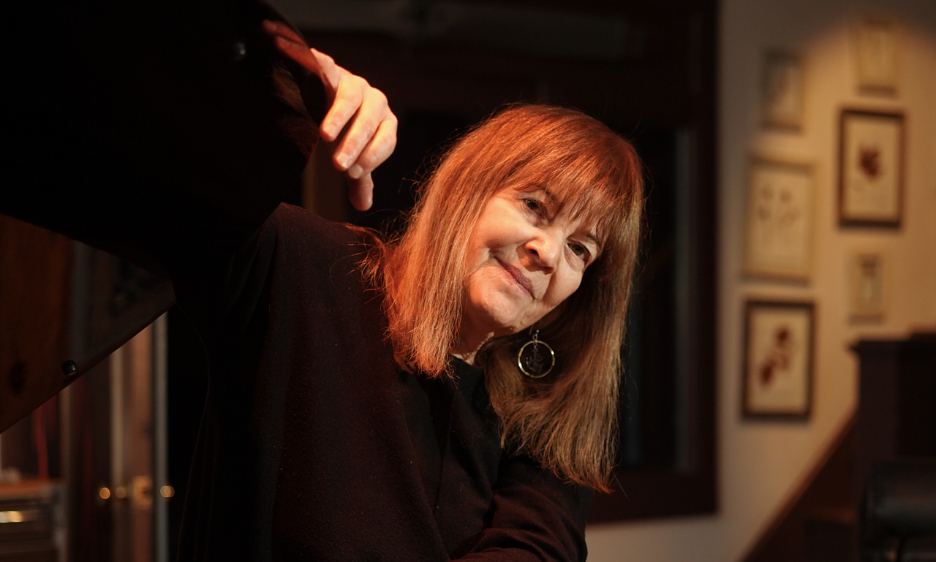
Courtesy Marilyn Crispell
Much like Cecil Taylor – a key influence – late in his career, Crispell appears to have entered a new and lyrical stage of her piano playing.
The National Jazz Museum in Harlem
New York, NY
April 16, 2026
What a time this is for Marilyn Crispell. Now 79, the stalwart of avant-garde piano was honored as a 2025 National Endowment of Arts Jazz Master and received a Jazz Legacies Fellowship from the Jazz Foundation of America this February. And her artistry is more than intact—it's evolving and diversifying, as her solo concert in New York last week made brilliantly clear.
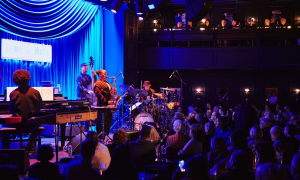
Performing on Thursday afternoon at the National Jazz Museum of Harlem, Crispell's playing was as varied and satisfying as it's ever been. In the first segment of the performance alone, she alternated between slow introspection—in sections that sometimes conjured up Keith Jarrett's more tuneful solo passages—and mid-tempo, yet still largely melodic, explorations in which rippling runs were resolved with runs and repeating figures from Crispell's left hand. Nearly twenty minutes in, a rolling dissonant episode segued into a gorgeous, gospelish conclusion. It was all beautifully constructed, and never lulled.
Next came the first of two well-chosen non-originals: a fascinating distillation of "Broken Shadows," an overlooked gem from the canon of Ornette Coleman. Crispell pared away the clang and clatter of Coleman's 1969 recording—made with Dewey Redman, Charlie Haden, and Denardo Coleman. In her solo rendition, rolling support from Crispell's left hand framed unadorned playing of the piece's compelling melody—a Coleman earworm, comparatively speaking. After some improvisatory variations on the theme, still with that rolling undercurrent, and a restatement of the melody, it was all over in six or so riveting minutes.
Next came the set segment that came closest to "energy music," to use Crispell's own term for her powerful piano work of the 1980s and 1990s. Over rumbling chords, Crispell piled cascades of dissonant, repeating passages and solos. Yet her playing was more languid than at its percussive peak on such albums as the solo The Woodstock Concert (1995) (Les Disques Victo, 1996). And, after a pause, Crispell again settled back into reflective and harmonically soothing territory.
Then came "After the Rain," the set's second non-original. As with the Coleman composition, Crispell framed the melody of the John Coltrane ballad in rolling chords and ringing renditions of its sweet melody.
As did Cecil Taylor, one of her key influences, late in his career, Crispell appears to have entered a late, lyrical stage to her artistry. If that's made her playing less exciting, and perhaps less popular with fans of noisy, no-holds-barred improvisation, it's also made it more accessible and, in the main, more touching.
Among the triumphs of this recent phase to Crispell's career are two quietly radiant releases on ECM Records as part of Trio Tapestry, her project with saxophonist Joe Lovano and percussionist Carmen Castaldi. The trio plays the Village Vanguard from April 28 to May 3, and headlines—outdoors and for free—the Jersey City Jazz Festival on May 30.
A link to the National Jazz Museum of Harlem's video of Crispell's concert is shown below.
 FOLLOW Paul Reynolds
and get notified whenever a new article published.
FOLLOW Paul Reynolds
and get notified whenever a new article published.
Journalist and programmer in jazz, folk, country and other musics
About Marilyn Crispell

Tags
PREVIOUS / NEXT
Become a Sustaining Member

Since 1995, All About Jazz has championed jazz as an art form and supported the musicians who create it. Over three decades, it has grown into one of the world's leading jazz resources, serving hundreds of thousands of readers, musicians, presenters and industry professionals each month.
Help Build the Future of All About Jazz
Your support helps us continue building All About Jazz for the next generation—expanding our editorial coverage, preserving jazz history, developing new community features and creating better ways to discover the music and the people behind it.
Become a sustaining member for as little as $20 per year and you'll immediately enjoy an ad-free experience along with access to subscriber features and future articles for a full year.
Together, we're not simply sustaining All About Jazz—we're building its future. Thank you for being part of the journey.