Home » Jazz Articles » Interview » Mariana Bondarenko and the Work of Sustaining Ukrainian ...
Mariana Bondarenko and the Work of Sustaining Ukrainian Music Culture
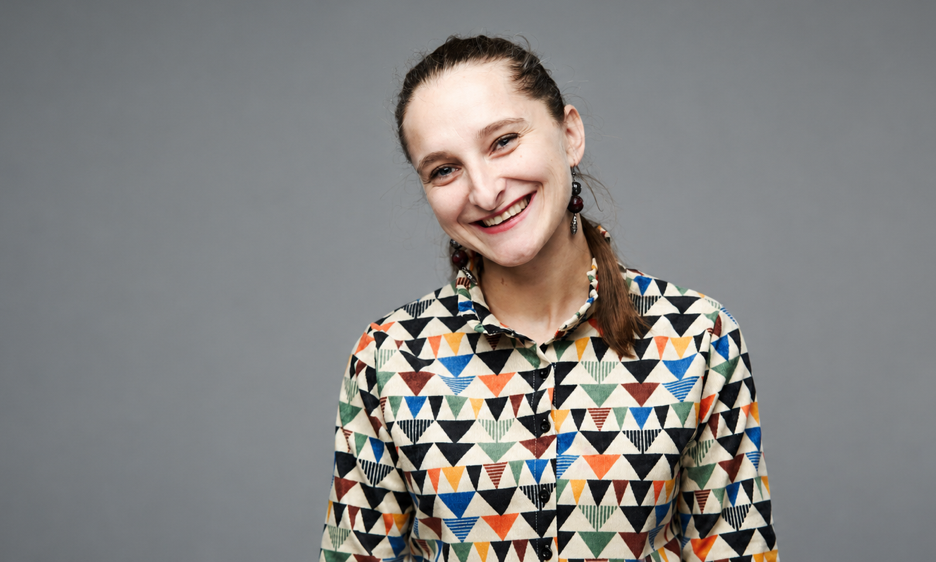
What many people outside Ukraine still do not fully understand is that Ukraine today is simultaneously a country at war and a functioning cultural ecosystem. International media understandably focuses on military developments, destruction, and geopolitics, but behind those headlines there are thousands of musicians, educators, festival organizers, journalists, curators, and cultural managers who continue working every day.
—Mariana Bondarenko
Somewhere in the middle of that whirlwind, I had the opportunity to meet Mariana Bondarenko from the Ukrainian Institute. What began as a professional conversation very quickly became something more personal, grounded, and emotionally affecting. The realities she described—the challenges facing Ukrainian artists, the efforts being made to preserve cultural identity, and the determination of musicians and arts organizations continuing to work under unimaginably difficult conditions—stayed with me long after the conversation ended. Equally powerful was the spirit underneath it all: not simply survival, but an active commitment to protecting culture, supporting younger generations, and continuing to create meaning and connection through music and the arts in the middle of war.
What Mariana shared about the realities facing Ukrainian artists, cultural organizations, educators, and musicians during the ongoing war was deeply moving. Equally powerful was hearing about the extraordinary determination, resilience, and creativity being demonstrated by the Ukrainian cultural community under circumstances that many of us outside the region can barely imagine. The work being done to preserve cultural identity, sustain artistic life, support young musicians, and maintain human connection through music and the arts is not only important—it is profoundly inspiring.
I found myself leaving these conversations thinking not only about Ukraine, but about how fragile and important cultural ecosystems really are everywhere. It became impossible not to reflect on the deeper role music, art, and culture play in holding communities together during periods of uncertainty and disruption.
Michael Ricci and I both strongly believe that supporting Ukrainian cultural initiatives is not simply an act of solidarity, but an investment in the preservation of artistic identity, historical memory, human dignity, and international cultural dialogue itself. As All About Jazz Media continues to grow internationally, we look forward to developing future collaborations and supporting various initiatives connected to Ukrainian artists, educators, institutions, and cultural programs wherever possible.
Introducing Mariana Bondarenko
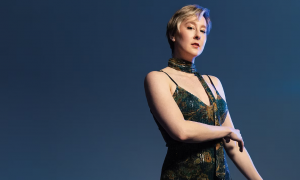
I'm honored to introduce Mariana Bondarenko here and grateful for her willingness to participate in this conversation. Mariana works at the intersection of international cultural outreach, artistic collaboration, and helping support and sustain Ukrainian creative communities during an extraordinarily difficult and defining period in modern Ukrainian history. As Head of Music Programs at the Ukrainian Institute, her work extends far beyond administration or cultural representation. It involves helping Ukrainian artists remain visible, connected, supported, and able to continue creating, studying, collaborating, and building cultural continuity under extraordinarily difficult circumstances.Through initiatives involving jazz, contemporary music, international exchange, artist mobility, education, and cultural advocacy, Mariana operates inside a space where music and culture are not simply artistic pursuits, but part of a much larger human effort to preserve identity, memory, connection, and creative life itself.
What follows is not simply a conversation about Ukraine or even about music alone, but a broader reflection on artistic identity, cultural continuity, responsibility, collaboration, and the role art continues to play in helping people remain connected to meaning, identity, and one another during periods of profound uncertainty.
Beginning the Conversation
All About Jazz: Mariana, first of all, thank you again for taking the time to do this and for being willing to share some of your thoughts and experiences with us. I really appreciated our conversations in Bremen, and I've been looking forward to continuing them in a more thoughtful way here. A lot of what we spoke about stayed with me long after the event ended. In my work helping develop All About Jazz Media, I spend a great deal of time thinking about the larger ecosystem surrounding artists, creative communities, education, media, collaboration, and how we create healthier and more sustainable support structures for meaningful artistic work. Many of the things you described about what musicians and cultural organizations in Ukraine are navigating—and the ways people are continuing to build, protect, and support creative life under those conditions—felt both deeply moving and profoundly important to me.I'd love to begin by asking you a little bit about what you're seeing and experiencing from inside the work itself.
From where you sit working directly with artists, presenters, educators, and cultural organizations every day, what do you think people outside Ukraine still are not fully understanding about what's happening inside the country right now?
Mariana Bondarenko: What many people outside Ukraine still do not fully understand is that Ukraine today is simultaneously a country at war and a functioning cultural ecosystem. International media understandably focuses on military developments, destruction, and geopolitics, but behind those headlines there are thousands of musicians, educators, festival organizers, journalists, curators, and cultural managers who continue working every day.
For artists, air raid sirens have become part of the creative process. Concerts are interrupted and moved to shelters. Tours are planned around security considerations. Musicians travel abroad to represent Ukraine while constantly worrying about family members at home. Yet cultural life continues. Festivals take place—in new formats, smaller line-ups and with less international acts, new albums are released, educational programs are running, and audiences keep showing up.
AAJ: What has surprised you most personally over the last few years?
MB: What has surprised me most is not resilience itself—Ukrainians have always been resilient—but the scale of creativity that has emerged under these conditions. Instead of cultural life shrinking, in many ways it has become more focused, more courageous, and more internationally connected than before. A lot of new initiatives have appeared, new festivals, new concert venues. If we look into civil society, more and more NGOs appear who reply to the concrete cultural needs—music managers network Porichka, Ukrainian Jazz Network, Street Jams, Fusion Jams, CMYK etc. Ukraine's civil society also played a pivotal role in preserving the country's musical heritage. Private initiatives and non-governmental organizations displayed extraordinary mobility, cooperation, and resourcefulness, ensuring the sustainability of the Ukrainian music industry.
AAJ: As musicians and artists living outside Ukraine, I think many of us instinctively wonder how creative life even continues under these conditions. What role have music and the arts actually been playing inside Ukrainian society during this period?
MB: Music has become both a source of emotional survival and a form of civic engagement. It helps people process grief, fear, uncertainty, and loss, but it also creates moments of connection and normalcy.
I have attended concerts where audiences moved to shelters during air raids and then returned to the hall to continue listening. These moments fundamentally change the meaning of performance. A concert is no longer simply entertainment—it becomes a statement that life, culture, and human connection continue despite the war.
In jazz particularly, improvisation has acquired new meaning. The ability to respond to uncertainty, to listen, adapt, and create collectively mirrors the reality Ukrainians experience every day. Many musicians describe performance today as an act of resilience rather than merely artistic expression.
AAJ: Have there been moments where music seemed to create a kind of emotional continuity or normalcy in otherwise unstable situations?
MB: Music also serves a powerful cultural diplomacy resource: it provides a bridge between Ukraine and the world. Ukrainian artists touring internationally are not only performing; they are sharing lived experiences, building advocacy for Ukraine, and creating spaces for dialogue that politics alone often cannot achieve.
AAJ: One of the things I've been especially curious about is whether difficult conditions sometimes change the music itself—not just emotionally, but creatively and structurally. Are you hearing or seeing changes in Ukrainian music, collaboration, or artistic language that feel connected to this moment?
MB: The war has profoundly influenced Ukrainian artistic language. We are witnessing not only emotional responses but also entirely new creative approaches.
Many composers and improvisers work directly with sounds associated with war. Some incorporate field recordings of sirens, explosions, military communications, or urban soundscapes transformed by the war. Others explore themes of memory, displacement, and collective trauma through new compositional forms.
AAJ: Are younger musicians approaching creativity differently right now?
MB: Andrii Pokaz from Odesa uses the sounds of sirens in their release "Song of Sirens," Chernihiv musicians developed a whole program including the sounds of the war in their program "Music under siege."
Another example—the Ukrainian duo Hyphen Dash recorded their album Basement 626 in the basement of a soldier from the 93rd Mechanized Brigade "Kholodnyi Yar" in Kramatorsk. The music was entirely improvised on site, without pre-composed material. The recording captures not only a musical performance but also a particular wartime reality and atmosphere.
At the same time, younger artists are increasingly comfortable moving between genres. Jazz, electronic music, folk traditions, contemporary classical music, sound art, and multimedia practices are intersecting in ways that would have seemed unusual a decade ago. Limitations have often become catalysts for innovation. One of the shining examples is the Ukrainian crossover instrumental quartet D'Electro that was founded in 2022 in Kyiv. The band consists of four well-known Ukrainian musicians: Dennis Adu (trumpet, flugelhorn, effects), Oleksandr Malyshev (keyboards), Rodion Ivanov (keyboards), and Artur Frolov (drums). Each of these musicians is known for their own projects and participation in many Ukrainian and international musical events. The goal of creating the quartet is to experiment with combining different genres, from jazz to hip hop and electronics.
AAJ: From your perspective, what are the most important cultural and artistic realities Ukrainian artists and organizations are trying to preserve right now?
MB: The war has made cultural preservation an urgent matter of survival rather than simply heritage management.
Russia's aggression is not only directed against territory; it is also directed against Ukrainian identity. Since the beginning of the full-scale invasion, more than 1,500 cultural heritage sites and more than 2,400 cultural infrastructure facilities have been damaged or destroyed. At the same time, hundreds of artists and cultural workers were tortured and murdered.
This is why preserving memory, language, music, literature, and artistic traditions has become such a priority. Long before the full-scale invasion, following Russia's occupation of Crimea and parts of the Donbas in 2014, many Ukrainian musicians began consciously reconnecting with local traditions and exploring the cultural heritage of different regions of Ukraine. This led to a renewed interest in folk music, traditional polyphony, and previously overlooked cultural legacies, including those of the Crimean Tatars. One of the most significant projects in this process was "QIRIM," created by the Ukrainian singer Jamala in collaboration with the National Symphony Orchestra of Ukraine. Through new interpretations of traditional Crimean Tatar songs, the project restores and celebrates a cultural heritage that Russia has sought to marginalize and erase.
AAJ: What parts of Ukrainian cultural identity feel especially urgent to protect?
MB: Preserving cultural memory also means remembering the artists whose lives and creative journeys were cut short by the war. In 2024, the Ukrainian Institute published Serhii Artemov In Memoriam, dedicated to the talented Ukrainian jazz double-bassist, band leader and composer who was killed while defending Ukraine. The publication documents his artistic legacy, personal story, and contribution to Ukrainian jazz, ensuring that his voice remains part of Ukraine's cultural memory. For us, such initiatives are not only acts of remembrance but also acts of resistance against the destruction of Ukrainian culture and identity. Every preserved composition, every archived recording, every documented artistic biography becomes a way of safeguarding what Russia is attempting to erase. Also his community initiated a festival to honor his memory: Artemov Jazz Fest which is held each year in Dnipro around his birth date, 12th October, and each band that participated in the festival has to write their own interpretation on one of Serhii's works.
AAJ: How conscious are Ukrainian musicians today about redefining and strengthening a distinctly Ukrainian artistic voice separate from long-standing Russian cultural framing or influence?
MB: For this question, I would recommend reframing it to avoid suggesting that Ukrainian artists are only now separating themselves from Russia. Historically, Ukrainian artists have always been Ukrainian; the issue is that Russian imperial and Soviet cultural policies systematically appropriated Ukrainian cultural achievements and presented them to the world as part of a broader "Russian culture."
I would actually challenge the premise of this question slightly. Ukrainian artists have never perceived themselves as Russian. What we are witnessing today is not a separation from Russian culture, but rather the restoration of visibility to Ukrainian voices that were often overshadowed, appropriated, or misrepresented by Russian imperial and Soviet narratives.
For centuries, Russia claimed numerous Ukrainian artists, composers, writers, and cultural figures as part of its own cultural heritage, while suppressing the distinct development of Ukrainian culture. As a result, international audiences often encountered Ukrainian artistic achievements through a Russian framework, sometimes without even realizing their Ukrainian origins.
AAJ: Do you feel this process was already underway before the war, or has the war accelerated it?
MB: The full-scale invasion did not initiate this process of reclaiming Ukrainian cultural identity, but it accelerated global awareness of it. Today, musicians, scholars, and cultural institutions are actively recovering forgotten histories, restoring the names of Ukrainian composers and artists to their rightful place, and presenting Ukrainian culture on its own terms.
In jazz, this process is particularly exciting. Ukrainian musicians are drawing inspiration from local traditions, regional histories, folk polyphony, and literary heritage while remaining deeply connected to the global language of jazz. The result is not isolation from international influences but a growing confidence in contributing something distinctly Ukrainian to global artistic conversations.
For younger generations, this comes very naturally. They do not define themselves in opposition to anyone else. Their artistic identity begins with the understanding that they are Ukrainian artists participating in a global cultural dialogue from their own unique perspective.
AAJ: Even in the middle of everything happening, are there projects, performances, recordings, younger artists, or collaborations that still genuinely excite or inspire you and remind you why music matters so much?
MB: What inspires me most is the emergence of an entire generation of artists who refuse to separate artistic excellence from social responsibility. In today's Ukraine, musicians are not only creating remarkable work—they are actively contributing to society in ways that would have been unimaginable just a few years ago.
Since the beginning of the full-scale invasion, countless musicians have performed for soldiers near the front line, in military hospitals, rehabilitation centers, and de-occupied communities. Many artists have also become directly involved in supporting the defense effort. Some serve in the Armed Forces themselves. The Ukrainian jazz community alone has seen musicians leave stages for military service, including artists such as Mark Tokar, Volodymyr Likhoshva, Oleksandr Lebedenko and many others whose creative careers have been interrupted by the war. Thus, Ukrainian Institute in partnership with Jazzography launched a documentary exhibition "UA Jazzmen at War" featuring famous Ukranian musicians who gave up their music careers to protect our country. The exhibition premiered at WOMEX back in 2022, and later travelled around key music industry events, such as jazzahead! (Germany), Budapest Ritmo (Hungary), NUEjazz and Hof Jazz Nights festivals in Germany, Musik I Lerum (Sweden).
AAJ: I've always felt artistic ecosystems can be fragile even under normal circumstances. Are there things happening right now inside the Ukrainian music community that unexpectedly give you optimism?
MB: A particularly remarkable phenomenon is that many cultural professionals have applied their skills far beyond the cultural sector. Musicians, sound engineers, producers, and creative entrepreneurs have become involved in developing and supporting military infrastructure, including drone production, communications systems, and technological solutions for the defense sector. The boundaries between artistic and civic responsibility have become increasingly fluid.
The Ukrainian jazz scene has been particularly remarkable. Musicians continue recording, touring, organizing festivals, mentoring younger artists, and building international partnerships despite enormous challenges.
I am also inspired by initiatives that invest in future generations. Through programs like Resonate UA, implemented by Ukrainian Institute together with our Swedish partners Musikcentrum OST and local music academies in Kyiv and in Kharkiv, we help Ukrainian musicians and music managers develop professional skills, build networks, and engage internationally. The results came immediately with more effective engagement of our delegations at key fairs and conferences like WOMEX, jazzahead!, Tallin Music Week etc.
AAJ: One of the things I keep coming back to while having conversations like this is the realization that, when societies are under real pressure, you start to see very clearly what people feel is actually worth protecting, preserving, and carrying forward as human beings. As someone who has spent most of my life around musicians, artists, studios, and creative communities, I've been thinking about that more and more lately—not only because of what's happening in Ukraine, but because the world in general feels increasingly fragile and challenging for artists, intellectuals, and creative people trying to be seen, heard, supported, and able to sustain meaningful work. It increasingly feels like we need to rethink how we build systems, communities, and cultural infrastructure that genuinely support people who are trying to communicate and express themselves on deeper artistic and human levels.
Have the last few years changed the way you think about the deeper purpose of music, art, or cultural life itself?
MB: The last few years have reinforced my belief that culture is not a luxury. People often realize the importance of culture only when it is threatened. During war, you see very clearly what communities choose to protect. Alongside hospitals, schools, and homes, people protect books, songs, archives, museums, instruments, and memories.
Music preserves things that institutions cannot always preserve. It carries emotions, experiences, and forms of collective memory that cannot be fully captured in reports, statistics, or political speeches.
I have seen people attend concerts shortly after missile attacks. I have seen musicians perform for soldiers, wounded veterans, and displaced communities. Those experiences remind you that culture is not separate from life—it is one of the ways people remain human during extraordinary circumstances.
AAJ: On a practical level, what does creative life actually look like day to day for musicians inside Ukraine right now?
MB: Creative life in Ukraine today requires constant adaptation. Musicians often work around electricity outages, air raid alerts, transportation disruptions, and security risks. There has been even a flash mob, started during an air raid, when a guitarist started playing together with the sounds of sirens, interpreting its melody. Many other musicians joined this flash mob.
Concert venues must comply with safety regulations. International travel can be complicated, particularly for male musicians of military age. I always admire the city of Kharkiv which is only 20 km from the border with Russia and is being constantly bombed: back in 2022 they organized a festival Kharkiv Music Fest in the subway. This tradition continues now as well, as it is a big demand on music in the city—from both sides of musicians and the audience. The best luck now have those venues that are situated in the basements—no need to stop the concerts, and everyone feels safe. But still there are of course other options—like jazz concerts on the roof terrasses, in the Botanic garden or just in the city park in the downtown—this is our way to stay normal and live our lives—no matter what...
AAJ: What kinds of adaptation or improvisation have artists been forced to develop?
MB: Artists continue finding solutions. Festivals have developed hybrid formats. Educational programs have moved online when necessary. Recording projects take place in unconventional spaces, from shelters to private apartments to military facilities.
One remarkable example is Cultural Forces, a unique initiative of artists serving in the military. Since 2022, its members have organized thousands of performances, educational events, and cultural activities for soldiers across the front line, hospitals, and training centers. It demonstrates how culture remains essential even in military environments.
AAJ: Your work sits at the intersection of culture, advocacy, international outreach, and supporting artists under extremely difficult conditions. In the middle of all of that, what continues to give you a sense of purpose or motivation inside the work itself?
MB: What motivates me most is seeing the tangible impact that international cultural engagement can have on individual artists and entire communities. At the Ukrainian Institute, we often work on projects whose results are not immediate. Building partnerships, supporting translations, creating international opportunities for musicians, and developing professional networks are long-term investments. Yet every time I see a Ukrainian artist performing on an international stage, collaborating with peers from another country, or reaching new audiences, I am reminded why this work matters.
Over the past years, we have worked consistently to strengthen the international presence of Ukrainian jazz and improvised music. Through Ukrainian Institute's membership in Europe Jazz Network including engagement with the European Jazz Conference, creating the first mapping of Ukrainian jazz scene for Jazz Panorama, and finally launching the first ever Ukrainian Jazz Prize in partnership with EJN, and our annual Ukrainian delegations to jazzahead!—we have helped create new opportunities for Ukrainian musicians, festivals, and cultural managers to become part of international professional networks, gain more visibility and build new professional connections and partnerships.
AAJ: What kinds of collaborations or exchanges have been especially meaningful for you personally?
MB: Many of the most meaningful achievements have grown from long-term relationships. Our cooperation with Swedish partners such as Musikcentrum Öst, KNUTPUNKT, and the Stockholm International Women's Jazz Festival has opened valuable opportunities for exchange and mobility. Joining the European Music Council has allowed the Ukrainian Institute to connect with cultural institutions across Europe and build new partnerships.
We have also seen how media collaborations can build lasting cultural bridges. Our very special cooperation with JazzKultura Radio in Krakow have brought to live the initiative "Ukrainian-Polish jazz connections," that helped us to explore the history of Polish-Ukrainian cooperations and main actors who contributed in these collaborations.
And of course, our cooperation with All About Jazz has helped bring Ukrainian artists and stories to international audiences through a series of dedicated articles and interviews—A Brief Guide To Ukrainian Jazz.
One particularly inspiring example comes from our partnership with Nordnorsk Jazzsenter in Norway. Following trumpeter Dennis Adu's performance at the European Jazz Conference in Sofia in 2022, Norwegian colleagues expressed a strong desire to work with him. Last year, that interest resulted in a residency and concert tour with Bodø Rhythm Group, for which Dennis created original arrangements and performed across several Norwegian cities. What began as a single showcase performance evolved into a meaningful artistic collaboration. For jazz musicians, this ability to create together across borders is perhaps the most valuable outcome of international cooperation.
The war has also changed my understanding of cultural diplomacy. Today it is not simply about representation or visibility. It is about creating conditions in which Ukrainian artists can speak for themselves, tell their own stories, build equal partnerships, and participate fully in international cultural life. Ultimately, cultural diplomacy is not about speaking on behalf of artists—it is about making sure their voices can be heard directly.
AAJ: Despite everything happening, Ukrainian artists continue building collaborations and creative relationships internationally. From your perspective, what kinds of international partnerships feel genuinely meaningful and constructive right now?
MB: The most meaningful partnerships are based on equality, reciprocity, and long-term commitment. The strongest collaborations are not one-off solidarity events. They involve co-creation, commissioning new works, educational exchanges, residencies, professional development, and sustained relationships that continue to grow over time.
One of the best examples is our long-standing partnership with Musikcentrum Öst in Sweden. What began in 2022 as a residency project gradually evolved into a broader strategic cooperation supporting Ukrainian music professionals. Together, we developed Resonate UA, a comprehensive capacity-building program launched at the end of 2024. The program focuses on two genres that have enormous artistic potential but have historically been less represented internationally from Ukraine: jazz/improvised music and world music.
Resonate UA goes far beyond traditional training. Through a series of lectures, mentoring sessions, peer-learning activities, and individual consultations, participants gain practical knowledge about international touring, showcase strategies, fundraising, communication, audience development, and building sustainable careers in the global music sector. However, one of the most valuable components of the program is its international study visits to major industry gatherings such as jazzahead! in Bremen and WOMEX, the world's leading world music expo.
AAJ: From the perspective of someone working closely with artists internationally, where do you think collaborations are most effective right now—performance, education, media, artist exchange, commissioning, archiving, or something else?
MB: What has been particularly rewarding is seeing how much more confident and internationally prepared our participants become through direct exposure to platforms such as jazzahead! and WOMEX. These experiences equip Ukrainian musicians and managers with the skills, networks, and confidence needed to build sustainable international careers and become equal partners in the global music ecosystem.
At this moment, education, artist exchange, commissioning, and professional development are particularly valuable because they create lasting capacity within the sector.
AAJ: A lot of people outside Ukraine genuinely want to help, but often are not sure what actually makes a meaningful difference. From your perspective, what kinds of support really matter right now for artists and cultural organizations?
MB: Good intentions are important, but sustainable support is even more important. Artists need opportunities, not only visibility. They need access to international stages, residencies, commissioning programs, recording opportunities, education, professional networks, and long-term partnerships.
An inspiring example of meaningful international cooperation is our partnership with JAZZ9TUS from Aalborg, Denmark. Through two summer schools for young musicians and composers, Ukrainian participants have had the opportunity to work side by side with peers from different countries in an environment that naturally encourages artistic exchange, experimentation, and collaboration. Beyond developing their musical skills, these encounters have led to new professional connections, creative partnerships, and the creation of original music projects, demonstrating how international mobility and education can become a foundation for long-term artistic growth.
AAJ: Are there common misunderstandings international organizations sometimes have when trying to help?
MB: One common misunderstanding is that emergency support alone is sufficient. Emergency support is essential, but cultural ecosystems also require continuity. Artists need to be able to imagine a future.
The most effective support combines immediate assistance with long-term investment in institutions, communities, and professional development.
AAJ: Even after everything artists in Ukraine have been navigating, people continue creating, teaching, performing, organizing festivals, and building new projects. From where you sit, what do you think keeps that creative energy alive?
MB: What keeps creative energy alive is a sense of purpose.
Many Ukrainian artists understand that their work has significance beyond individual careers. They are preserving memory, documenting history, strengthening communities, and representing their country internationally.
I see this spirit throughout the jazz community. Festivals continue despite enormous obstacles. Musicians organize benefit concerts, educational workshops, and international collaborations. New recordings continue to emerge.
What gives me optimism is the strength of Ukraine's next generation of musicians. A real superpower for me is the Glière Kyiv Municipal Academy of Music, whose jazz department continues to nurture outstanding young talent despite all the challenges of wartime. I was deeply impressed by the Students Big Band led by trumpeter Dennis Adu during their International Jazz Day performance. Their passion, commitment, and artistic maturity were evident in every note they played. It was a reminder that the future of Ukrainian jazz is in very capable hands.
AAJ: Has the international visibility of Ukrainian artists changed meaningfully during this period?
MB: International visibility of Ukrainian artists has changed dramatically over the past few years. Ukrainian musicians are now present in professional conversations and networks where they were previously underrepresented. Through cultural diplomacy efforts and long-term partnerships, Ukrainian artists have become increasingly visible at international platforms. The challenge now is to transform this visibility into sustainable careers, long-term collaborations, and stronger institutional connections. Cultural diplomacy is most successful when it creates lasting professional relationships rather than one-time appearances. What excites me today is seeing exactly that happen: Ukrainian musicians are no longer simply being discovered—they are becoming active contributors to the international jazz community and helping shape its future.
AAJ: When you look beyond the immediate realities of the war, what kind of future do you hope Ukrainian music and cultural life can grow into?
MB: I hope Ukrainian music emerges from this period stronger, more confident, and more internationally connected than ever before. I hope we continue building institutions that support artists sustainably. I hope younger generations inherit stronger professional networks, better infrastructure, and greater international visibility.
AAJ: What would you most like younger generations of Ukrainian artists to inherit from this moment culturally, artistically, or institutionally?
MB: Most importantly, I hope Ukrainian musicians continue feeling empowered to contribute their unique perspectives to global music culture—not as representatives of a crisis, but as artists whose work stands on its own artistic merit. The future I hope for is one where Ukraine is recognized not only for its resilience but also for its extraordinary cultural creativity.
AAJ: What the international community can actually do for people outside Ukraine who care about music, culture, education, and the preservation of artistic identity, what kinds of support are genuinely useful right now? Are there specific initiatives, organizations, educational programs, artist residencies, instrument donations, documentary projects, sponsorship opportunities, or direct cultural efforts where individuals, institutions, festivals, or audiences can meaningfully contribute rather than simply observe from a distance?
MB: There are many meaningful ways to help. Invite Ukrainian artists to festivals, residencies, and educational programs. Commission new work. Present Ukrainian music alongside international artists rather than in isolation. Support translation, publishing, documentation, and archiving initiatives. Partner with Ukrainian institutions on long-term projects.
Support can also be very practical: instrument donations, recording equipment, scholarships, mobility grants, artist residencies, research partnerships, and mentorship programs all make a difference.
At the same time, I would encourage international musicians, festival programmers, journalists, and music industry professionals to come to Ukraine whenever possible. Experiencing the country firsthand, meeting artists in their own environment, attending festivals and concerts, and understanding the realities of life and cultural work during wartime creates a completely different level of connection. The strongest partnerships are often born not from online meetings but from shared experiences, trust, and personal encounters.
Ukraine is not only a country that needs support; it is also an exciting and rapidly evolving cultural space with extraordinary artistic talent and creative energy. For the international music community, engaging with Ukraine today means discovering new artists, new audiences, and potentially an entirely new market for collaboration, touring, and artistic exchange. Most importantly, think long-term. Sustainable cultural support means helping artists and institutions build futures, not simply helping them survive the present. Ukraine does not need sympathy alone—it needs partners who are willing to invest in cultural relationships that will continue long after the war ends.
Closing Thoughts
I want to sincerely thank Mariana Bondarenko for her generosity, honesty, insight, and willingness to participate in this conversation. Her daily life, as a dedicated advocate for the Arts is both surreal, living a daily life in an active war zone, and deeply inspiring to me. What emerges from her perspective is not simply a story about preserving music during wartime, but a deeper reflection on the role culture plays in protecting identity, memory, humanity, and connection under extraordinary pressure.One of the most striking realities revealed through this interview is that Ukrainian artists and cultural organizations are not merely attempting to "survive" the current situation. They are actively building, teaching, documenting, creating, collaborating, and fighting to preserve the continuity of an entire cultural voice while simultaneously imagining its future. That level of resilience, clarity, and commitment deserves not only admiration, but meaningful long-term support from the international community.
I strongly believe that cultural engagement matters. Music and the arts are not peripheral luxuries reserved for peaceful times; they are part of the essential fabric that helps societies maintain dignity, identity, emotional survival, and historical continuity during periods of instability and trauma. The Ukrainian artistic community is demonstrating this in real time with extraordinary perseverance, creativity, collaboration and courage.
We look forward to continuing to build relationships and future collaborations with Mariana, the Ukrainian Institute, and the broader Ukrainian artistic and cultural community in ways that are constructive, practical, and sustainable. We also encourage readers, festivals, institutions, educators, media organizations, and audiences to learn more about the ongoing work being done by Ukrainian artists and cultural initiatives, and to explore direct ways of supporting educational programs, artist mobility, cultural preservation efforts, performances, archives, documentaries, instrument access, and international partnerships.
If this conversation accomplishes anything, hopefully it is to remind us that culture is not separate from humanity—it is one of the ways humanity survives and thrives.
 FOLLOW John March
and get notified whenever John has a new article published.
FOLLOW John March
and get notified whenever John has a new article published.
John March is the owner of JM Media Services LLC, Producer, Sound Mixer, Sound Designer, Social and environmental activist and the new Creative Director and Head of Production for the new division All About Jazz Media.
Tags
PREVIOUS / NEXT


Become a Sustaining Member

Since 1995, All About Jazz has championed jazz as an art form and supported the musicians who create it. Over three decades, it has grown into one of the world's leading jazz resources, serving hundreds of thousands of readers, musicians, presenters and industry professionals each month.
Help Build the Future of All About Jazz
Your support helps us continue building All About Jazz for the next generation—expanding our editorial coverage, preserving jazz history, developing new community features and creating better ways to discover the music and the people behind it.
Become a sustaining member for as little as $20 per year and you'll immediately enjoy an ad-free experience along with access to subscriber features and future articles for a full year.
Together, we're not simply sustaining All About Jazz—we're building its future. Thank you for being part of the journey.