Home » Jazz Articles » Live Review » Civil Disobedience at Joe's Pub
Civil Disobedience at Joe's Pub
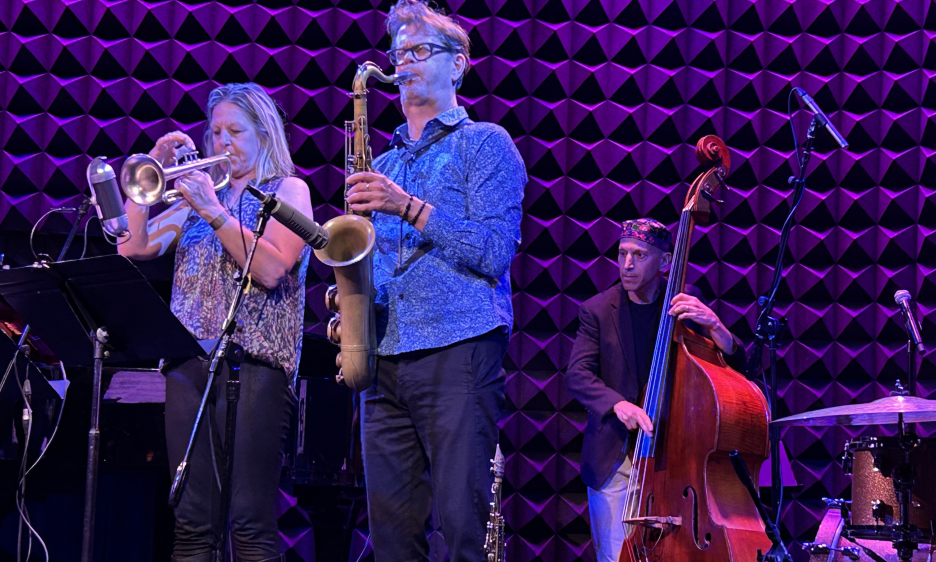
Joe's Pub
New York, NY
June 11, 2026
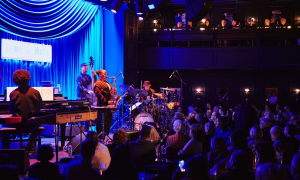
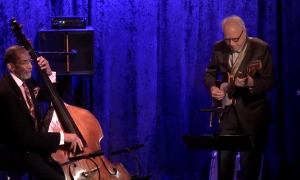
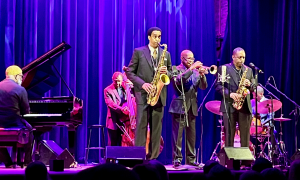
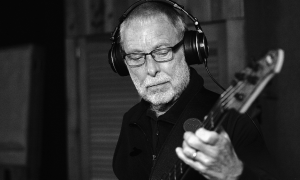
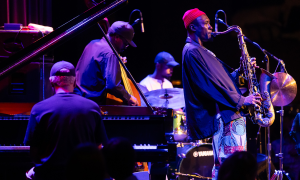
Civil Disobedience presented a stellar show at Joe's Pub in New York City that covered a uniquely curated set of music taken exclusively from Civil Rights-era recordings on Blue Note Records. Led by bassist, activist, and composer David Ambrosio, the group is a quintet that features an all-star cast of some of the most renowned members of the greater jazz community. The impassioned, attentive dialogue between Ambrosio and his bandmates was undeniable from the downbeat and displayed a deeply resonant respect and of a pivotal moment in jazz and '60s America.
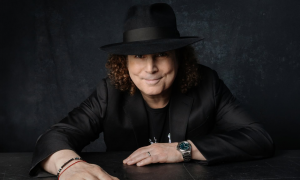
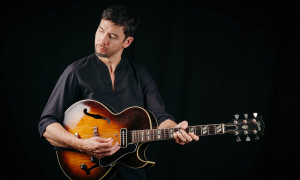
Civil Disobedience has been a project nearly a decade in the making. Ambrosio, saxophonist Donny McCaslin and trumpeter Ingrid Jensen originally began collaborating under the name Chump Change some years prior. They joined forces with fellow heavyweights pianist Bruce Barth and the legendary Victor Lewis on drums for the first time in 2018, focusing on a wealth of music composed during the Civil Rights era that largely went unreleased until well afterward. Stepping in for Lewis at this event was the extraordinary Johnathan Blake . As an impassioned activist, Ambrosio has stated the mission of this project is to shed light on this body of work while also demonstrating how the material and message still retain relevance during the turmoil and anxiety of present day America. Like the diversity of cultures that stood in solidarity through those times, each selection from the set had a distinct identity as if to provide a sense of the time from multiple perspectives.
One of the most remarkable aspects of this project is how, despite the source material coming from a bygone era, each member of Civil Disobedience seemed able to inject their own unique sensibility into the pieces without diluting the intention and potency of the original composers or recordings. The set opened with Bobby Hutcherson's "For Duke P. (AKA XYC)" and Duke Pearson's "Bedouin," two stormy pieces originally released on Hutcherson's 1963 album The Kicker (Blue Note Records). Jensen and McCaslin's musical chemistry felt especially simpatico with both taking markedly feral, exploratory solos spots here and throughout. Barth's rich and inventive vernacular likewise masterfully served the music and Ambrosio with his lyrical exposed passages felt like the heart and soul beating throughout.
These tunes were followed by Harold Land's "Poor People's March," written in dedication to the Poor People's Campaign of 1968 which was an organized protest in Washington D.C to gain a protective bill of rights for economically disadvantaged Americans. This march was revived in 2018 under the title "A National Call for Moral Revival" further demonstrating how pervasive and crucial this cause continues to be. The atmosphere and thrust of this piece could be best be characterized as possessing a inner strength and conviction informed by defiant, indefatigable faith in justice winning out against tyranny. Each player further brought this quality to the fore with their respective spotlights. Jensen's unbridled turn felt less like a lament and more a celebration or rallying cry driven by a collective inspired spirit while McCaslin's searing soprano solo had a sound with so much altitude, it felt as if he was playing directly to the gods.
This marked a moment for breath and solemn contemplation which was provided in the form of an exposed, stark and emotive solo from Ambrosio and this segued into the ballad "Mirrors" followed in contrast, with the bold and propulsive "Irina"; both originally composed by Joe Chambers. Where the former piece felt lush and reflective, the latter was reminiscent of an eager army charging into battle and boasted shouting calls from McCaslin as well as a frenzied solo from Barth. The most spatial point of the evening came during the group's rendition of James Spaulding's dedication to Martin Luther King, Jr. entitled "A Time to Go." Jensen and McCaslin provided a prayer-like unison melody which was underpinned by Blake's cymbal washes and Barth's fragile upper register gestures.
"Vernestune," a raging swing vehicle written by Jackie McLean, was the final selection and played host to blazing trading between Jensen and McCaslin before giving way to a fiery solo from Barth and finally a show-stopping atomic-powered solo from Blake that closed out the evening with a literal bang—many of them, in fact. The takeaway of Civil Disobedience is that a rich tradition will always hold relevant truth about the human condition regardless of age or time passing. That uncanny imprint of such intensity in history will never disappear. The group channeled not just the written notes but also the spirit of the music and context in a manner that was genuine, inspired, and moving throughout.
 FOLLOW Max Kutner
and get notified whenever a new article published.
FOLLOW Max Kutner
and get notified whenever a new article published.
Max Kutner is a guitarist and composer originally from Las Vegas, NV and currently based in Brooklyn, NY.
About David Ambrosio

Tags
PREVIOUS / NEXT


David Ambrosio Concerts
Become a Sustaining Member

Since 1995, All About Jazz has championed jazz as an art form and supported the musicians who create it. Over three decades, it has grown into one of the world's leading jazz resources, serving hundreds of thousands of readers, musicians, presenters and industry professionals each month.
Help Build the Future of All About Jazz
Your support helps us continue building All About Jazz for the next generation—expanding our editorial coverage, preserving jazz history, developing new community features and creating better ways to discover the music and the people behind it.
Become a sustaining member for as little as $20 per year and you'll immediately enjoy an ad-free experience along with access to subscriber features and future articles for a full year.
Together, we're not simply sustaining All About Jazz—we're building its future. Thank you for being part of the journey.