Home » Jazz Articles » Album Review » Martin Pyne: Trios
Martin Pyne: Trios
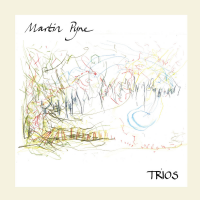
Somewhere in that ancient, mystic trinity, Pyne finds plenty of musical possibilities.
Pyne has recorded in solo, duo and larger ensemble settings, and his work as a vibraphonist, drummer and percussionist gives him a broad palette to draw from. Here, he concentrates primarily on the vibraphone, occasionally turning to balafon and temple bowls. He leaves the conventional percussion duties to his longtime musical partners Johnny Hunter and Angus Bishop, allowing the two trios to develop very different personalities.
The Vampire Coast Trio, featuring Hunter and acoustic bassist Michael Bardon, contributes nine tracks to the first disc. The resonant opening notes of "Wrapped in Silence" gradually give way to a slow-burning blues, establishing an unhurried atmosphere that carries into "Asrai." These musicians are in no hurry to reach a destination. Instead, they allow their music to unfold patiently, drawing equally from chamber music and jazz traditions.
"Blackwell Tart," dedicated to New Orleans drummer Ed Blackwell, a longtime member of Ornette Coleman's groups, swings with a sly, understated charm. Pyne also acknowledges another vibraphone influence, Walt Dickerson, with the solo performance "Song for Walt Dickerson." Elsewhere, he steps away from the vibes altogether for "Cooking for One," playing balafon and bells. Another useful comparison is Bobby Naughton, a vibraphonist who also favored the trio format. Like Naughton, Pyne understands that the instrument is both a melodic and harmonic voice and a source of rhythm and percussion. He exploits those contrasting qualities without allowing one to overwhelm the other.
The second disc introduces the Chalk Horses Trio, which takes a decidedly more electric and galvanic approach. Here, Pyne's vibraphone and Bishop's drumming are energized by David Beebee's electric Rhodes piano. The opening "The Green Man Dances in Mud Lane" could almost be mistaken for a performance by Medeski, Martin & Wood, its funky groove slipping and sliding toward the dance floor. From there, the trio moves through a variety of influences and textures. "Chalk Horses" explores West African sounds through Pyne's balafon, while "The Ghosts of Wharram Percy" and "The Wife's Lament" evoke the spacious electric grooves of Miles Davis.
Ever inventive, Pyne also experiments with a prepared vibraphone, introducing objects and metal to alter the instrument's familiar resonance. On "Yellow Rattle" and "Farandole," these additions create unexpected timbres, expanding the instrument's vocabulary beyond its customary shimmering tones.
Trios demonstrates that three musicians can be both a limitation and a world of possibilities. The Vampire Coast Trio favors patience, space and subtle interplay, while the Chalk Horses Trio embraces electricity, rhythmic propulsion and sonic exploration. Together, the two groups reveal Pyne's ability to make the vibraphone a flexible instrument of expression, equally at home in a quiet chamber setting or a groove-driven adventure. Three, indeed, is a magic number.
 FOLLOW Mark Corroto
and get notified whenever a new article published.
Mark misses his dogs Louie & Freddy, but endeavors daily to find and listen to new and interesting sounds.
Track Listing
CD1: Wrapped In Silence; Vampire Coast; Listen To The Wise Man; Cooking For One (for Stan and Simon); Asrai; Blackwell Tart; Spinning Yarns; Onibi; Song For Walt Dickerson; CD2: The Green Man Dances In Mud Lane; Chalk Horses; The Ghosts Of Wharam Percy; Fishing In Murky Waters; Vesper; Yellow Rattle; The Wife's Lament; And Then A Poppy Blooms; The Nixie; Shadow Play; Farandole.
Personnel

Martin Pyne
vibraphoneMichael Bardon
cello
Johnny Hunter
drumsDavid Beebee
pianoAngus Bishop
drumsAdditional Instrumentation
Martin Pyne: balafon, balafon, prepared vibraphone, small percussion; Johnny Hunter: glockenspiel, percussion; Angus Bishop: percussion. Michael Bardon: bass; David Beebee: electric piano.
Album information
Title: Trios | Year Released: 2026 | Record Label: Discus Music
PREVIOUS / NEXT

About Martin Pyne
Tags
Become a Sustaining Member

Since 1995, All About Jazz has championed jazz as an art form and supported the musicians who create it. Over three decades, it has grown into one of the world's leading jazz resources, serving hundreds of thousands of readers, musicians, presenters and industry professionals each month.
Help Build the Future of All About Jazz
Your support helps us continue building All About Jazz for the next generation—expanding our editorial coverage, preserving jazz history, developing new community features and creating better ways to discover the music and the people behind it.
Become a sustaining member for as little as $20 per year and you'll immediately enjoy an ad-free experience along with access to subscriber features and future articles for a full year.
Together, we're not simply sustaining All About Jazz—we're building its future. Thank you for being part of the journey.