Home » Jazz Articles » Late Night Thoughts on Jazz » Revolutionary Aesthetics: Exploring Warne Marsh's Overth...
Revolutionary Aesthetics: Exploring Warne Marsh's Overthrow of Sweet Georgia Brown
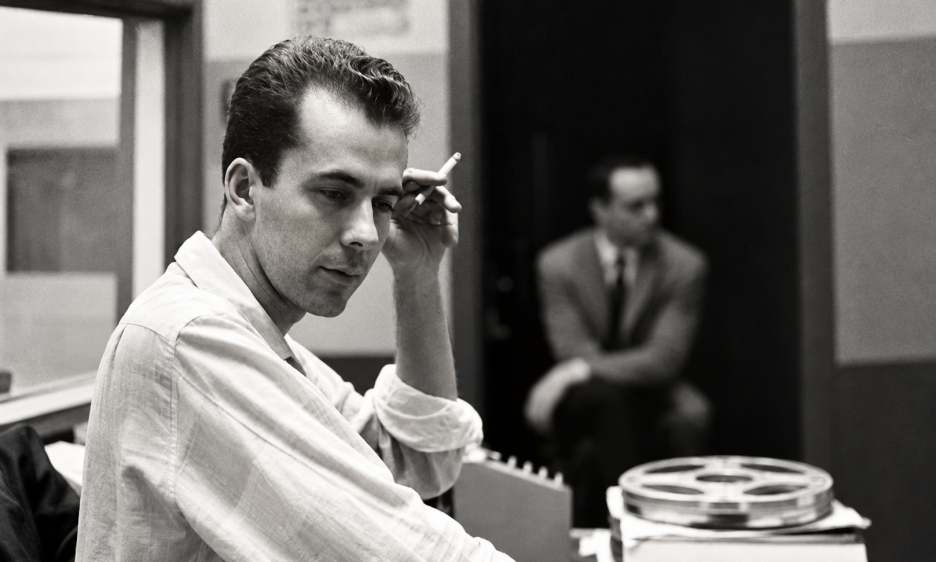
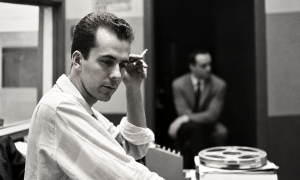
Courtesy Peter Ind
The sound emanating from Marsh’s horn is light, almost cardboard-like. He keeps the listener engaged with subtle dynamic variations, accentuating certain notes to create polyrhythmic subcells. He plays over-the-barline phrases that often land in odd spots and obscure the form.
The album Release Record-Send Tape (Wave (4), 1969) was released in 1969, virtually ten years after it was recorded. The piece under review is "Sweet Georgia Brown," which is the first track on the album. The performance is started by Marsh, who begins by playing an improvised cadence and proceeds to render an a cappella statement of the second half of the theme. Bassist Peter Ind and pianist Ronnie Ball join in at the top of the form, and drummer Dick Scott soon follows on the brushes. Instead of playing the melody, Marsh embarks on an adventurous solo from the get-go. The traditional switch from brushes to sticks at the top of the form is welcomed by Marsh with a dramatic, futuristic line. The piano eventually drops out, giving way to a drums-bass-saxophone trio. Marsh responds to the spatial textures of the format by playing long, complex phrases ending in long rests. The solo goes on and suddenly the track is over, with no formal ending, no other solos, and not a single full statement of the melody.
The track is unclassifiable in terms of genre, since it significantly deviates from most jazz performances of the time but does not comply with the style of the then emerging avant-garde movement. Unlike "free jazz" pieces of the era, the ABAC form of the composition is followed by all players in a manner characteristic of mainstream jazz, however highly stylized. The setting of a private jam session facilitates experimentation and the musicians take full advantage of this. A jam session is, in the words of William Bruce Cameron from his essay Sociological Notes on the Jam Session, "a transitory recreational association of an elite. It is an informal but traditionally structured association of a small number of self-selected musicians who come together for the primary purpose of playing music [...] without regard to the standards of the buying public" (Cameron, 177-178). It was only a decade after the fact that, upon reflection, Marsh chose to release this recording, which indicates that the intentions behind the performance were non-commercial.
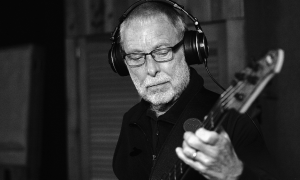
The sound emanating from Marsh's horn is light, almost cardboard-like. He keeps the listener engaged with subtle dynamic variations, accentuating certain notes to create polyrhythmic subcells. He plays over-the-barline phrases that often land in odd spots and obscure the form. The rhythm section follows Marsh's incursions while adhering to its role as accompaniment. The relationship between the musicians is one of mutual respect and camaraderie, and they share a willingness to adventure into uncharted territory. There is no specific script to be followed, other than the song's structure that is improvised upon. Technology plays a minimal role in the performance. The recording equipment was set up by bassist Peter Ind, aiming to accomplish an accurate representation of the ensemble's acoustic qualities.
Let us now delve into issues of meaning. Unlike a proper album, where musicians are paid, and the recording takes place in a studio with a producer and audio engineers, and there is a chain of specialized professionals who intervene in artistic and business matters, Release Record—Send Tape and the track under analysis were conceived by Marsh, Ball, Ind, and Scott in their entirety for no initial remuneration. Marsh believed that studios and recording settings in general were infertile ground for the performance of jazz, as explained by Safford Chamberlain in his monumental biography An Unsung Cat: The Life and Music of Warne Marsh. The session's subversion of traditional production values and DIY attitude carry, in all likelihood, severe aesthetic underpinnings. Warne Marsh and Lee Konitz were known to be openly critical of "emotional showboating," preferring the genuine artistic output of figures such as Charlie Parker or Lester Young. The pressing question that arises is: why did they put down what other musicians were doing, rather than following their chosen path in silence? I believe this is a relevant matter for artists, who I believe should be conscious of the motives behind their work.
"Sweet Georgia Brown" stands as a landmark document of improvisation, showcasing Marsh at his creative peak. He delivers an unconventional, genre-bending performance that succeeds in drawing listeners into reflective, intentional listening. The disobedience of the aesthetic rules of mainstream jazz and disregard for commercial pressure contributed to the creation of a unique, groundbreaking recording. Although the scientific accuracy of the Tristano school's aesthetic beliefs must be questioned, Marsh's performances and career are located within a broader avant-garde musical movement that aimed to transform mid-20th-century jazz.
 FOLLOW Daniel Casares
and get notified whenever a new article published.
FOLLOW Daniel Casares
and get notified whenever a new article published.
Daniel Casares is a distinguished jazz guitarist, composer, and producer from Galicia, Spain
About Warne Marsh

Tags
PREVIOUS / NEXT


Become a Sustaining Member

Since 1995, All About Jazz has championed jazz as an art form and supported the musicians who create it. Over three decades, it has grown into one of the world's leading jazz resources, serving hundreds of thousands of readers, musicians, presenters and industry professionals each month.
Help Build the Future of All About Jazz
Your support helps us continue building All About Jazz for the next generation—expanding our editorial coverage, preserving jazz history, developing new community features and creating better ways to discover the music and the people behind it.
Become a sustaining member for as little as $20 per year and you'll immediately enjoy an ad-free experience along with access to subscriber features and future articles for a full year.
Together, we're not simply sustaining All About Jazz—we're building its future. Thank you for being part of the journey.