Home » Jazz Articles » Groove Orbit » Ralph "Bigfoot" Hamilton: The Lost Legend Behind Two Gui...
Ralph "Bigfoot" Hamilton: The Lost Legend Behind Two Guitar Pioneers

So who was Ralph Hamilton, and why does it matter? Hamilton was a musician whom both T-Bone Walker and Charlie Christian studied under while living in Oklahoma City during the late 1930s. Not much is known about him, but oral histories from Oklahoma City point to a talented musician who guided these young players long before they changed the sound of twentieth-century music. Although both guitarists are known for different styles of music, certain shared features of their playing indicate Hamilton's possible influence.
Unfortunately, little is known about Hamilton. In fact, we don't even know for sure that this was his real name. Some sources list him as Ralph Hamilton, while others list him as Chuck Richardson. Despite the discrepancy, this is the person credited with teaching both T-Bone Walker and Charlie Christian when they were on the cusp of their professional lives. Although both musicians were influenced by and learned from other musicians, Hamilton's influence was pivotal in helping the two guitarists transform jazz and blues.
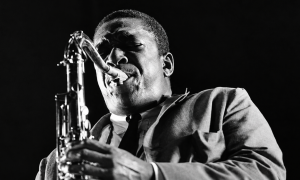
Charlie Christian
To understand Christian's importance in jazz history, it is essential to consider the guitar's place in music during this period. Although the instrument has been part of jazz from its earliest days, it was almost exclusively confined to rhythm duties. It was certainly not considered a lead instrument by most band leaders and musicians, and the primary reason was its volume. Before amplification, the guitar could not project through a large ensemble. Given the natural presence of horns, hearing the guitar over the orchestra posed a significant obstacle. Of course, all of that changed when Charlie Christian arrived. His phrasing, articulation, and approach to soloing still serve as something of a training ground for aspiring jazz musicians. It is also considered by many to be a precursor to bebop. So how did he develop such a modern approach?Although Christian had a drive and passion for music, he still needed to develop his guitar chops. Much of Christian's development as a guitarist stems from his study with Ralph Hamilton. Known locally as "Bigfoot Chuck," Hamilton was a multi-instrumentalist with a distinctive chord style approach to the guitar. Christian biographers Wayne Goins and Craig McKinney describe Hamilton's playing as a "highly stylistic blend of lead melody and chordal harmony." This interworking of chords and melody became a crucial part of Christian's developing style. It also stands to reason that later guitarists, such as Wes Montgomery, adopted Christian's technique, suggesting that Hamilton's influence may have indirectly helped many other guitarists.
Hamilton was a kind but demanding instructor. He stressed the importance of reading music. He told Christian, "Learn to read; then you will not have to take anyone's word for what is on the paper." Although Christian learned some of the essential musical concepts from others, he looked up to Hamilton both as a musician and a mentor. Christian once told his younger brother Clarence, "I want my guitar to sound like Chuck's." Hamilton not only taught Christian how to read music, but he also showed him how to construct chords, use chord inversions and incorporate extensions. Christian absorbed everything he learned from Hamilton and expanded on it. Hamilton sparked an innovative impulse in the young musician, but trying to reach the volume he needed prevented him from matching the other band instruments, and he was always looking for ways to break out of the background. According to Alan Govenor, Christian would often go to extreme lengths to be heard. For example, he would sometimes perform "with a microphone attached to his guitar with rubber bands so he could be heard." Everything changed, however, when guitarist Eddie Durham introduced Christian to the electric guitar. Durham is generally credited as being the first guitarist to record with an electric guitar, and he crossed paths with Christian frequently. Once Christian plugged in, the guitar emerged from hiding.
He managed to set himself apart in two ways. First, playing the electric guitar allowed the guitar's sound to cut through and have the same presence as the horns. Second, taking Hamilton's approach to chords a step further, Christian began experimenting with a single-note style of playing. As Goins and McKinney note, Hamilton was the master of the chord solo school. At the same time, Christian became a master of the single-string guitar style "well before jazz combos and big band ensembles were comfortable with featuring the guitar as a primary instrument."
Much of Christian's melodic approach was more than likely a result of Hamilton's tutelage. However, musicians like Lester Young also inspired Christian, and Charlie wanted the guitar to sound more like a horn than a rhythm instrument. By taking Hamilton's ideas and branching out, he helped redefine the guitar's possibilities. It is important to note, though, that the chord structure and Christian's single-note phrasing are closely related. Many of his solos follow the rhythm and flow of the chords by using arpeggios as a foundation. A good example of Christian's blending of chords and single notes in a solo appears on the Benny Goodman Sextet version of "Stardust." His solo begins by improvising with chords. He later transitions into single-note lines, building on the chord structure, before returning to the chord phrasing. This combination of single lines mixed with chords in improvisation later became popularized by Wes Montgomery. In fact, Wes Montgomery once mentioned that he got interested in playing the guitar because of Charlie Christian, so it is quite possible that his concept of block chords developed from listening to Christian.
Two significant events catalyzed Christian's rise to fame. The first came during his first major performance at an after-hours jam session in Oklahoma City. Charlie wanted to sit in on the bandstand with his older brother, Edward, who was an accomplished musician in his own right. Edward was not excited about having his little brother sitting in. He allegedly told Charlie, "Don't nobody wanna hear that old blues." Hamilton stepped in and persuaded Edward to let him play. Once they started swinging, Charlie blew everyone away, and Edward's attitude totally changed. As Charles later recounted, "my oldest brother went through the ceiling," saying, "hey man, this is my brother!" Edward's recognition boosted Charlie's confidence substantially.
Christian, of course, later rose to fame through his work with Benny Goodman, but it was far from smooth sailing. At Mary Lou Williams's suggestion, John Hammond took Christian to California to audition for Goodman's band. Goodman was not keen on having a guitar in the band, but he gave him a shot. The first session was a disaster, and it looked like Christian might be getting on the next train back to Oklahoma. Hammond, however, had confidence in Christian's talent and snuck him onto the bandstand at the Victor Hugo Restaurant in Beverly Hills. In an effort to make things challenging for the young guitarist, Goodman called the somewhat obscure tune "Rose Room," thinking Christian would fail.
Little did Goodman realize that this was one of the tunes that Ralph Hamilton taught him, and Christian took charge. They played the song for over 45 minutes, and Christian's playing blew away Goodman, who hired him immediately. They went on to record some of the most legendary music in jazz history.
T-Bone Walker
Along with Christian, T-Bone Walker is one of the earliest electric guitar players. Already established as a formidable blues player before he ever met Charlie Christian, their association not only sparked a close friendship but also elevated Walker's guitar style. This development is more than likely because both guitarists studied with Bigfoot Hamilton.Walker had a deep connection to the blues, getting inspiration from musicians such as Blind Lemon Jefferson, Scrapper Blackwell and Leroy Carr. Although Walker learned the blues from several different musicians during his early years, his style transcended traditional blues structures. He incorporated jazz elements into his blues playing, which may have resulted from his study with Bigfoot Hamilton. Hamilton's influence on chords and chord soloing is probably one of the most pronounced. Therefore, Walker's unique incorporation of jazz chords into the blues appears consistent with Hamilton's style.
There is an issue here that needs to be addressed. In the Charlie Christian sources, the teacher who instructed both Walker and Christian is listed as Ralph "Bigfoot" Hamilton. However, in Stormy Monday: The T-Bone Walker Story (LSU Press, 1999), the biography by Helen Oakley Dance, he is listed as Chuck Richardson. Is this the same person? We have little to go on beyond oral histories, so it remains a matter of speculation, but given the available evidence, it seems reasonable that these are the same person.
One point to consider comes from oral history itself. If Walker were interviewed later in life, it would not be uncommon to find discrepancies in specific details of his earlier life. For example, in an excerpt from an interview with Walker, reprinted in the Charlie Christian biography, he claims to have introduced Charlie Christian to John Hammond. But the author mentions this is highly suspect, given what we already know about John Hammond. There are also many other discrepancies in information related to Walker. This is not to suggest he was intentionally misrepresenting the truth, but instead that he was mixing up details in his memory. So it stands to reason that although many of the events Walker described probably did happen, the specific details of his memory are imprecise. Therefore, since the details are consistent, it makes sense to assume that this is the same person regardless of the name.
Whether this is the same person or not, the fact remains that both Walker and Christian shared the same teacher. According to Dance, Walker's playing became more intense "when he first encountered Charlie Christian in Oklahoma City, and they shared veteran guitarist Chuck Richardson's instruction" before going out to establish their own careers in music. Richardson/Hamilton was known for adding notes to a chord or even using different chords, and this later became a hallmark of Walker's style. For example, Walker's use of chord substitutions and ninth chords added a unique and complex texture to the standard 12-bar blues. Along with this, his passing chords and comping style seem to be similar to what jazz guitarists frequently play. His signature song, "Call It Stormy Monday (But Tuesday is Just as Bad)," features a progression that many guitarists refer to as the Stormy Monday changes. The unique sound of the changes comes from its use of ninth chords, turnarounds and substitutions, all of which are very common in jazz language.
According to blues guitarist and historian Sumter Bruton, Walker's incorporation of jazz chords was something that he learned from Charlie Christian, specifically the ninth 13th diminished in augmented chords. Noted blues/jazz guitarist Duke Robillard describes Walker's playing as similar to Charlie Christian's, "although they are different as musicians."
Modern electric blues guitar can be traced directly back to Walker, whose amplified guitar basically revolutionized blues music. Now, many guitarists use augmented chords when comping, and whether they realize it or not, they have T-Bone Walker to thank. And Hamilton's legacy continues with the music.
We may never know anything more about Hamilton other than the breadcrumbs scattered throughout the few sources available. Even without details and documentation, he left an indelible mark on modern music.
 FOLLOW Kyle Simpler
and get notified whenever a new article published.
FOLLOW Kyle Simpler
and get notified whenever a new article published.
Longtime jazz listener
About Charlie Christian

Tags
PREVIOUS / NEXT


Become a Sustaining Member

Since 1995, All About Jazz has championed jazz as an art form and supported the musicians who create it. Over three decades, it has grown into one of the world's leading jazz resources, serving hundreds of thousands of readers, musicians, presenters and industry professionals each month.
Help Build the Future of All About Jazz
Your support helps us continue building All About Jazz for the next generation—expanding our editorial coverage, preserving jazz history, developing new community features and creating better ways to discover the music and the people behind it.
Become a sustaining member for as little as $20 per year and you'll immediately enjoy an ad-free experience along with access to subscriber features and future articles for a full year.
Together, we're not simply sustaining All About Jazz—we're building its future. Thank you for being part of the journey.