Home » Jazz Articles » Interview » Rafael Enciso: Bassist Intends To Search, Remember And Evolve
Rafael Enciso: Bassist Intends To Search, Remember And Evolve
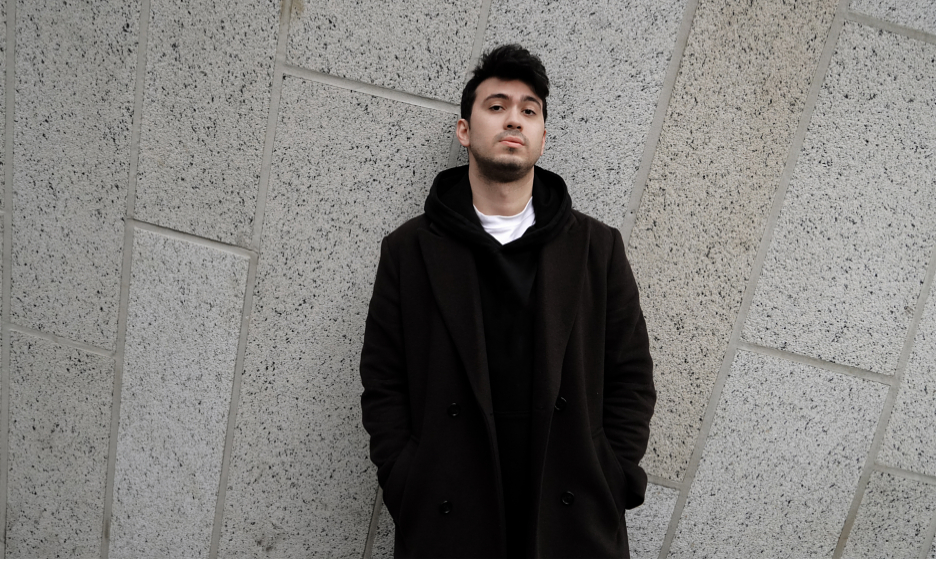
Courtesy Elora Kang
Improvisation and composition are two sides of the same coin. Both are acts of creating music from nothing.
—Rafael Enciso
The foursome share a deep understanding and ability to play seamlessly together that stretches beyond the bandstand. Enciso has been playing with Chakarji since he first moved to NYC in 2021, and the quartet were all a part of Enciso's first ever bandleader gig in the city. Moreover, their friendship runs deep, with Enciso, Russell, and Caminiti having lived together for three years, deepening their bond ever more in ways that are tangible in the recording. Atop these factors, each member of the quartet had at some point played in Dayna Stephens' band, and thus share that common language, trust, and modus operandi.
Their record is stranded neatly between its two more or less incomparable strengths. On the one hand, it is undeniable that Enciso's charm lies in a sprawling canvas of ideas and innovative bass playing, while the leader's strong impulse is to emphasize the ensemble's grooves and melody with space for improvisation and exploration. Pings of cymbal brush against syncopated piano puffs. The bass vibrates but never overwhelms. In live videos, you can see Enciso's hand sprinting up and down the neck, his other plucking curiously. Enciso's compositional voice encapsulates his observations: that times may change form, but things never truly disappear. What this music reveals is true harmony—four experts in sync with themselves and each other and not interested to have edges filed down by pedicurists in a turquoise tinted spa.
Raised around the natural beauty of Ithaca, New York, Enciso found himself deeply attuned to the cycles of the seasons. Starting with waterfalls and rivers, Enciso began simply paying attention to the world around him, moving from nature to broader societal trends. In doing so, he noted that like the seasons, nothing is ever truly gone, but simply fades into and out of what comes after, often reappearing in new and unexpected ways. From these contemplations, the album Crossfades was born. The title came as a form of musical parallelism to the nature of change itself. As times pass and blend, so a crossfade exists as one sound dissolving into another, overlapping for a moment before giving way. "The album lives in that in-between space," Enciso offered, "where the past and present coexist and influence each other. Harmonically and rhythmically, there's a lot going on ... unexpected shifts, layered textures, and grooves that keep you on your toes."
One of the tracks that best summarizes the album's concept is "Waterfall." Inspired by the many chutes near Enciso's hometown, the song paints the picture of a cascade, leaning into transformation and flow, with rhythms and harmonies that shift in ways to capture how water reshapes its paths over time. Standing in contrast is "Thousand Yard Stare," a ballad about the weight of things carried without having the words to express it. This track was recorded in Enciso's apartment in a single take.
"The High Priestess" is Enciso's ode to Wayne Shorter, whose music always was heard as "a glimpse into the future, full of mystery and lyricism." This piece carries the same spirit of fearless exploration without falling into imitation. The solo in this piece showcases the ensemble's fluidity. "Austin Otto" is a humorous and playful track featuring Stephens. The piece exists to provide the listener a fun, light moment amidst some of the heavier songs on the album.
All About Jazz conducted an interview with Enciso through email. The bassist/composer turns out to be as eloquent with his answers as he is playing bass.
All About Jazz: When did you start playing your instrument, and what or who were your early passions or influences? What is it about its sound that captured your attention?
Rafael Enciso: I started playing bass when I was around seven years old. Growing up, there was always music in the house. My dad is a great Latin American percussionist and was constantly putting bands together and rehearsing at home, so I was surrounded by rhythm and groove from a very young age. My mom, on the other hand, is a cellist, which meant I was also exposed to a very different sonic and musical world. I think hearing those two contrasting instruments and traditions made the bass feel like a natural fit for me. It gave me a way to explore cello repertoire while also being able to play with my pops.
I grew up loving all kinds of music. At one point, I went through a huge rock phase where all I wanted to do was play music like Led Zeppelin and Pink Floyd. In middle school, artists like Sly and the Family Stone and Stevie Wonder introduced me to some of my favorite bass lines and really deepened my appreciation for groove and feel. Later, in high school, I fell in love with gospel music and the rich harmonic language I heard from artists like Kirk Franklin and Kim Burrell.
Some of my earliest bass influences were Paul Chambers and Andy González, but the artist who truly made me fall in love with this music was Miles Davis. He was, and still is, one of my favorite artists of all time. I can always return to Miles as an infinite source for inspiration.
AAJ: For most artists, originality is first preceded by a phase of learning and, often, emulating others. How would you describe your own development as an artist and the transition towards your own voice?
RE: In high school and college, I definitely went through periods of trying to emulate different artists. I would hear musicians play things that completely bewildered me, and I became obsessed with figuring out how they were doing it. A lot of my teachers assigned specific musicians to transcribe and imitate, which was valuable, but that approach never resonated with me as deeply as discovering music on my own. The language that stuck with me was always the music I organically fell in love with first.
I think developing my own voice has largely come from absorbing those influences myself, then filtering that vocabulary through my own ears, tastes, and instincts. On bass, my particular combination of influences feels unique to me, and I think the same is true of my writing as a composer.
AAJ: What were some of your main challenges when starting out as an artist and in which way have they changed as you continued?
RE: One of my biggest ongoing challenges has been figuring out how to make my music feel genuinely impactful. I've always wanted to make the world a better place, and at times I've wrestled with the idea that playing jazz in isolation doesn't necessarily create obvious or immediate change in people's lives.
As I've gotten older, my perspective has shifted. I've come to believe that meaningful change can happen on a smaller, more personal scale. If I'm living intentionally and contributing something honest and positive in the moment, that matters.
With music specifically, I eventually realized that if my art can make someone smile, laugh, cry, reflect, or simply feel something real, then I've done my job. There's already so much noise, stress, and negativity in the world. If I can offer people even a brief experience of connection or joy, I consider that meaningful. And since it's impossible to control how others receive the music, I try to start with myself. If the music feels honest and meaningful to me, chances are it will resonate with someone else too.
AAJ: How do you see the relationship between improvisation and composition?
RE: To me, improvisation and composition are two sides of the same coin. Both are acts of creating music from nothing; one simply happens in real time, while the other is more deliberate and premeditated. When I write, I'm always thinking about how musicians might improvise within the music. I want the compositions to create a world that invites exploration.
I also think composition is something musicians need to practice just as intentionally as their instruments. Everyone understands the importance of practicing technique or improvisation, but composition often gets treated differently. I remember reading an interview with Bob Brookmeyer where he talked about practicing composition as a discipline, and that really stuck with me.
I write every day, and I try to finish every idea I start, even if it never gets performed. That habit sometimes creates the opposite problem in that I end up with too much material! When I was assembling the songs for Crossfade, narrowing down the track list was honestly one of the hardest parts. But having too much music is a good problem to have. I'm already thinking about the next record.
AAJ: The songs on Crossfade come across as tight and together. Has it made a marked difference having a quartet that has been together four years?
RE: Short answer ... yes! The biggest difference is trust. The band you hear on the record trusts each other completely, and that made the entire process feel very natural. We were only really able to rehearse before recording (these cats are too busy!), which I don't think would have been possible with many other groups. They're also all incredible musicians. The music is demanding, and they consistently make it sound effortless, which is pretty remarkable to witness and hear!
AAJ: Your song titles are very evocative. It is reported that people often see pictures when listening to music. Do you find the similarity of composing music and composing a painting quite prominent, as if you are composing musical pictures?
RE: I really like that analogy. I often think of musicians as painters of time. A lot of my song titles come from the emotional or visual associations I have after writing the music. Sometimes the title comes from how the piece makes me feel once it's finished; other times there's a specific image or idea that exists before or during the writing process.
For example, I wrote the basic melodic framework for "Waterfall"at the piano, but the title and overall identity of the piece really clicked after I visited Ithaca Falls in my hometown. The turbulence and flow of the water felt like a perfect reflection of the melody I had written. Once those two things became linked in my mind, the rhythmic concept for the piece came together very quickly.
AAJ: Please supply anything you would like to say about the songs on Crossfade: inspiration, impressions, meaning, a particular solo or arrangement, etc.
RE: A good example of the relationship between composition and improvisation on the record is "Photogenic Memory." The piece features a fully written soli section alongside three separate improvisational sections, which creates an interesting balance between structure and spontaneity. That track feels representative of a lot of what I'm interested in as a writer, creating music with strong compositional architecture while still leaving enough openness for the performers to shape the music in the moment.
Another example of my influences coming together in one piece is "The High Priestess." The tune features some pretty intense harmonic voice leading, which I think is definitely informed by my time studying classical music. At the same time, the G pedal vamp was inspired by Wayne Shorter's "Masquelero" from Miles Davis's Sorcerer, which has always been my favorite Miles record. Because of that connection, I decided to dedicate the tune to Wayne. The title came after a conversation with my mom about Tarot cards. In a Tarot deck, the High Priestess represents wisdom, intuition, and mystical knowledge, which feels fitting for how I think of Wayne as both an artist and composer. The ending opens up into a bass line-oriented section that also feels connected to my upbringing, especially from spending so much time playing music with my dad.
 FOLLOW Dean Nardi
and get notified whenever a new article published.
FOLLOW Dean Nardi
and get notified whenever a new article published.
I am a retired journalist, first covering pro sports in Boston for a daily newspaper then publishing two magazines.
About Rafael Enciso

Tags
PREVIOUS / NEXT
Become a Sustaining Member

Since 1995, All About Jazz has championed jazz as an art form and supported the musicians who create it. Over three decades, it has grown into one of the world's leading jazz resources, serving hundreds of thousands of readers, musicians, presenters and industry professionals each month.
Help Build the Future of All About Jazz
Your support helps us continue building All About Jazz for the next generation—expanding our editorial coverage, preserving jazz history, developing new community features and creating better ways to discover the music and the people behind it.
Become a sustaining member for as little as $20 per year and you'll immediately enjoy an ad-free experience along with access to subscriber features and future articles for a full year.
Together, we're not simply sustaining All About Jazz—we're building its future. Thank you for being part of the journey.