Home » Jazz Articles » Interview » Fred Hersch Talks About His Found Duo Album With ‘The Gu...
Fred Hersch Talks About His Found Duo Album With ‘The Guitar Whisperer'
Courtesy ECM Record
I’m so glad that folks will get to hear this musical snapshot of a great jazz guitarist who recorded way too seldom.
—Fred Hersch
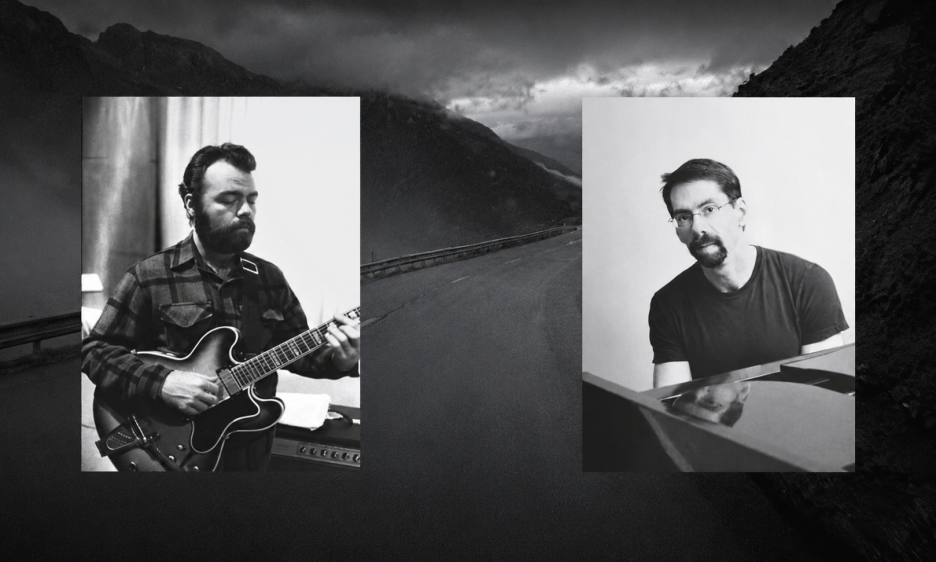
On June 19, ECM released Feebles, Fables And Ferns (ECM Records, 2026), a forgotten 1988 duo with Fred Hersch. I talked to Fred June 25, 2026 in the very room the album was recorded nearly four decades ago. His trio (Drew Gress, bass and Peter Erskine, drums) had just completed an appearance at the Village Vanguard and they are preparing to leave for Europe to play six summer festivals. This interview has been edited for content and clarity.
All About Jazz: Tell me about how a 1988 recording you made in your apartment became an ECM release.
Fred Hersch: After Mick passed away a couple years ago, his executor, David Lee, got in touch with me and asked, "you know that duo project you made at your studio? Mick always said that he liked that record. Do you want to give it a listen?"
Feebles, Fables, and Ferns was recorded in 1988 on the first real digital two-track recording device. It was a box called a PCM-F1 and it used a Betamax video cassette player as the transport. It was a live mix, no multi-track recording. Fortunately, my engineer at that time (A.T. Michael MacDonald) kept everything. He kept all the masters of everything.
I listened to it and I thought it was, somehow, very nice. I put a quick sequence together of 40 minutes and I said to David, "look, if you want to put it out on Bandcamp or a similar platform, I need to clear it with Manfred Eicher. I don't want to surprise him by releasing something."Within a day or two, Manfred said that he wanted to put it out and that Mick was one of his favorite guitarists.
If I'm not mistaken, Mick may have been the first solid body jazz guitarist, and he recorded the album on an unusual guitar called a Steinberger. It's a very small guitar and it doesn't have a scroll at the end like a normal guitar. He ran it through an Ampeg bass amp in the isolation room and we did it in one afternoon. We really hadn't played much duo, but he came down from Boston and we went into the studio. It was sort of forgotten for all these years.
AAJ: How did you and Mick get together?
FH: Mick and I had played a bunch of gigs in Boston. I was teaching at the time at the New England Conservatory and he was teaching at Berklee. So I would go up, spend the night, teach two days with the night in the middle and then come back.
Sometimes we'd play a pickup gig, you know, with somebody or other in Boston. Mick was always really easy to play with, and a lovely guy to be around.
And guitar and piano—it's not that easy. It's kind of wild. I've made a duo recording with Bill Frisell, one with Julian Lage, and one with Mick. It's tricky in terms of, you know, the possibility of too much harmonic congestion and people kind of stepping on each other. You have to be sensitive to it. I think the strongest part of the record is the ensemble playing. I mean, we were really listening deeply to each other, and there were so many happy coincidences as a result.
Deep Listening
AAJ: What do you mean by "listening deeply to each other?"FH: To me, one of the attributes of a great jazz musician is the ability to listen deeply and instinctively know what is the next right thing to do. You know when to play when not to play, and it's just this kind of ESP, kind of radar thing.
If you're having a good conversation with someone, an hour can go by and you're not looking at your watch. You're just in it and the two people are not thinking what they're going to say next, they're actually listening to you.
Duo is a very intimate conversation. And sometimes two people are, in a weird way, talking at the same time. On this album many tracks are not just piano solos or guitar solos. There are a lot of tracks that are more or less both of us playing at the same time but miraculously doing the right thing, staying out of each other's way, and responding from our shared experience.
I think it's a talent and a skill. A lot of young jazz players who grow up with YouTube videos as jazz education are more focused on what they're playing rather than what's going on on the bandstand, perhaps due to a lot of practicing in isolation.
To me, the way to get better and the way to play better music is to play with the best people possible, ideally musicians better than you are.
Five Excursions
Those little five little spontaneous compositions that are on the album ("Five Excursions," Track 4)—it was like, "okay I'll start one, you start one, let's start one together." It was just a nominal instruction to get us going. I did four or five of them on my solo album Silent, Listening (ECM, 2024). One of the key things is to know when to stop them, to know when they're done, to respect what is happening and say "this is enough" and wrap them up. I think "Five Excursions" are excellent examples of that.I did one of those with Enrico Rava on my first album for ECM ("Improvisation" from The Song Is You [ECM, 2022]). We would make it up and just know when it has said what it had to say and it's over.
AAJ: If I had been in the studio in 1988 when you and Mick recorded "Five Excursions" what would I have heard before you started playing? Would you have called out a key?
FH: I might have just said, hey, you start one., I'll start one. I might have just said, (key of) "G." It was 37 years ago, so I don't really remember. Probably, one of us said something, or just went into something and the other person got on board. Anyway, there was only two hours we put down.
AAJ: Let me ask you about the song Feebles, Fables, and Ferns, which Mick wrote in 1979 (In Pas(s)ing, above). It was originally recorded by a quartet with a saxophone.Did you have that in your head, or on paper? Had you decided how you were going to arrange it for piano?
FH: I just had a lead sheet and we decided to play the melody at the end and then roll the tape. It is based on the standard "Baubles, Bangles, & Beads.." I never heard Mick's original version.
AAJ: Really? I guess I'm surprised to hear that.
Interpretation By Committee
FH: In general I've made a deliberate decision—with the exception of one track—not to listen to the Bill Evans and Jim Hall records. I just decided I'm going to play guitar and piano duo the way I play it and I'm not going to listen to whatever iconic jazz piano and guitar records there are because I don't want to be affected by them.AAJ: When you put it that way I think I understand. I recently interviewed an actress in a British series that was first produced in 1985. She avoided watching it, so as not to inadvertently copy another interpretation.
FH: Some people do crazy research if they're taking on an iconic part. They listen to everything, watch everything, check everything out, but that can lead to an interpretation by committee instead of doing what I want with the music. I'm not really a researcher in that way. I did a lot of what I call "songbook albums," by a particular composer, like Cole Porter, or Rogers and Hammerstein, or (Antônio Carlos) Jobim. I didn't listen to recordings. I went back to the sheet music because I wanted to start with what was on the paper and not what was done before.
Joni Mitchell
AAJ: In one of the first jazz essays I ever wrote, Fred Hersch: A Lifetime Of Meditation At The Piano I talked about Joni Mitchell's "Both Sides Now." Glen Campbell sped it up, added fingerpicking, but you still recognize it as Joni Mitchell's song. I then analyzed your interpretation, which wasn't a cover or a tribute. You were playing your version. Is that what you mean?FH: Yeah. And, you know, in the 1960s and 1970s, if you wanted to hear music you had to buy the LP, go to a concert, or maybe hear it on the radio. I can remember as a high schooler, we knew the first and third Tuesday of every month was record release day. You would go to the store and wow! There's a new Stevie Wonder album! Or, cool! There's a new Joni Mitchell album! It was a big deal. You took it home and listened to it with your friends and decided whether you like the A side or the B side. It was a whole social kind of thing Certain albums of Joni's like Blue or Court And Spark, or Hejira —I listened to them so many times . . .
But whenever I play a song with words, I am thinking of the words. That's the one thing that helps me interpret the song. And that may lead me to play it in a different key, or a different meter, or a different time feel. I play "My Old Man" in a very different key and with a much more bluesy, funky sort of feel than Joni. But I'm going from what's in the songbook and what the words are. I want it to be me, but I want to respect what's there.
And Mick was a guy who really cared about melodies. He was very fastidious in his approach to improvisation. You're right, he was a kind of a monk—not Thelonious—but "monk-like" in his devotion to teaching and his writings. He could have had a bigger career but I don't think he was that comfortable in the spotlight. He didn't make that many records, so I hope this album is something that the guitar world is going to be interested in. I call him "the guitar whisperer" because he taught and mentored many generations of prominent jazz guitarists.
It's weird hearing myself 37 years ago because my left hand has evolved into a much more complex thing. But, there's a certain energy that I had back then that's different. And, I have to say, it holds up. I was 33. It was still the '80s. I was still kind of finding it all, but I think there's so many uncanny moments of a crazy coordination that you just can't you can't really explain. It's just sort of there.
Goodrick As Jazz Guitar Ancestor
I always liked Mick. I thought he was a really cool guy. The first time I heard him was August 1975. I had just moved to Boston and I was crashing at the house of a friend. He said, "there's this new guitarist, maybe we should go listen." So we went to Central Square to a little club and it was a guitar duo with Pat Metheny and Mick Goodrick. It wasn't crowded. It had a very "mentor/mentee" vibe. That was the first time I heard Mick, and I had no idea who he was. I can visualize the club in my mind, two guys playing with a lot of intensity. That was around the time Pat's Bright Size Life (ECM Records, 2024). I can't remember whether Pat was a star yet, but I don't think he was a big deal or he wouldn't have been playing a little club in Cambridge.
AAJ: I don't know, but I think Metheny might have done it if Mick Goodrick asked him to. As the liner notes in the album discussed, Goodrick was Gary Burton's guitarist when Metheny came in. I hear a lot of Mick Goodrick in Pat Metheny.
FH: I think Mick was the ancestor, for sure. You can listen to Kenny Barron and say "that's early McCoy Tyner and Tommy Flanagan." You can kind of tell people's early influences and I think with Pat and Mick, it was sonic and also a kind of a not heavy attack. Their playing is very melodic with a lot of technique, but not in a showy kind of way. Also Wolfgang Muthspiel, who recorded for ECM, was very influenced by Mick.
I should listen to some of Mick's records. I haven't really checked them out. I have really just listened to the thing that we did and feel that it's a nice thing to have out in the world, you know? I'm so glad that folks will get to hear this musical snapshot of a great jazz guitarist who recorded way too seldom.
 FOLLOW Frank Housh
and get notified whenever Frank has a new article published.
FOLLOW Frank Housh
and get notified whenever Frank has a new article published.
Arts Writer and Publisher of “Media Room,” mediaroom.substack.com
About Fred Hersch

Tags
PREVIOUS / NEXT
Fred Hersch Concerts
Become a Sustaining Member

Since 1995, All About Jazz has championed jazz as an art form and supported the musicians who create it. Over three decades, it has grown into one of the world's leading jazz resources, serving hundreds of thousands of readers, musicians, presenters and industry professionals each month.
Help Build the Future of All About Jazz
Your support helps us continue building All About Jazz for the next generation—expanding our editorial coverage, preserving jazz history, developing new community features and creating better ways to discover the music and the people behind it.
Become a sustaining member for as little as $20 per year and you'll immediately enjoy an ad-free experience along with access to subscriber features and future articles for a full year.
Together, we're not simply sustaining All About Jazz—we're building its future. Thank you for being part of the journey.