Home » Jazz Articles » Interview » Dewey Huang: Where Mandarin Songwriting Meets Bossa Nova
Dewey Huang: Where Mandarin Songwriting Meets Bossa Nova
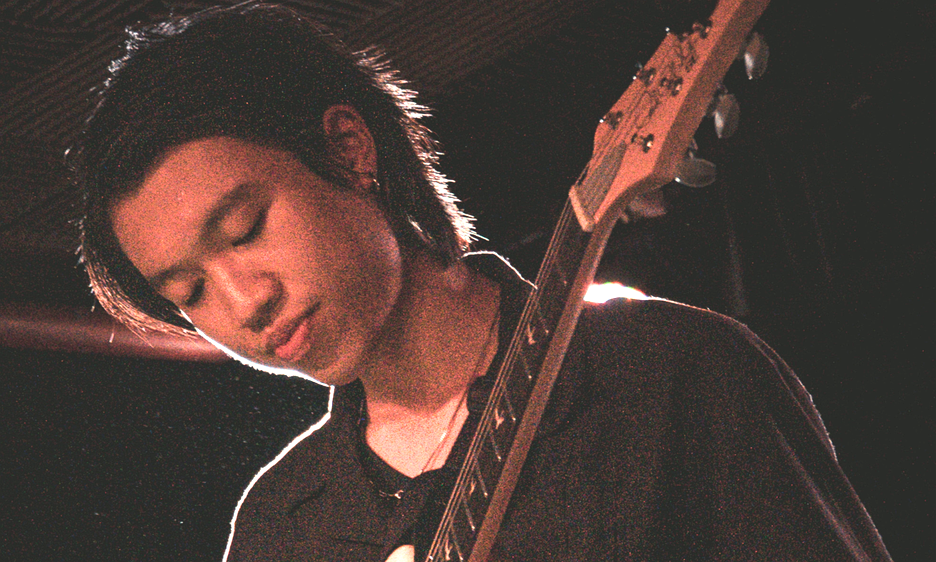
Chinese tradition taught me subtlety. It taught me that emotion does not always need to announce itself.
—Dewey Huang
A walking bass line on "Fly Me to the Moon" eventually pulled Huang toward jazz, leading him to take a gap year to study full-time in Beijing, form his first quartet, and discover his voice as a live arranger. The Mandarin pop his mother sang at home, from Teresa Teng and earlier generations, and the Chinese literary tradition he absorbed as a young student would later become the foundations of his sound.
Since moving to New York, Huang has developed the Mandarin Bossa Nova project, an evolving body of work that brings together Mandarin lyricism, bossa nova groove, jazz arranging, and contemporary production. His song "Things Only I Know," a collaboration with Anabella Ross, earned an Indie Song of the Year nomination at the Asian Music Industry Festival. He premiered his Suite at La MaMa with strings and a jazz ensemble, has been recognized through the Songwriters Hall of Fame Scholar Award and the Johnny Mercer Foundation, and has been featured twice as a bandleader at Producer Mondays at Nublu 151, the long-running New York series led by Grammy-nominated musician Ray Angry.
All About Jazz spoke with Huang about discovering jazz through a single bass line, the creative charge of hip-hop, the gamble of leaving economics behind, the lyricism he carried from China, and building a project that bridges Mandarin songwriting and Brazilian music.
All About Jazz: Hi Dewey, thank you so much for speaking with me today. Your music brings together Mandarin songwriting, jazz harmony, Brazilian rhythm, hip-hop, and contemporary production in such a personal way. Before we get into all of those worlds, what first opened jazz up for you?
Dewey Huang: That was one of the first moments when I actively listened to actual jazz recordings with real curiosity. Learning that walking bass line pushed me to check out more jazz, and eventually to see live jazz in person. It also helped me understand some basics of the jazz language, especially arpeggios, improvisation, and feel. Before that, guitar was mostly chords, songs, and accompaniment for me. That moment showed me how bass line, harmony, rhythm, and melody could all be connected.
AAJ: That curiosity eventually led you to the JZ Club in Guangzhou. What did that room teach you as a listener?
DH: I still remember how fascinating it was the first time I went to see live jazz. I could focus on any musician on stage and hear so many details in their performance. The amount of dynamics, variation, and communication constantly kept my interest. That experience taught me more than harmony or improvisation. I learned how musicians listen to each other on stage, how a soloist leads without speaking, how the rhythm section responds, and how a room can become a community.
AAJ: At the same time, you were studying economics and statistics and producing music in your dorm. When did music stop feeling like something on the side?
DH: I was doing well in my major, but I was spending half of my time chasing music. I was obsessed with writing and producing, and I kept finding more people in my circle to work with. At some point, I realized that I felt proud to be identified as someone who makes music. That identity meant more and more to me.
AAJ: You were also deeply involved in your university's hip-hop and rap community. What kind of creative environment were you surrounded by then?
DH: Those years were very important because I was surrounded by people who were making music out of passion and necessity, not career strategy. I met so many talented creators in my college hip-hop community, and I felt lucky to collaborate, release music, and go to competitions with them.
Later in Beijing, I joined a community of skilled musicians who were serious about jazz. Forming my first jazz quartet was a big pivot point for me, and it helped me discover my potential as a live arranger. I am constantly pushed by the urge to become excellent when I am around talented creators. It is about seeing what is possible through someone else. It is peer pressure, but in a good and inspiring way.
AAJ: You have described hip-hop as something that unlocked your creativity. Do you feel a connection between freestyling and jazz improvisation?
DH: Both require freedom within structure. In freestyling, you need rhythm, vocabulary, timing, and instinct. You respond to the beat, the room, and your own thoughts in real time. In jazz improvisation, it is similar. You need to know the form and harmony deeply enough that you can move freely inside it. The next step is to find your voice, use your voice, tell your story, and show your attitude.
AAJ: Choosing music seriously meant leaving a more predictable path. What did those conversations with your family sound like?
DH: There were many conversations over time. My family is not musical, so they did not really understand that world. From their perspective, music was much more uncertain compared with economics and statistics. They wanted stability for me, which I understand completely. I proved myself through my consistent commitment to creating music, which they saw when I was home during the holidays. They used to complain that I played computer games too much, but later they saw that I was either practicing, writing, or producing.
I also proved myself by getting offers from music graduate programs. I prepared portfolios by myself and showed them that this was not a fantasy but real work. I had songs, arrangements, recordings, performances, and a real study plan. I think they eventually realized that I was not running away from discipline. I was choosing a different kind of it.
AAJ: After that, you took a gap year to study jazz full-time in Beijing. Did that feel more frightening or freeing?
DH: The fear was mostly about giving up certainty. With economics, there was a clearer path. With music, especially coming from a nontraditional background, there was no guarantee that I could catch up or belong. At the same time, the idea of taking a gap year was also comforting because I finally had a chance to sit in a room where music was taken seriously every day and work on my foundations with full commitment.
AAJ: Then you came to New York, where the pace and density of the music scene are very different. What did New York give you musically, and what did China give you that you still carry?
DH: There is so much going on in New York. There are so many musicians, writers, producers, venues, sessions, schools, and communities layered on top of each other. You can go to a rehearsal in the afternoon, a recording session at night, and then hear a world-class musician at a small club after midnight. That density creates pressure, but it also creates possibility.
What China gave me was a deep sense of lyricism and cultural memory. I think Chinese traditional literature and poetry are treasures worth learning from for a lifetime. Even in my limited time studying them when I was younger, I absorbed so much beauty from that tradition, and it will forever hold an inspiring space in my creative mind.
AAJ: That sense of lyricism seems closely connected to how you arrange. How does Chinese poetry shape the way you write for musicians?
DH: In a lot of Chinese poetry, the image is never over-explained. A few words can create weather, distance, loneliness, memory, or longing. That affects the way I arrange. I try to get to the point and let it breathe, then the audience will meet the song halfway.
AAJ: You also talk a lot about contrast, especially the need for a bridge or another perspective inside a song. Where does that instinct come from?
DH: I think emotion becomes meaningful through contrast. Happiness means more when you feel what it is pushing against. Melancholy becomes beautiful when there is light inside it. In songwriting, I often want a bridge because I need another perspective. I want the main idea to return with more meaning.
I know a piece has enough contrast when the return feels earned. If the final chorus or final section feels exactly the same emotionally as the first one, something may be missing. But if the listener comes back to the same melody with a different understanding, then the journey has worked.
AAJ: Bossa nova clearly became another important language for you. What made it feel like home rather than just an influence?
DH: Bossa nova and samba carry sadness with beauty, and they have groove, so you can almost dance the sadness away. The emotional and musical sophistication those artists created was deep. Once I started learning the Portuguese lyrics, which are incredibly percussive and beautiful, it elevated my understanding of rhythm and the world of images a song can create.
AAJ: At the same time, Mandarin popular music was already part of your memory through Teresa Teng and earlier generations of singers. Did that help you understand Mandarin Bossa Nova as part of a longer conversation?
DH: It proved to me that this kind of music has always had the potential to work beautifully. It also connected a lot of dots for me because Teresa Teng was a household name, and my mother sang her classics at home all the time. Now I feel nostalgic every time I think about those songs. The Mandarin Bossa Nova project became an intersection of my artistic pursuit, personal connection, and cultural tradition.
AAJ: One of your earlier cross-cultural works was a jazz arrangement of "Jasmine Flower." What were you trying to discover with that piece?
DH: I was testing whether a traditional Chinese melody could live inside a jazz language without losing its identity. "Jasmine Flower" is so familiar and culturally loaded that I had to be careful. I was able to maintain the emotional identity of the pentatonic melody while adding jazz harmony and feel, and that created something new and beautiful.
AAJ: After moving to New York, when did the city's cultural mix start to feel real in your own music?
DH: I felt it when I made my first few recording projects and put my first live shows together in New York. I would be in a room with musicians from completely different backgrounds—jazz players, classical string players, R&B singers, Brazilian musicians, theater writers—and somehow everyone could do what they did best and contribute to the music.
Openness is what New York does at its best. It does not just put cultures next to each other. It allows them to interact through real people, real rooms, and real work. For me, that became the foundation of the Mandarin Bossa Nova project.
AAJ: "Things Only I Know" with Anabella Ross became one of your most recognized works. What did collaboration bring to that song that composing alone could not?
DH: I wrote that song back in 2022 in Beijing, performed it at my recital with my quartet, got notes from my instructors, and polished it as much as I could. But the collaboration is what really brought it to life. Working with Anabella was the best thing that could have happened to the song. Her interpretation, her voice, and her Brazilian-American background aligned perfectly with its aesthetic.
I live-tracked the band in New York like a real jazz record, which gave the recording a liveness I could never get from virtual instruments on my laptop, and it only took three or four takes to get there. The collaboration went beyond music as well. The visuals were owed to my friend Ling, a passionate photographer who is a data scientist during the day. She captured the nature of the song and shot the album cover and promotional content.
The nomination meant a lot because it showed me the work could travel beyond my private world. It is inspiring to see how a personal and vulnerable song can resonate. For independent artists today, a song is not just something you upload. A professional release involves writing, arranging, recording, production, distribution, credits, royalties, visuals, and press. I am glad all of those elements were recognized as a whole.
AAJ: You later premiered the Suite at La MaMa with strings and a jazz ensemble. What does that music become live that it cannot fully become on a recording?
DH: The sensational experience of hearing a live jazz band play with lush string writing is incomparable and hard to fully capture in a recording. Every live performance is a conversation between the performers, the audience, and the room. The premiere was special because most of the audience did not understand Mandarin and needed to be introduced to the Eastern aesthetic behind the work. To reach them, I had to transform music inspired by my own culture into a universal form and let the music speak for itself.
Where I want to take the project next is toward a fuller live and recorded form: more developed arrangements, more performances, and eventually a body of work that can stand as a bridge between Mandarin songwriting, Brazilian music, jazz arranging, and contemporary production. I want it to feel intimate, but also large enough to hold the communities and traditions that shaped it.
AAJ: You have also been featured twice at Producer Mondays at Nublu. What did that room teach you about your work as a bandleader?
DH: Being featured at Producer Mondays twice was an important step because it placed my original work inside a real New York live-music environment, in front of listeners with very sophisticated ears. It is a space where serious working musicians, emerging artists, and major creative figures exist in the same ecosystem. That kind of room gives you an honest answer. If the music does not have identity, people feel it immediately.
With that standard of musicianship around me, I felt constantly inspired to present my best work. I thought carefully about the transitions between songs, the flow of the set, the way I interacted with the audience, and how each arrangement could breathe in the room. In many ways, I was curating my strongest live set up to that point.
As a featured artist, I was invited to present my own songs, arrangements, and musical direction. Those performances helped me see myself more clearly not only as a songwriter and producer, but as a bandleader building an original live language. Being invited twice gave me confidence that the work could live beyond my own desk.
AAJ: Where do you feel the Mandarin Bossa Nova project is heading next?
DH: I want to keep developing the Mandarin Bossa Nova project into a fuller live and recorded body of work. That means writing more, developing the arrangements further, and creating more opportunities for the music to exist in front of people, not only as recordings but as live experiences. I hope the project can continue to grow as a bridge between Mandarin songwriting, Brazilian music, jazz arranging, and contemporary production. I want it to feel personal and intimate, but also large enough to hold the communities, languages, and traditions that shaped it.
AAJ: How can people find your music and follow what you are doing?
DH: The best way is through my website, streaming platforms, and Instagram, where I share new releases, performances, and updates about the project. Thank you, May, for the thoughtful questions and for giving me space to talk about this music.
 FOLLOW May Yu
and get notified whenever a new article published.
FOLLOW May Yu
and get notified whenever a new article published.
May Yu is a New York–based classical and jazz violinist, music business professional, and All About Jazz contributor whose work bridges performance, education, writing, and the modern music industry.
About Dewey Huang
Tags
PREVIOUS / NEXT


Become a Sustaining Member

Since 1995, All About Jazz has championed jazz as an art form and supported the musicians who create it. Over three decades, it has grown into one of the world's leading jazz resources, serving hundreds of thousands of readers, musicians, presenters and industry professionals each month.
Help Build the Future of All About Jazz
Your support helps us continue building All About Jazz for the next generation—expanding our editorial coverage, preserving jazz history, developing new community features and creating better ways to discover the music and the people behind it.
Become a sustaining member for as little as $20 per year and you'll immediately enjoy an ad-free experience along with access to subscriber features and future articles for a full year.
Together, we're not simply sustaining All About Jazz—we're building its future. Thank you for being part of the journey.