Home » Jazz Articles » Interview » Clément Reboul: How to Love and Learn Gypsy Jazz
Clément Reboul: How to Love and Learn Gypsy Jazz
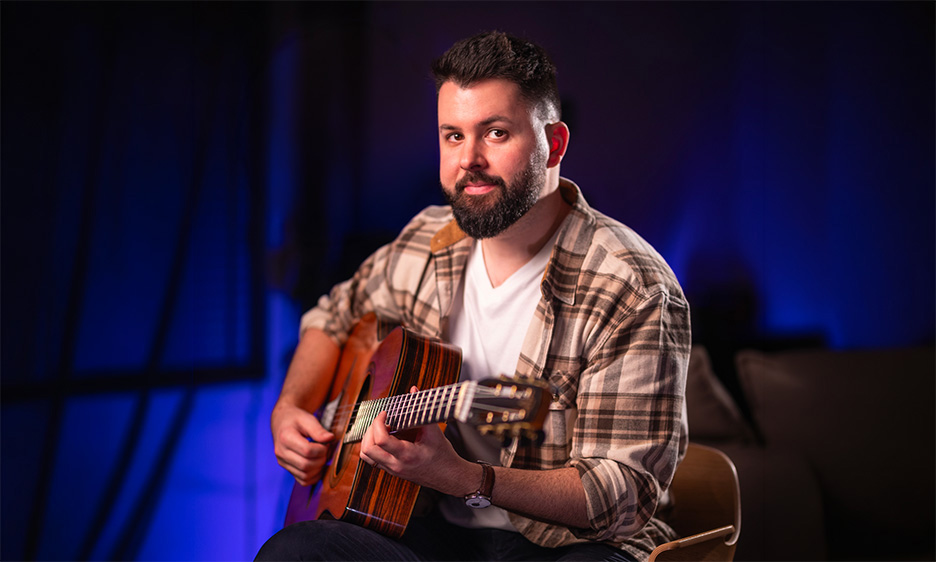
Gypsy jazz has never been just a style of guitar playing. It is a musical language, a tradition, and above all, a living music that deserves to keep being discovered and passed on.
—Clément Reboul
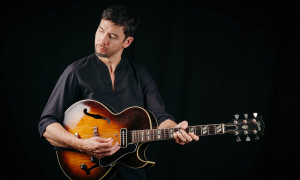
Having launched his gypsy jazz educational YouTube channel in 2009, Reboul possesses a well-thought-out framework for explaining the genre—what to listen for and how to get started playing—that merits sharing with the AAJ community.
The Heart of Gypsy Jazz
All About Jazz: I've heard this style of music called gypsy jazz, jazz manouche, or even hot jazz. Which term do you prefer and why?Clément Reboul: In English-speaking countries, "gypsy jazz" is the most widely understood term. In France, we commonly use "jazz manouche," which references a sub-group of the Romani people.
Both terms describe the same musical tradition: the style that developed around Django Reinhardt and Stephane Grappelli in France in the 1930s, combining American swing with a very distinctive European sound and approach to the guitar.
"Hot jazz" is different. It's a broader term associated with early jazz and the energetic, improvisational music of the 1920s and 1930s. That music was a major influence on Django, but not all hot jazz is gypsy jazz.
AAJ: What makes the style immediately recognizable to the listener?
CR: The most distinctive characteristic of gypsy jazz is the rhythm section, especially the combination of rhythm guitar and double bass. The rhythm guitar technique we call "la pompe" ("the pump") is at the heart of the sound. You can play the same melody and the same chords, but without that rhythmic feel, it simply doesn't sound like gypsy jazz. In the classic Quintette du Hot Club de France format, there was no drummer, so the guitars and bass had to provide both the harmony and the rhythmic drive.
The acoustic nature of the instruments is also very important. Guitars, double bass, violin or clarinet create a very organic sound.
Then there is the language of improvisation. Gypsy jazz has a vocabulary of very characteristic phrases and licks, many of them inherited directly from Django Reinhardt and then passed down from one generation of musicians to another. Some of these phrases are so distinctive that you can hear just a few notes and immediately think, "that's gypsy jazz."
AAJ: Django Reinhardt remains the central figure of gypsy jazz. What makes his music still feel so alive and relevant more than 70 years after his death?
CR: What still amazes me about Django is how modern his playing can sound. Of course, some recordings are very much rooted in the swing era, but when you listen to his improvisations, there is an incredible sense of freedom, creativity and rhythmic sophistication. Some of his phrases could almost have been invented yesterday.
He also had a very strong musical identity. You only need to hear a few notes to recognize Django. That's something every musician can learn from: technique is important, but ultimately the goal is to develop your own voice.
His story becomes even more remarkable when you consider the accident that severely damaged his left hand. After being badly burned in a fire, he lost much of the use of his ring and little fingers. Rather than giving up the guitar, he essentially rebuilt his technique around his two fully functional fingers. He mainly used his index and middle fingers for single-note lines, while finding ingenious ways to use his injured fingers for certain chords.
That's one of the things I find most inspiring about him: limitations don't necessarily prevent creativity. Sometimes they can actually shape it.
AAJ: What exactly is "la pompe?" How does this guitar technique replace the role of the drum kit in a traditional gypsy jazz ensemble?
CR: "La pompe" is the traditional rhythm guitar technique used in gypsy jazz, and it is really the engine of the music. In a traditional ensemble without drums, the rhythm guitar and double bass together provide the entire rhythmic foundation.
The basic idea may sound simple: four beats per bar, with a very characteristic attack and release of the chords. But playing a convincing pompe is much more nuanced than simply strumming four chords. The duration of each chord, the accent, the attack of the pick, the dynamics and, above all, the placement of every beat are extremely important.
In a way, the rhythm guitarist has to think like a drummer. The double bass provides the foundation while the short, percussive attack of the rhythm guitar creates much of the drive you might otherwise associate with a drum kit.
For me, the difference between a good pompe and a great one is the groove. A great rhythm guitarist doesn't just play the correct pattern. He listens constantly to the other musicians, adjusts his dynamics, and creates a pulse that makes everyone else want to play.
That's also why "la pompe" is often underestimated by beginners. The basic movement can be learned relatively quickly, but developing the right feel can take years. When it's really good, you almost stop noticing the rhythm guitar itself. You simply feel the whole band swinging.
Learning and Teaching Gypsy Jazz
AAJ: Do you need a strong understanding of jazz theory to improvise gypsy jazz?CR: You definitely don't need a deep knowledge of jazz theory before you can start playing gypsy jazz. Theory can be extremely useful, especially as you progress, but I see it more as a tool to understand and organize the music rather than a prerequisite for making music.
Gypsy jazz has traditionally been learned a lot through listening, imitation and playing with other musicians. You listen to Django or another player, learn a phrase you like, understand where it works, and gradually incorporate it into your own vocabulary. Over time, you start recognizing recurring sounds, chord movements and harmonic ideas, sometimes before you even know their theoretical names.
Personally, I have a good understanding of harmony and music theory, but I don't read standard music notation. That has never prevented me from understanding, playing or teaching gypsy jazz. It's important to make that distinction: understanding music and being able to read written music are two different skills.
AAJ: What foundations do you emphasize when you teach?
CR: In my teaching, I like to combine formal exercises and aural experience. I want students to understand the chords, arpeggios and harmonic relationships they are playing, but I also want them to build a real musical vocabulary by learning phrases and solos from great players.
Ultimately, knowing that a certain scale theoretically works over a chord doesn't automatically make an improvisation sound like gypsy jazz. The phrasing, rhythm, articulation and vocabulary are what give the music its identity. Theory can tell you which notes are available; listening and experience teach you what to do with them.
AAJ: What makes playing gypsy jazz guitar different from playing mainstream jazz, rock, or blues?
CR: Gypsy jazz guitar has a very distinctive technique and sound. If you come from rock, blues or even mainstream jazz guitar, you quickly realize that many of your habits don't translate directly.
One of the biggest differences is the right-hand technique. Traditionally, gypsy jazz players use a very firm pick and a technique often called rest-stroke picking. The pick doesn't simply pass through the string; on many strokes it comes to rest on the next string. There is also a strong emphasis on downstrokes, especially when changing strings. This produces a powerful attack and a lot of projection.
That technique makes sense when you remember that this music was originally played acoustically. A soloist had to be heard over several rhythm guitars and a double bass without an amplifier. The traditional Selmer-Maccaferri-style guitars, steel strings and picking technique all contribute to that bright, percussive and projecting sound.
The left hand also has its own vocabulary. You'll encounter chord shapes, arpeggios, embellishments and fingerings that aren't necessarily what a rock, blues or mainstream jazz guitarist would naturally use. And because Django developed such a recognizable language, generations of players have studied and absorbed many of his phrases and approaches.
The biggest difference, in my opinion, is not purely technical. It's the phrasing. You could play the "correct" scales over all the chords and still not sound like gypsy jazz. The accents, articulation, rhythmic placement and vocabulary are what really create the style. That's why a very accomplished guitarist from another genre can pick up a gypsy jazz guitar and still sound like a rock or jazz guitarist at first. The notes may be right, but learning the accent of the language takes time.
AAJ: As a teacher, how do you maintain the spirit of learning by doing/interacting while incorporating online lessons that are possible today?
CR: That's actually one of the biggest challenges of teaching today. Traditionally, this music wasn't learned by sitting in a classroom with a textbook. You learned by being around other musicians: watching their hands, listening carefully, copying phrases, asking questions and, most importantly, playing together.
When I started teaching online, I didn't want to lose that aspect of the music. Video is particularly well suited to gypsy jazz because students can see exactly what I'm doing, hear the result, slow things down and repeat a passage as many times as necessary. In a way, it recreates part of that traditional process of sitting in front of another musician and observing how he plays.
But online teaching also provides an opportunity to add something that traditional transmission sometimes lacks: structure. Instead of simply showing someone a lick and saying, "Do this," I can break it down, explain why it works, show where it can be used, and progressively build the technical and harmonic knowledge around it.
When teaching, I use a lot of demonstrations, close-up views of both hands, exercises, backing tracks and complete solos. Students should listen and imitate but also understand what they're doing. The goal isn't for them to memorize hundreds of isolated licks. It's to gradually absorb the language and eventually make it their own.
Of course, there is one thing an online course can never completely replace: playing with other musicians. That's where you develop interaction, timing, dynamics and the ability to react to what someone else is playing. So I don't see online education as replacing the traditional way gypsy jazz has been transmitted. I see it as another way of opening the door. Someone can now discover and seriously learn this music even if there isn't a gypsy jazz community or an experienced teacher anywhere near where they live. And once they've built that foundation, the best thing they can do is take it out into the real world and play with others.
Today and Tomorrow
AAJ: Do you see a younger generation emerging to carry this music forward, both as musicians and listeners?CR: I see younger musicians discovering Django all the time, often through YouTube, Instagram or other online platforms.
What's interesting is that the music continues to attract players despite being rooted in a repertoire and a sound that are almost a century old. I think part of the reason is that gypsy jazz is incredibly immediate. It's acoustic, energetic and very social. You can put a few musicians around a table with two guitars, a violin and a double bass, and make exciting music without needing a stage, a computer or even electricity. There's something very appealing about that today.
At the same time, I don't think the future of gypsy jazz should simply be about reproducing Django Reinhardt forever. Django created a language, but he was also an extremely curious musician who evolved throughout his career and absorbed new influences. I think the best contemporary players have the same spirit: they respect the tradition while bringing their own influences, compositions, sounds and personalities into the music.
AAJ: For someone discovering gypsy jazz for the first time, which essential recordings would you recommend?
CR: If you're discovering gypsy jazz for the first time, you obviously have to start with Django Reinhardt. Rather than recommending just one album, I would suggest listening to a selection of the recordings he made with Stéphane Grappelli and the Quintette du Hot Club de France in the 1930s and 1940s. Recordings such as "Minor Swing," "Les Yeux Noirs," "I'll See You in My Dreams," and "Nuages" contain so much of the vocabulary that still defines this music today.
I would also recommend listening to Django's later recordings from the early 1950s. They're fascinating because you hear a different Django, influenced by bebop and more modern jazz. It reminds us that he wasn't simply the guardian of one particular style. He continued evolving as a musician.
For a more modern perspective, I would definitely recommend Bireli Lagrene. His album Gipsy Project & Friends (Dreyfus Records, 2002) is a great example of how incredibly sophisticated and virtuosic this music can become while remaining deeply connected to Django's language.
I would also point people toward Angelo Debarre and The Rosenberg Trio. They each have their own personality, but both are wonderful examples of the modern gypsy jazz tradition and demonstrate just how far the language has developed since Django.
My advice, though, would be not to listen only to guitar solos. Pay attention to the rhythm guitar, the double bass, the interaction between the musicians and the way the groove feels. That's where you really begin to understand what makes this music special.
AAJ: Where is gypsy jazz headed?
CR: For me, gypsy jazz has never been just a style of guitar playing. It is a musical language, a tradition, and above all, a living music that deserves to keep being discovered and passed on.
Over the years, the Internet and social media have completely changed the way this tradition can be transmitted. Someone can hear Django Reinhardt for the first time today, become fascinated by his music, and immediately begin exploring an entire world of recordings, musicians and educational resources. That's incredibly exciting.
 FOLLOW Scott Lichtman
and get notified whenever a new article published.
FOLLOW Scott Lichtman
and get notified whenever a new article published.
Jazz/fusion keyboardist & autograph collector in Stamford CT.
About Clement Reboul
Tags
PREVIOUS / NEXT

Become a Sustaining Member

Since 1995, All About Jazz has championed jazz as an art form and supported the musicians who create it. Over three decades, it has grown into one of the world's leading jazz resources, serving hundreds of thousands of readers, musicians, presenters and industry professionals each month.
Help Build the Future of All About Jazz
Your support helps us continue building All About Jazz for the next generation—expanding our editorial coverage, preserving jazz history, developing new community features and creating better ways to discover the music and the people behind it.
Become a sustaining member for as little as $20 per year and you'll immediately enjoy an ad-free experience along with access to subscriber features and future articles for a full year.
Together, we're not simply sustaining All About Jazz—we're building its future. Thank you for being part of the journey.