Home » Jazz Articles » Live Review » Chris Dave, Pino Palladino and Isaiah Sharkey Trio At Th...
Chris Dave, Pino Palladino and Isaiah Sharkey Trio At The Blue Note Jazz Club
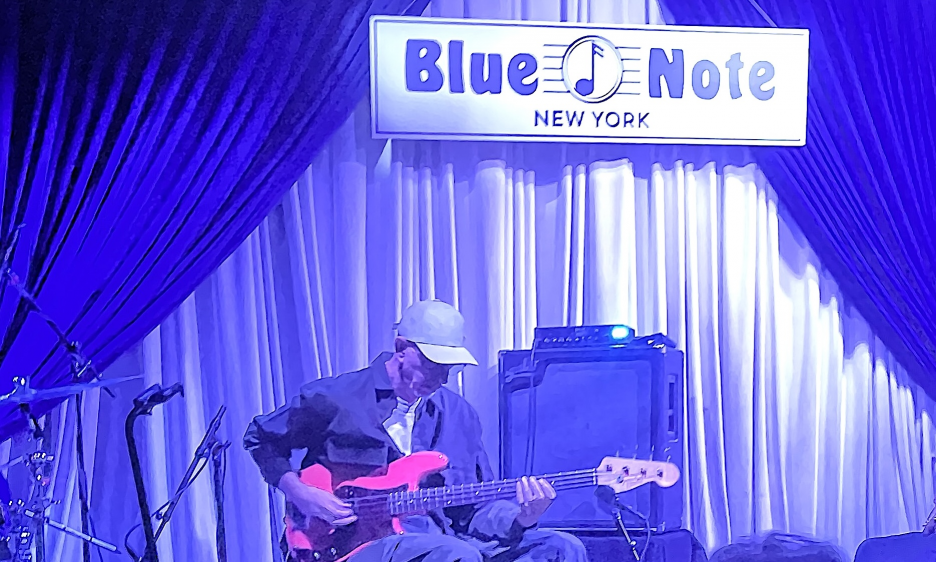
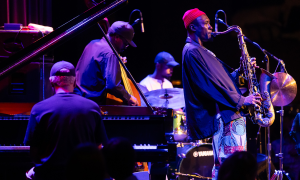
Courtesy Chris DeRosa
It was as if an invisible puppeteer were controlling their movements, commanding them to shift gears instantly on a dime and then right back again.
Blue Note Jazz Club
New York, NY
February 2, 2026 (11pm Set)
Hello, my name is Chris DeRosa, and this is what I heard...
Tonight's show took place at the legendary New York City venue, the Blue Note Jazz Club. This venue has been the go-to nightclub for top jazz performers and devoted patrons for over 45 years. This performance proved exactly why.
The members of the Chris Dave / Pino Palladino / Isaiah Sharkey Trio may not be household names to the casual listener, but they are among the most respected session and live musicians working today. Drummer Chris Dave, born in Houston, Texas, has recorded and performed with Justin Bieber, Meshell Ndegeocello, and Adele. Bassist Pino Palladino, born in Wales, has worked with The Who, John Mayer, and Beyoncé. Guitarist Isaiah Sharkey, born in Chicago, Illinois, has collaborated with Paul Simon, Patti Labelle, and Keith Urban.
These three unlikely bandmates first crossed paths while working on D'Angelo's Black Messiah (RCA Records, 2014), the last album released during his lifetime. Through that project and subsequent performances, they developed a deep musical kinship and bond. A recent Grammy tribute to D'Angelo reunited them once again and, fortunately for audiences, led to a handful of live dates celebrating the chemistry they forged a decade earlier. With no release to promote and only their collective histories as reference points, we were not quite sure what to expect, but with ears and mind wide open, we were about to witness something special and unique.
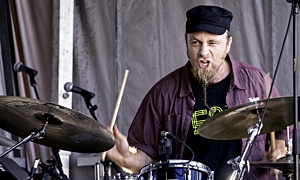
The set opened with a prerecorded vamp of an "I Need Some Money" chant over a fat 2 & 4 backbeat. Slowly, the three members walked onstage and began replacing the groove live as they settled into the night's vibe. Once locked in, the trio transitioned effortlessly into Chick Corea's "Quartet No.1" from Three Quartets (Warner Bros. Records, 1981). This version could have comfortably been a track on Pat Metheny's Bright Size Life (ECM Records, 1976) but with a slightly more R&B-leaning aesthetic. This was made possible due to Dave's choice of drums in his kit. His highly unique predilection for broken cymbals, multiple detuned snare drums, and an array of odd percussion that included several different-sized bongos helped emit this inner-city vibe. It was surprising how fluently each member navigated the complicated arrangement and jazz vocabulary required for such a composition. There seemed to be far more under the hood here than was obvious to the naked eye.
The second and last formally identifiable tune of the night was Steely Dan's "Aja" (ABC Records, 1977). This rather refreshing revamp of the classic tune included everything familiar but with a rhythmic veracity that is unlikely Donald Fagen or Walter Becker (the composers) could have imagined. The trio proceeded to bend and reshape the groove in multiple ways to create a sonic limp while still keeping the momentum and feel intact. These first two compositions were likely simply a springboard to soar from. Nothing from this point on was recognizable as a prerecorded, commercially available song, yet they still managed to draw you in and keep you smiling.
The next selection featured a medium-tempo, flowing eighth-note bossa nova groove. Dave worked a small mixing board positioned to his left to add delays and pitch shifts to his drums, especially when he dropped out. The degree of musicality and concentration was extraordinary. It was tempting to compare the sound they created to a well-laid tile floor, even and exact, with Palladino's bass lines acting as the perfect grout, making everything rock solid and comfortable to the ear.
More music followed with guitar swells under a very solid 2 & 4 backbeat, paired with a broken Hi-hat pattern that visually suggested a limp, while cowbell and bongo triplets appeared and disappeared like passing shadows. Just like that, gears would shift and the trio would channel Return to Forever through a highly syncopated, unison, chop-infused melody line.
It was as if an invisible puppeteer were controlling their movements, commanding them to shift gears instantly on a dime and then right back again. The rhythmic modulations and transitions were so smooth and seamless they seemed to come from one mind. It was not clear if it was from their high level of musicianship, hours of endless rehearsing, or some unnatural synchronicity that made this display possible, but the result was undeniably captivating.
As the night continued, the trio wove through various feels with machine-like precision. One recurring concept involved mutating rhythmic phrases in a playful attempt to "stump" the other band members from ending together. Dave frequently manipulated tempos and dynamics in an effort to catch the others off guard and outsmart them. The audience clearly enjoyed the musical gamesmanship, and it was remarkable to witness how deeply connected the trio remained throughout.
The next selection featured an improvised vamp with haunting, reverb-soaked vocals from Sharkey. Over a lush, supportive backdrop, he repeated the line "You're losing, you're losing me" before launching into a George Benson-like scat solo. The jam gradually evolved into Marvin Gaye's "You're All I Need to Get By" before dissolving into silence.
The night continued with another straight backbeat groove, mostly used as transitional material to the next "idea." These straight jams often stretched four or five minutes before one of them would erupt into a pre-arranged riff or motif. Imagine if Frank Zappa played r&b but spontaneously inserted one of his complicated motifs at will. The final 20 minutes built toward an intense climax centered on a recurring "stump the band" unison motif performed in multiple tempos, dynamics, and rhythmic interpretations. The trio would leap from samba to afrobeat and back again, spontaneously returning to the motif time and again, leaving the audience visibly astonished.
Words alone cannot fully capture what transpired, but the experience made it clear why the biggest names in music continue to seek out these musicians. Much appreciation goes to this trio for an evening of fearless creativity and for their lasting contributions to the art form.
 FOLLOW Chris DeRosa
and get notified whenever a new article published.
FOLLOW Chris DeRosa
and get notified whenever a new article published.
Chris is a Brooklyn-based professional freelance drummer/producer/composer.
About Chris Dave
Tags
PREVIOUS / NEXT

Become a Sustaining Member

Since 1995, All About Jazz has championed jazz as an art form and supported the musicians who create it. Over three decades, it has grown into one of the world's leading jazz resources, serving hundreds of thousands of readers, musicians, presenters and industry professionals each month.
Help Build the Future of All About Jazz
Your support helps us continue building All About Jazz for the next generation—expanding our editorial coverage, preserving jazz history, developing new community features and creating better ways to discover the music and the people behind it.
Become a sustaining member for as little as $20 per year and you'll immediately enjoy an ad-free experience along with access to subscriber features and future articles for a full year.
Together, we're not simply sustaining All About Jazz—we're building its future. Thank you for being part of the journey.