Home » Jazz Articles » Interview » Antonio Forcione and Cenk Erdoğan: A Masterclass in Musi...
Antonio Forcione and Cenk Erdoğan: A Masterclass in Musical Storytelling
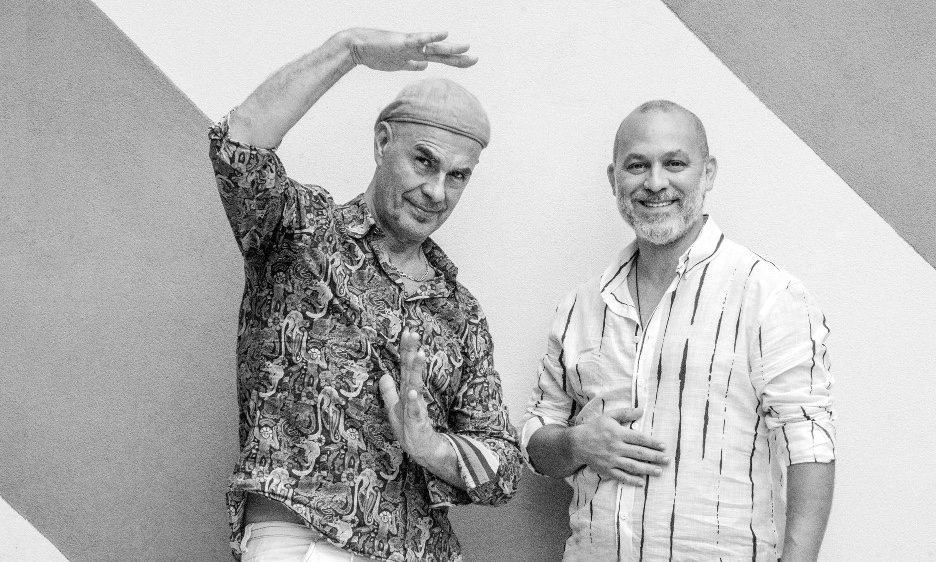

The duo format is naked. There is nowhere to hide. Every note and every breath matters... It demands playing and listening at a molecular level.
—Antonio Forcione
The two musicians first crossed paths two decades ago in the vibrant cultural landscape of Istanbul. At the time, Forcione—already an internationally acclaimed force in jazz and world music—recognized a rare, vocal-like honesty in the playing of a young Erdoğan. He extended an invitation for the bassist to join him in London, but the complexities of life and geography intervened. The two went their separate ways, carving out prestigious careers on opposite sides of the continent: Forcione as a boundary-pushing soloist and collaborator with legends like Charlie Haden; Erdoğan as a Grammy-winning composer and a pioneer of the fretless guitar.
It was not until they met on the neutral ground of Sofia, Bulgaria, that the "intermission" finally ended.
Storytellers captures the essence of this long-delayed reunion. It is an album defined by "four hands on the table"-a metaphor for two master chefs working in a single kitchen. Here, the percussive, rhythmic freedom of Forcione's steel strings meets the microtonal, Anatolian soul of Erdoğan's fretless melodies. The result is a sound that transcends the "East meets West" cliché, opting instead for a profound, molecular level of listening where neither ego nor artifice finds room to breathe.
In the following interview, Forcione and Erdoğan discuss the mechanics of the fretless guitar, the vulnerability of the duo format, and why some stories require two decades of silence before they are ready to be told.
All About Jazz: Mr. Forcione, you encouraged Mr. Erdogan to come to London nearly two decades ago after hearing his fretless guitar in Istanbul. What was it about his playing that stayed with you all those years, and what made Sofia the right time and place to finally realize this collaboration?
Antonio Forcione: I first heard Cenk at a masterclass I was giving in Istanbul many years ago; it was his honesty and his passion that impressed me. His fretless guitar didn't sound like an instrument trying to impress; it sounded like a voice searching. Why Sofia? Sometimes collaborations don't happen because the calendar says so—they happen because life turns that way. Cenk would contact me now and then, and when Jazz Plus suggested working with him, the moment felt natural. Sofia became a neutral ground—not London, not Istanbul—a space where two journeys could meet without hierarchy.
AAJ: Mr. Erdogan, the fretless guitar allows for microtonal expression that a standard guitar cannot achieve. How did you approach blending Anatolian musical traditions with Antonio's jazz, flamenco, and world music vocabulary? Were there moments where the two languages seemed incompatible?
Cenk Erdoğan: The fretless guitar is an intersection between guitar vocabulary and Anatolian folk and Ottoman classical music. I am a composer who feels both worlds equally inside me. When I play with Antonio, I can hear the influences in his beautiful playing. I hear Africa, Spain, and jazz, of course. I never felt that we were incompatible. We are individuals who try to tell stories with our own languages from the same perspective.
AAJ: Can you each describe a moment on the album where you had to step outside your comfort zone to meet in that shared musical space you've created?
CE: There are, of course, some moments where you use your professionalism. You can play a particular part or a melody, but you don't feel it naturally. But for guitarists like us, this is a part of our job: to find solutions and also add emotion to those moments.
AF: Stepping outside my comfort zone is something I do quite often with musicians from different backgrounds, as it means letting go. With Cenk, there is no exception; the music asks us to trust the air between the notes.
AAJ: Antonio, your discography shows you've primarily worked solo or leading your own groups. What drew you specifically to a duet format for this project rather than expanding to a trio or quartet? What does the duo allow that a larger ensemble might constrain?
AF: The duo format is naked. There is nowhere to hide. Every note and every breath matters. I have worked with orchestras, quartets, and ensembles, and I love that richness. But a duo is like two close friends speaking late at night. It demands playing and listening at a molecular level.
AAJ: Cenk, for listeners unfamiliar with the fretless guitar, can you explain how it changes your relationship to melody and phrasing? Does the absence of frets make you think more like a vocalist or a string player than a traditional guitarist?
CE: The guitar is an instrument that you start to learn vertically. All of the chord shapes and scale practices are, most of the time, played vertically. But when you start playing the fretless guitar, you understand how to express the melody horizontally. The fretless guitar sounds very close to the human voice. You can see different examples of fretless instruments, like the "sarod" from Indian music, which shares the same mentality of playing: imitating the human voice. So, I feel that the fretless guitar gives you more freedom and possibilities.
AF: Listening to Cenk play fretless guitar, I feel he thinks like a singer and a violinist at the same time. The absence of frets removes the grid, and without a grid, you are responsible for intonation emotionally, not mechanically. That changes the phrasing. It becomes breath-based rather than pattern-based.
AAJ: The album is called Storytellers, and each piece has its own narrative quality. What story do you feel these songs tell—both individually and as a complete work? Is it your story as musicians, or something more universal?
CE: We tell our own stories in our compositions. Like a regular conversation, Antonio tells me a story and I accompany him—which means I am listening to him. Then I tell my story, and he listens and supports me. It is in our nature as human beings; we can also tell other people's stories, like kids who are suffering from war or about some values that have been lost. It depends on the person who opens his eyes and heart to the world instead of living inside his cage. The more you look around, the more you understand; then you can compose and get along with yourself better than before.
AF: Storytellers is not an autobiography in a literal sense. It is more like emotional archaeology, if we can say so. Each piece carries a narrative—sometimes personal, sometimes imagined. But together, they tell a story about an encounter. Two men from different shores sitting at the same table, where the difference between us enriches and does not divide.
AAJ: The album is described as "four hands on the table"—Cenk's metaphor for two chefs cooking together. Can you walk us through what that actually sounds like in practice? How do you listen to each other while playing?
CE: "Four hands on the table" means two cooks cooking at the same table and creating a dish, like what we did with Antonio. We did our homework—listened to our songs, practiced our parts—and then we met in the studio and talked about the structure of the songs. The rest is just pressing the recording button and starting to cook. By listening deeply to each other during the recording session, we try our best. I believe we musicians are listeners first, then players.
AF: "Four hands on the table" is a beautiful metaphor for making music together. Sometimes, leading happens without agreement; it's like one chef adds spice and the other tastes and responds. The signals are subtle: a breath, a dynamic shift, a rhythmic suggestion. Trust develops when the ego dissolves. And spontaneity only works when both people are willing not only to make things together but are also prepared to fail together.
AAJ: The album moves between deeply personal songs—like "Nena" and "Turning Pages"—and more abstract musical explorations. How do you balance autobiography with artistry?
AF: Vulnerability is essential. Without vulnerability, music becomes a display of decoration. Vulnerability means sincerity. When I wrote "Nena," it was personal, yes, but once it leaves my hands, it belongs to the listener. They project their own memories into it. Perhaps we can say that art is autobiography transformed into something shared.
AAJ: Antonio, you've worked across so many traditions—jazz, folk, flamenco, world music. When working with Cenk's specifically Anatolian influences, did you find unexpected connections?
AF: Working with Cenk reminded me how close traditions actually are beneath the surface. Flamenco's melismatic phrasing is not far from Anatolian ornamentation. Southern Italian folk rhythms speak to Middle Eastern cycles. Even jazz, which many think of as harmonically complex, is rooted in storytelling and call-and-response. The surprise was not the difference; it was the recognition.
AAJ: "Luna" closes the album with reflections on the moon's different shapes and emotional states. How did you two decide on the album's sequence—why does it end with the moon?
AF: Ending with "Luna" felt inevitable. The moon is cyclical; it suggests continuation, not closure. "Turning Pages" implies the deep emotions of a child and his relationship with his parents living far away, while "Leaving Home" suggests departure. Cenk and I wanted the album to end in reflection, not resolution.
CE: In our album, we played different kinds of music and created vibes. We try to understand Antonio's childhood dreams in "Turning Pages," and we try to understand how it feels to "leave home," being on tour, making music, and coming back home. The reason we end with "Luna" is that the song has a rhythmical mode that makes you feel like you are on a train journey. I'm very happy to end the album with "Luna" because it gives us hope for future albums.
AAJ: This album was a long time coming. Now that Storytellers is complete, do you see this as a self-contained project or the beginning of an ongoing musical conversation?
CE: We tried to make it 21 years ago, but we could not manage it. Finally, after all those years, we have an album, and I am not going to let this project finish with just one album. First, we need to do more concerts; after we feel that our songs have become "tired," we will compose another album. I trust myself and him a lot!
AF: I don't see this as a closed chapter. This feels like the beginning of a conversation that has only just found its first chance to be expressed. There are always ideas left unexplored, and I am sure that is healthy. Music should always leave space for tomorrow.
Tags
PREVIOUS / NEXT

Become a Sustaining Member

Since 1995, All About Jazz has championed jazz as an art form and supported the musicians who create it. Over three decades, it has grown into one of the world's leading jazz resources, serving hundreds of thousands of readers, musicians, presenters and industry professionals each month.
Help Build the Future of All About Jazz
Your support helps us continue building All About Jazz for the next generation—expanding our editorial coverage, preserving jazz history, developing new community features and creating better ways to discover the music and the people behind it.
Become a sustaining member for as little as $20 per year and you'll immediately enjoy an ad-free experience along with access to subscriber features and future articles for a full year.
Together, we're not simply sustaining All About Jazz—we're building its future. Thank you for being part of the journey.