Home » Jazz Articles » Interview » Vijay Iyer: Into The Mainstream
Vijay Iyer: Into The Mainstream

"They're called a hip-hop group, but their stuff is really hard to categorize. It's really advanced and very visceral. The first time I saw them live was at The Knitting Factory about ten years ago, and it was like seeing the Art Ensemble Of Chicago. It had that real organic quality to it and real compositional sensibility that was really like they're building things from scratch right in front of you with this vast and unlikely arsenal of sounds. They were improvising with drum machines and synthesizers and stuff and making music and rhyming. To me, it was as deep as seeing the Art Ensemble. It was as creative, and they were working with the fundamentals of music. So it's not about 'it's jazz or it is not jazz.' It's that these are creative people working with some profound ideas and very strong aesthetics, building something right in front of you.
"So that's the sensibility that was guiding (me) on that Youtube clip. It's the same kind of thing. It so happens that I play piano mainly, and I was also running some of the electronic beats on my computer and Priest was doing some on his and we were interacting and decorating each other's beats. You are just trying to rise to the occasion, bring something to the table and build something—that's all it is."
Iyer discusses the "traditional" elements of music in this kind of performance: "Well, you have to think about what are the real elements of music: melody, rhythm and harmony ... We're talking about instruments that generate melody and rhythm, but I'm talking about three guys with voices, with words as their arsenal and drum machines and analog synthesizers that make noise, filtered noise. So I wouldn't say it was the most melodic thing I've ever seen, but it was very visceral and elemental. It had a lot of clarity. It had a lot of rhythm, that's for sure, and rhythm is the first thing that hits you when you hear music. It had rhythm and it had vocal performance—whatever you want to call it (laughs)—and it had texture and sonic variety and it was alive. It was unfolding in real time in front of us. They were building it right in front of us from scratch."
Then there is the debate on what is "art music," on what isn't, and, no doubt, on whether something ought to be even be in the ball park for discussion. Iyer says, "I would not make a distinction between so-called jazz and 'art music.' I had this debate with this guy (Terry Teachout). He writes for the Wall Street Journal. He was sort of grousing about how he thinks jazz has become too much of an art music. He seemed nostalgic for the days of Louis Armstrong."
"He, I think, just misleadingly or wrong-headedly characterized that as not art music. When I say 'art music,'" he adds, "I'm not saying that to distinguish it from music that people like (laughs). All I mean is that the guiding sensibility behind it is not so much 'Is this going to sell records?' (laughs), but there's a deeper purpose behind it. That's all, that's all it is. For me, the best art doesn't tell me what to feel. Instead, it creates this field of possibilities that I might explore as to how I might respond. It's not going to force a particular emotion on me but (it) will suggest possibilities, so for me it's about something that creates an experience for the listener to discover and explore and find something. That's all.
"And I think that there's music that's calculated to just have a high impact and (a) superficial impact, like junk food—that's not really meant to be lived with (laughs). I think an example would be what is called 'muzak,' the easy listening music that's meant as background. Another example would be generic club music that is (just sort of) meant as environmental, that is not meant to be listened to directly.
"I think art music is something that is a form of address to the listener. It's music that is discursive in that sense, (music) that's meant to (say), 'I'm trying to tell you something' (laughs). So it means it needs to be listened to and respected on those terms.
"The thing is, we can get into these debates about what is and is not art; (it's) ... kind of in the ear of the beholder—that's sort of an endless question. I don't want to dwell too much on the distinction. I think that it's partially how you listen and how you experience music. Because there are plenty of people who will talk over my music (laughs). Some of my music isn't discursive in the sense of having a beginning middle and end that ... it's not like it's delivering some sermon or something like that. It's often more experiential in the sense that you interact with it as a listener. So I don't really have any grand theories about what is art music and what isn't. I think it emerges in context. It's an experience."
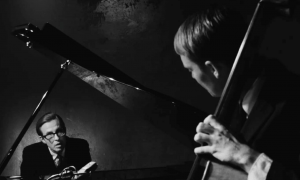
For example, in a video of Iyer and Mahanthappa playing a duet concert (as their duo Raw Materials), they could be (visually) a violinist and pianist at Carnegie Hall as much as they could be two "traditional" jazz musicians on a concert stage.
Saxophonist Mahanthappa has a multicolored approach to the alto sax, and unlike Iyer, displays on his own albums overtly Indian sounds. The album Kinsman (Pi Recordings, 2008) is a rich example, and is made with Carnatic and Carnatic-trained musicians. The album features Kadri Golpanath, the Indian "Emperor of the saxophone." With (Steve) Lehman—Iyer's collaborator in the trio group Fieldwork—Mahanthappa has at times a less usual, clearer or more classical sax sound that is often encountered in jazz recordings, though Iyer explains that the real point is the range of playing, or sounds, that both strive for.
He says, "I think that both of them are very creative with timbre, with the sound itself as well as with the improvising language in terms of notes. They're both very inventive with timbre on the instrument. Maybe because they focus on the range of possibility with timbre, you might hear some of these connections. I don't think I've ever heard Rudresh's alto sound described as pure. ... I feel like these guys put a lot of character into the sound. I think what it is, is that there's more of a vocal quality you'll often hear. When I've heard classical saxophone quartets, you'll get a lot of surprising sounds out of those combinations of saxophones because timbre is one of the expressive parameters—sometimes you feel like you hear something very vocal—it sounds almost brass like—and at other times you hear what sounds like a double reed instrument. There's a whole timbral range the saxophone has. It's a pretty peculiar instrument, really (laughs). Because both of them (Mahanthappa and Lehman) really manipulate timbre very expressively, I think you hear all those possibilities.
"I think of some of the duo stuff that Rudresh and I have done together, if you've heard the album Raw Materials, some of the opening sounds—at the beginning of the album—don't sound like a saxophone. It sounds more like a shehnai; it sounds very vocal—you hear the performance of the tone being manipulated in a way that's very expressive. It sounds like a wail or a cry."
Through Iyer's more recent trio/quartet albums, it is possible to see a semi-rock thread. For example, on his album Blood Sutra (Artist House, 2003), there is a track entitled "Because of Guns (Hey Joe)" which is essentially a reworking of Hendrix's version of "Hey Joe." The track includes a piano walking bass, addressing the distinctive guitar riff figure of Hendrix's. Then, on his next trio album Reimagining, there is the stunning re-creation of John Lennon's "Imagine," cast this time in a minor key context.
Iyer says: "I grew up as a child of the '70s and '80s. And I heard lots of rock and pop and soul, and very early hip-hop and stuff like that. I was really into (Led) Zeppelin and I listened to The Police and Prince—basically people who could play their instruments and who could command a stadium full of people! I loved just the raw simple power of some of that and the way the experience stays with you."
He explains the essential similarity or overlap between genres of music: "Well, none of these things are as far apart as one may think. The music market leads us to believe that these genres or areas of music have nothing to do with one another. But who are the musicians who play with (current popular artists)? For example, the drummer for the Mars Volta, a big prog rock band—this is a good example—he is a gospel and jazz drummer. There's all this Youtube footage of him before he joined the band winning things like 'drumming chops' contests. He came from the Black Church in the Bay Area. So he has these deep roots in gospel and soul music and he's brought this to prog rock. Another example is the people who back up Beyonce. She has this all-female band that she tours with and most of those people are jazz musicians. (Or) Earth, Wind & Fire, some of those guys were in the ACM! It goes on and on ... all this constant dialogue between these different areas of music."
A further issue in music is "bootlegging" by the audience. In the liner notes to Historicity, Iyer includes in his "Special thanks" list "all the people ... (who) bootlegged us." He says, "The point is, I whatever I think of it, it's not going to stop. A lot of them collect these things because they can and because they get a sort of frisson of doing something illegal or something that they're not supposed to do that makes it just a little bit more inviting to them because (of) just the sheer defiance aspect. I guess I have mixed feelings about it. I'm glad the people are hearing us play, because really the fact of the matter is, it's really hard to play in front of people because there aren't many opportunities to do it, especially in the U.S. (There are) really so few places to play, I mean it's alarming, compared to what you have in Europe for example. The opportunities to perform are pretty few and far between.
"I put a lot of time into making the albums sound good. I obviously have no control over what bootlegs sound like. Usually they sound so terrible that I don't feel they are competing with the albums! The albums have that extra quality factor going on—basically it doesn't make your ears bleed when you listen to them! (laughs). But then, on the other hand, people like to hear what happens in the live context, and that often can be pretty different. Making a studio album is one thing, but playing it in a context where everyone is somehow in on the process of discovery and invention—that often creates these special moments that
Collaborations With Mike Ladd
Iyer has gained considerable attention for two collaborations with poet and hip—hop/spoken voice performer Mike Ladd. The first was the album In What Language (Pi Recordings, 2004). The record was a song cycle discussing the effects of globalization. The second was Still Life With Commentator (Savoy Jazz, 2007), described as an "oratorio" about the media coverage of current world events, in particular the Iraq war.Iyer says of Still Life With Commentator, "One of the threads in that project was the idea of the news media being this new opiate—really something that lulls you to this narcotic haze where you accept these realities that we shouldn't be accepting. But there's also the manic side to it which somehow ends up being a consequence of this 24-hour news situation, because they have to keep generating excitement and interest in things that aren't actually happening.
"The Still Life With Commentator idea is that we've all seen this happen where you have some dire event that's happened or is just about to happen. (There's) a reporter on the scene in front of the camera with a microphone and the backdrop is some extremely neutral-looking locale where supposedly something has happened or something is just about to happen. Usually it's just a door or a farm or an intersection or something—just a place that has no obvious value and they're trying to infuse it with value by just generating chatter—by just filling up the space with noise. So it becomes this anxious hysteria: to try to keep people watching because it's a business, of course. But also it becomes addictive. You feel like you have to watch because things are happening. And we become participants in it too. Since we made that project—it's two years ago (now)—it seems like it's even gotten worse (laughs). It's just reached a whole new level of hysteria.
"That was the hardest thing about that project ... because you can't satirize (this), because they will time and again outdo any exaggerated (satire) (laughs). They sort of self-satirize, because they keep pushing the envelope in terms of what seems permissible, or what seems even acceptable."
Several Fox News programs are described, but CNN and MSNBC are included. A line from Ladd effectively sums up the basic point: "the distance of atrocity, as far away as stars" (from the track "Holocaust Blog").
Most of the music is electronically created. One track, entitled "Blog Mom," features, at one point, a midrange electronic sound that could convey the impression of busy printing presses firing off newspapers (depending on the ear of the beholder). Iyer: "The way that this music was made ... it's computer music. A lot of it is done with ... this whole digital arsenal that seems to augment the ensemble of instruments and voices. It's funny when we perform it live, because it's really hard to know who's doing what a lot of the time because everyone has a computer diddling with something, and it's making something happen but you can't really tell who's doing what.
"In a way, the craft of the piece takes advantage of our symbiosis with digital technology in the same way that the content of the piece does. It's about our relationship with technology. With electronic music, you have this vast palette of possibilities but you have to a bring a composerly sensibility to it or else you can just drown in possibility (laughs). You have to have a sense about how to make things sound the way you want them to sound. You have to have aesthetic, you have to have something in mind so that the electronics don't become the point of the music—they just become a means. There were electronic instruments and computers being performed alongside the more traditional instruments, the piano, the cello and guitar and voice. So all that was part of the ensemble. There's no live drummer on that project. It's all digital (laughs)—beats that we created and manipulated."
Orchestral And Stage Compositions
Iyer completed a commission for his first full orchestral piece, "Interventions" in 2007. The work premiered in March of that year, to excellent reviews. Of classical writing, he says, "It's about the opportunities that come. I was commissioned by an orchestra to do that piece, and I've also written some chamber music for a string quartet and wind quintet. I'd love to do things like that. It takes me outside my immediate comfort zone and makes me learn something. So it's just about when the opportunities come. It takes a lot of time. I think I've never spent as much time on 15 minutes of music as I did to make that orchestra piece (laughs). I took about nine months to make 15 minutes of music."Iyer also wrote the music for a theatre piece, Betrothed (2007), written and directed by Rachel Dickstein: "The theatre director (Dickstein) is also the choreographer. And I've also written for films and I've done TV music and I've done remixes—I've had a lot of interesting opportunities to do things all over the map. I try to bring my sensibility to each of those situations and really just try to work with the challenge that it presents."
He has plenty of experience with orchestral music, given that he grew up playing violin in classical orchestras. His classical listening now focuses on modern composers, rather than the 19th century repertoire he used to play: "When I do (listen), it's for the composers like some of the composers I mentioned earlier: Ligeti and so forth. I learn from that. But I grew up playing in orchestras—I play violin. I played a lot of it. That sound I know from the inside. When I made that orchestral piece, I checked out a lot of more recent stuff because I wanted to deal with 'What's the modern arsenal that people are dealing with as composers?,' but I don't find myself listening a whole lot to orchestral music nowadays. I guess I tend to like the smaller-scale stuff. That's just where I'm at right now. It's more satisfying to see what people are able to do, how much one can do with how little—that sort of thing (laughs). That's the interesting question to me right now. Maybe it's something about the economy that's making me think this way!"
The Future
Historicity may be the first album Iyer has made that is largely comprised of covers of other writers' tunes, but this step is not necessarily a lasting new direction. He is not committing yet to a particular approach for the next recording. The trio is busy playing to audiences in the next year: "We're doing quite a bit of touring in the coming year, so I'm sure some new possibilities will reveal themselves just through that."I have other projects as well in the works. I'm working on a new project with Mike Ladd dealing with (Iraq and Afghanistan war veterans), which is going to come together in the next couple of years. (Working with Ladd) comes together over a pretty long, intensive period, and it's always pretty organic the way it builds, but in this case we really want to work with ... people from the veteran community (and to) try to build something with them, about them and for them.
"All my other collaborations are ongoing as well. Fieldwork is still doing performances and developing new music. My duo with Rudresh is still working quite a bit and we are also hoping to make a second album sometime in the coming years, and I have other collaborations going on—some stuff outside of music even. I'm doing a sound installation with this film maker Bill Morrison (maker of the much lauded avant-garde film Decasia, for example. Morrison has made several films in collaboration with current composers) in an abandoned prison in Philadelphia. So that's coming up next year. He's created this freestanding film work (with) loops and it's about 15 minutes long and I'm creating sound work that goes along with that.
About Vijay Iyer

Tags
PREVIOUS / NEXT

Vijay Iyer Concerts
Become a Sustaining Member

Since 1995, All About Jazz has championed jazz as an art form and supported the musicians who create it. Over three decades, it has grown into one of the world's leading jazz resources, serving hundreds of thousands of readers, musicians, presenters and industry professionals each month.
Help Build the Future of All About Jazz
Your support helps us continue building All About Jazz for the next generation—expanding our editorial coverage, preserving jazz history, developing new community features and creating better ways to discover the music and the people behind it.
Become a sustaining member for as little as $20 per year and you'll immediately enjoy an ad-free experience along with access to subscriber features and future articles for a full year.
Together, we're not simply sustaining All About Jazz—we're building its future. Thank you for being part of the journey.