Home » Jazz Articles » Interview » Sivan Arbel: Oneness is the Hopefullest Number
Sivan Arbel: Oneness is the Hopefullest Number
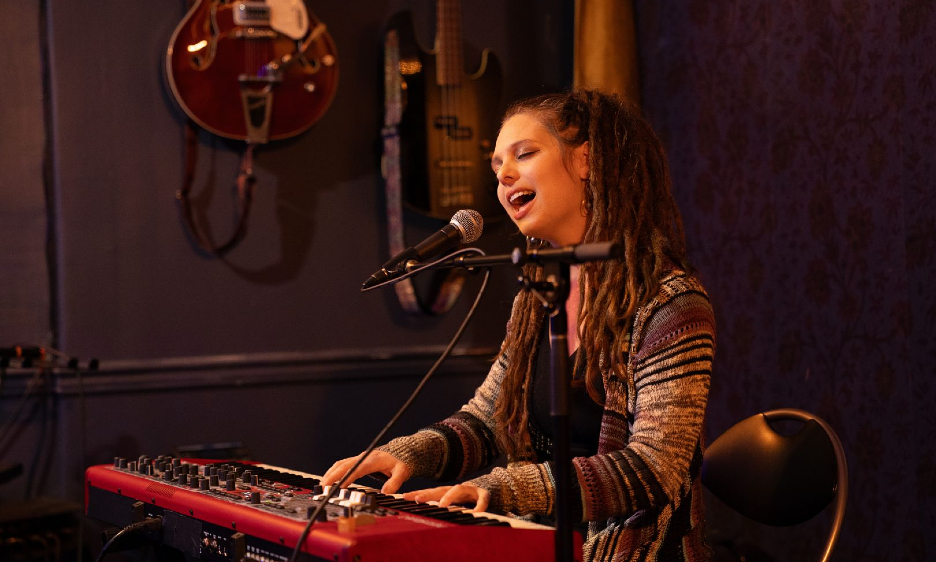

There is something I call squeezing the sponge. You basically soak in a lot of sounds, a lot of rhythms, a lot of different inspirations. And then when you just let go, it's like everything that has been in that sponge has been squeezed out.
—Sivan Arbel
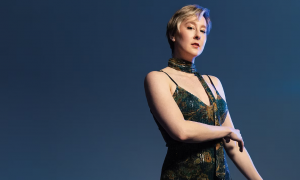
Arbel's exceptional sonic spatial awareness is on display as she perfectly balances moments of bombast with those of subtlety. "Second Floor Beloved," sung in Hebrew, tells the story of a homeless man who finds solace in fantasies about a loved one living on the second floor. Like the other tracks on the album, the song constantly oozes with personality as a honeycomb of lyrics is delivered with effortless conversational charm. "Vocals are a very special kind of instrument because we have the opportunity not only to create a melody with a certain sound, but also the second level with lyrics," Arbel posited. "When I do not sing lyrics, verses, the syllables that I choose are a kind of a language in its own right. I use in some respect two voices in one voice. That is how I am thinking about it. There is a kind of lyrical meaning even when there are only syllables."
Whether singing insightful lyrics or scat, the meaning manifests in songs that seek to capture motion, the slippery spirit of action. Most convey the impression of movement, if not dance, which is Arbel's second love. She studied both singing and dance in school years. Singing won out but dance remains an inspiration in her music as she is captivating audiences with her unique fusion of rhythm, groove, scat improvisation, movement and dance. Energy is being discharged and the sensation is palpable.
The combination of song and dance lends her music a special appeal. "It's really tuning in into the energy of the room of people and just improvising soundscapes to that kind of crowd," Arbel explains with an alluring smile that you could paint on a sunrise. You could picture her performances as gauzily suspended in dreamlike flight, enigmatic or an unfinished puzzle. But that would be a mistake. She may be moving in many directions but each step is forward. For her, jazz is not just a genre but a way of life, a constant exploration that stretches the boundaries of musical traditions she cherishes and loves.
All About Jazz: From listening to your record Oneness again last night, it appears to be a true multicultural work. Could you speak about how your interests developed?
Sivan Arbel: This is something that I've always naturally been doing when I approach something that I'm really interested in. I just explore deeply. And the big turning point once I began studying jazz is that I did my last year of school in Dublin, and it was an international school full of people from all over. I got to learn a lot of different rhythms and music from many different places, and you get to meet the people and the culture and the food as well.
AAJ: You went to a school in Israel before Dublin.
SA: Yeah, so I went to an Israeli school called Rimon School of Music, and they have a sisterhood like partnership with Berklee. Dublin also has an international partnership with Berklee.
AAJ: Ireland is quite different from Israel in climate among other things. And then you moved to New York, but I understand you will be traveling soon.
SA: I'm going to Europe to do a bunch of projects, and one of them is recording an album with an Italian pianist named Andrea Goretti. We've been friends for a while, and we received a grant to make a record. So, it's really going to be my first full on collaborative project.
AAJ: You have been involved with a Japanese band. How did that come about?
SA: They don't exist anymore, but I have still kept in touch with the guitarist, Richard Bona. I used to have this residency with my band in this club in New York called Bonafide. It was Richard's club. A Japanese guy did the sound. He knew us so well and when we walked on stage, he would tweak everything just the way that we liked it. That soundcheck lasted for like five minutes with a full horn section and rhythm section and myself, and one day after a while he reaches out to me saying that there's a Japanese band that's coming to New York and they're looking for a vocalist to collaborate with them. And it was a great connection because we really clicked. They brought some music of their own, and I wrote some lyrics and melody and introduced them to my music, so I am on their record. I think even one of the songs was in a movie. The guitarist did invite me to come to Japan, and we did some shows together.
AAJ: How did your love for music develop?
SA: From a young age, I always loved dancing and singing, and after school I went to this conservatorium. I took voice and dance lessons, and then in high school there was a music department that opened up and it had a history class of black American music. That's when I really fell in love with jazz. My teacher played some Ella Fitzgerald and Sarah Vaughan, and I got totally blown away from what they were doing. It was in high school, so I wasn't thinking ahead, but every step along the way was accompanied with this passion of mine to continue singing. I also needed to continue dancing in any kind of way that I could. That eventually led to booking shows and being on stage. I had amazing teachers that were a big support by showing me some of the business side as well as obviously the music side.
AAJ: How were you able to practice voice? It is not like a piano or other instrument you play.
SA: The conservatorium would provide people to accompany me for recitals and practice. Nowadays, it is much easier as you can get backing tracks for almost anything.
AAJ: How did you decide what to pursue for a career between music and dance?
SA: One year was very intense where I would go to music school in one part of Israel and then I would drive to the other side to take dance lessons. I really wanted to do them both very much. Eventually I found I wasn't so passionate about the dance as much as I expected to be. But I still incorporate dancing into my stage performances. You have to move your body when singing.
AAJ: What was the best piece of advice you've received towards singing?
SA: Before moving to New York, I was singing with this guitarist, Daniel Weiss. After we jammed and played, he told me, Sivan, go to New York, just go everywhere and sing and show everyone what you've got. That was a very big piece of advice because as vocalists, and especially as females, and as someone different who's coming to New York, it can be a very intimidating place to just go on stage and sing with so much confidence. Even though I didn't know this person that deeply, not like a childhood friend or anything like that, but that energy kind of accompanied me to New York.
AAJ: Listening to your record, you do some scat singing on a couple of the tracks, "Dreamland" for one, and I am hearing a saxophone in your voice. When you're doing a vocal solo do you envision or evoke it as a particular instrument?
SA: I think it's different every time. Lately, I just come from a place, a mood or a vibe. It can be some sort of a storytelling because "Dreamland" is a very particular mood. Even in the intro, we bring the listener into a certain dreamland or fantasy world, and when we're in this space, this musical space, when I'm swimming inside, then that mood is being evoked by the voice.
That's what is being communicated. But there are other times where when we play live, and there's one track that we do drum and voice and solo together. I tap into the drummer mood inside of me, so there's more percussive sounds rather than a very melodic thing coming out. I used to do a lot of fun games with myself where I would just practice by soloing over some changes. And then I would imagine, okay, now you're channeling a saxophone or you're channeling a piano. It's really interesting how the voice can change and the whole solo can change because you want to channel something. Or you can channel a moving train or you can channel the waves. You can channel a really annoying aunt that you have. It comes in so many moods and energies.
AAJ: You also do some scat on "Yin Yang."
SA: I was very taken by the rhythm on that track. There are different changing meters happening within the solo. So, that is something that usually carries me away because I love rhythm and I love groove so much. I've been studying a lot of Hindustani music, which comes from classical Indian music. There was this pentatonic raga that I was working on that you say the names of the notes when you go up and down the scale, and then you practice it with an open chest making with an "ah" sound. In composition and improvisation, there's something that I call squeezing the sponge. You basically soak in a lot of sounds, a lot of rhythms, a lot of different inspirations. And then when you just let go and let whatever the moment wants to be communicated, it's like everything that has been in that sponge has been squeezed out.
AAJ: Yin yang represents balance of energy. How do you maintain a balance in your personal life? Performing must bring such a jolt of energy, whereas there's times when we come down and are fatigued.
SA: Music is definitely balancing me because my practice is also singing a lot of long notes, and it's a very meditative grounding way of life. Exercise, too. I love doing yoga and moving the body, so that is very grounding. I don't talk to anybody before I do my yoga practice. It's like a morning coffee, but I don't drink coffee, so I do yoga instead. But it's a good question because when I started touring, I went on this two-month trip all over Canada, and I had a real hard time coming back to the city. I asked myself questions, like, what is life about? What am I here to do? I don't know if I went into depression by coming from a very high and exciting place, and then you're just back in the day to day. You need to do your laundry and cook for yourself and all these common activities. It can happen after a tour or after a very big exciting CD release party. It's exciting, the organization, getting the band ready and bringing everyone together. There's this amazing show of wow. And then you're back home and how is life normal now?
In those moments of having big exciting shows, I actually make sure that I have something to look forward to the next day. It can even be going to a class or meeting a friend for a coffee, instead of, okay, I'm done and don't know what to do. I'm easing myself back into life while also having the awareness that this is the lifestyle I chose with its ups and downs.
AAJ: What is this practice you do called sound meditation? It is not like a regular or guided meditation?
SA: For me, sound meditation is like being really focused. You're just focusing on one thing or just on breathing. And this is something that we always practice when we're performing. Also not letting the head be in the way so the music can flow as fluently and effortless as possible, specifically. The other way is mostly with a community called Ecstatic Dance or a dance lab. This kind of movement is all over the world and it's an event; it's a sober dance where everybody is just there dancing. It starts off with some movements for body awareness or mindfulness activity. People then go into a DJ set, and it ends with a sound meditation to just reground everyone. That has more ambient sound. Because I practiced jazz and improvisation for so many years, it's basically doing the same but in this kind of soundscape. So really tuning in into the energy of the room of people and just improvising soundscapes to that kind of crowd.
AAJ: Could you speak about your song, "The Pit?" What is going on there?
SA: I'm connecting to the vibe of the song. "The Pit" is communication between two people; someone is in a certain world of their own and someone is in a different world. There are two worlds that they just cannot connect. I think I was writing this about someone, and I just tried to write everything that I saw in that person's world. Sometimes there you go, wow, Tuesday, this person is present somewhere, but they're not present. So, their mind is running like a race horse on a foggy road.
AAJ: What about the lamb with the wolves?
SA: They're living in this world, but they're so scared and fearful within themselves. There is this melodic line, but I feel something that cannot be put into words. It's just that person's thoughts, them going about everywhere, like a butterfly to different places above flowers and wanting to try them all.
AAJ: There is a horse in there with the lamb, surrounded by wolves. Do you like animals very much, and if you could talk to one which would it be?
SA: A turtle. They're so slow and funny. Do their brains go slow as well? Or not? What are they thinking? There are a lot of turtles in Prospect Park in Brooklyn, and you see them out in the pond just soaking in the sun all day and seeing their goofy bodies trying to climb on something. But they're so slow that they fall.
AAJ: I wanted to ask you about the song "Blackfeet." Are you talking about children playing outside barefoot and getting their feet black?
SA: You see, when I come to Israel, specifically in the summer, I walk everywhere. And when I'm staying with my folks, my dad would see how dirty and black my feet are and he would always make a commentary on them. That was the intention.
AAJ: You sing about a piece of art—don't stare so deeply. Was there something in particular you were thinking about when you wrote that lyric? Or did the words happen to fit the song?
SA: As human beings, sometimes we get stuck on a certain idea and maybe even between couples, someone can say, hey, you did this before and this is what you did in the past. Trying to basically attack someone else based on a certain idea or thought in the past. This is something that I dealt with before and that moment and whatever memory was in the past, it was irrelevant. So, it was me trying to say basically, can we just look at the past like a piece of art, something beautiful to admire and not hold on to it so tightly? Just let it go.
AAJ: In another place, you said living life in terror is easy, following is easy when we're fearing, which seems incongruous. What did you mean?
SA: I meant, okay, so we're in oneness now. Living life is easy when we're busy. Living life in terror is easy. It's my take on society. It looks like a lot of people are making certain decisions based on terror, so we can just follow someone blindly and make decisions based on that rather than stopping for a second to think what it is that we want as a society, what it is that we want for our families, for our communities, for our people around us. This is my two cents on today's society, especially with social media and so much fake news out there. Everyone can be followed by so many people, but based on what, and I feel like a lot of leaders these days, people follow them based on fear, not based on trust.
AAJ: Do you think music can bring people together in the sense of understanding and being attuned with each other?
SA: Music has been revolutionary forever. For example, "Imagine" by John Lennon. My intention when I'm writing the songs, when I am performing the songs, is bringing a sense of unity, a sense of healing to whoever listens to the song and experiences our live performances. But once the music is out there, I have no control over what people experience. I just hope that the music moves something, even if it's in the soul and the mind. It might not bring people together in that particular moment where they hear the song, but it's starting to move things with what I try to communicate and share. Hopefully, people are experiencing this energy. This is a seed that is planted with every song, with every note, with every live show. And from there, we can just keep doing whatever we do with this intention and hope to make some good in our circles.
AAJ: If you had the opportunity to sing with any vocalist living or dead, who would that be?
SA: Well, she is dead, but I would have loved to sing with Ella Fitzgerald. Bobby McFerrin, too. Becca Stevens. So many great singers out there.
AAJ: What do you notice about a person when you meet or see them for the first time?
SA: I don't look for anything in particular when I'm meeting someone for the first time. I think it's an energetic sensation and it's not particularly how they look, but maybe the body language, how people carry themselves.
AAJ: You are so accomplished singing and dancing and seem very balanced. Is there anything that you wish you could do better?
SA: Probably be a better promoter for myself, or just have more money so I can hire promoters all the time to do that work for me. I would love to learn Italian. I think I've been on my way to learning that language, but I still haven't managed to fully accomplish it. Maybe be able to balance on my head. I cannot do that.
AAJ: That is an interesting visual. Is there anything that happened to you when you were a child with your siblings or your parents that was kind of funny that you still laugh about today?
SA: For sure. My mom and dad would laugh about when we're on vacation and just started singing a lot of Disney tunes for an hour, the whole ride to wherever we were going. I love to laugh. I love to make jokes. Sometimes I should also practice making the jokes in a smoother way between songs, but that is also like jazz, right?
AAJ: What do you see in your future, even if it's just a sketch, both personally and professionally?
SA: There's a new project in my mind other than this album that we're going to record soon. I've been studying Hindu music and classical Indian singing for a few years now, and I've seen how that really influences my songwriting. So, this is a seed that is starting to bloom. I just don't want to talk about it too much because it still hasn't really formed within me. I prefer not to put so many words and definitions to it before it fully blooms. But this is something that is happening.
About Sivan Arbel

Tags
PREVIOUS / NEXT
Sivan Arbel Concerts
Become a Sustaining Member

Since 1995, All About Jazz has championed jazz as an art form and supported the musicians who create it. Over three decades, it has grown into one of the world's leading jazz resources, serving hundreds of thousands of readers, musicians, presenters and industry professionals each month.
Help Build the Future of All About Jazz
Your support helps us continue building All About Jazz for the next generation—expanding our editorial coverage, preserving jazz history, developing new community features and creating better ways to discover the music and the people behind it.
Become a sustaining member for as little as $20 per year and you'll immediately enjoy an ad-free experience along with access to subscriber features and future articles for a full year.
Together, we're not simply sustaining All About Jazz—we're building its future. Thank you for being part of the journey.