Home » Jazz Articles » Interview » Amaury Faye: A French Jazz Composer Returns To The Source
Amaury Faye: A French Jazz Composer Returns To The Source
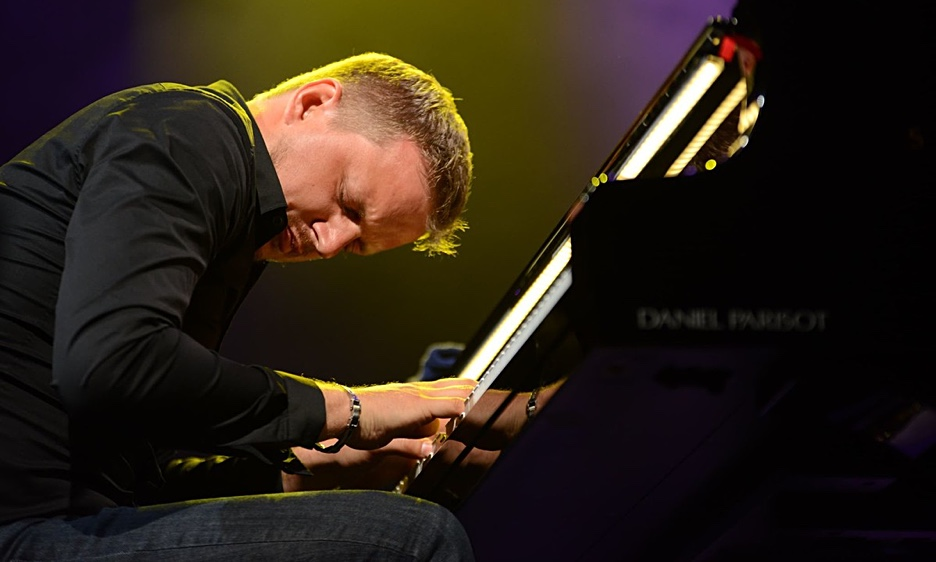
Rust is one of the first impressions I had when I arrived in New Orleans for the first time. . . this city, basically, it’s in Louisiana, it’s resisting the elements like hurricanes and insects and everything. You can see it on the walls. You can see it on the streets.
—Amaury Faye
In her review of Amaury Faye: Arise (Suite), Jane Kozhevnikova wrote: "In Arise, Faye becomes more of a storyteller and creates a narrative that compels attention from the beginning to the end. Unafraid to blend different styles and genres, Faye brings together a more "classical" sound with the string quartet of Audrey Dupont (violin), Aurélie Fauthous (violin), Carlos Vizcaíno Gijón (alto) and Nabi Cabestany (cello), and contemporary jazz style with the quartet of Julian Lee (tenor saxophone), Louis Navarro (double bass), Théo Lanau (drums)."
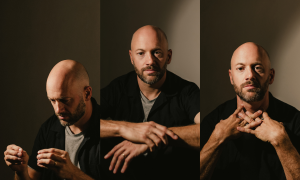
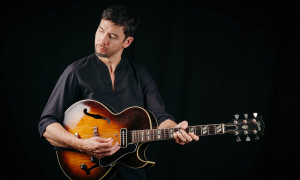
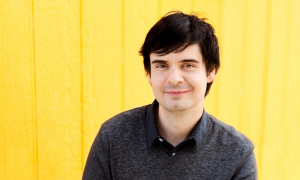
In 2025 Faye returned to jazz's source -New Orleans -where he recorded Rust (self released, 2025), his homage to the Crescent City. In our interview, Faye talked about his love for American jazz, the New Orleans jazz scene, and why he wore a panda head for the album's video trailer.
AAJ: Amaury, welcome. Where are you right now?
AF: I'm in Paris at my home. North of Paris, St. Ouen.
AAJ: Amaury just released an album called Rust. He is a French jazz musician, composer, and pianist who traveled from back to the source—New Orleans—to create this wonderful new album.
What inspired you to become a jazz musician?
AF: I'm based in Paris, but I'm originally from Toulouse. And when I was in Toulouse, I was about seven years old, and I studied with a private teacher for seven or eight years. He showed me ragtime music, and as a kid, ragtime music was fantastic.
Ragtime is easier to understand and to listen to than jazz. It's very close to classical, but at the same time it evokes saloons, the Far West, cowboys, all the things in the movies. So I started to play this music a lot. I think it was my second or third year of piano, and I was already starting to play all the songs like Scott Joplin, William H. Krell, and James Scott. It was challenging music, and at that moment, I wanted to be kind of a virtuoso. It's very hard to play, actually. It's a very orchestral music. So for years, I've been practicing ragtime. And at the same time, I could not listen to jazz. It was too difficult for me. But, over the years, my teacher continued to show me other stuff.
After a few years, I fell in love with jazz, and I started to move to other influences. I started listening to Oscar Peterson, Ahmad Jamal, Wynton Kelly , and Brad Mehldau. I was about 21, 22 years old.
AAJ: What was the Brad Mehldau album that inspired you?
AF: Oh, yeah. It's the The Art Of The Trio -Volume 4 -Back At The Vanguard (Warner Bros. Records, 1999). I love all the Art of Trios and Mehldau's other albums, but I spent nights and nights trying to get how he would do all the things with the trio. That's amazing.
AAJ: Well, I always believed that the jazz trio is one of the foundational, fundamental instrumentations of music, along with two guitars, a bass, and drums for a rock band and a string quartet. So much great music has been written for it. We have Bill Evans, we have Keith Jarrett, and Brad Mehldau. All of them have developed a strong body of work as a trio. Is that something that you aspire to do?
AF: Yeah, especially when I left Berklee, I wanted to start a trio. We did a few albums, but at some point, I wanted to develop something on my own, but so much stuff has been done. There is such a musical legacy. I was aspiring to do that. But at some point, I was like, maybe it's not your voice. Maybe my voice is not in the trio. Even if I loved what I did and I love playing trio, maybe I have to find something else to express myself.
Right now, Sullivan Fortner comes to mind as someone who is doing wonderful things with the trio.
AAJ: How did you come from Paris to Berklee?
AF: I was very influenced by American music, and I think that's the best way to just go into the heart of it. At the same time, I wanted to see how American musicians and people think and live.
If I was playing only European jazz, maybe I would not need to move to the US. But if you want to study jazz—what Ahmad Jamal called "American classical music"—if you want to study it, well, you have to be there at least one year. That's what I did. I could not do more than one year because it's very expensive. But that's all I needed. I learned so much. So that was the reason, to see how American people think, live, and at the same time be there and meet people and play with them.
AAJ: One of the things that struck me about Rust was that you were a French jazz musician who went back to the source. I suppose it can be debated, but jazz originated in New Orleans. If people wish to disagree with me, that's fine, but they would be wrong. Tell me how that came to pass.
AF: My girlfriend took me to New Orleans two years ago just to visit the city, and it was kind of a pilgrimage just to go to the birthplace of jazz. At the same time, we were visiting our friend Julian Lee, the saxophonist on Rust, and his wife, Sofia. I fell in love with the city. I felt at home just like I feel at home when I'm in Toulouse. And I love the city, the spirit, the people, the way life is very chill compared to a city like New York. I love New York, but everyone knows New York is not chill.
AAJ: No, it is not.
AF: It's a wonderful city, but it's not chill. New Orleans is more fit to my personality. When we were in New Orleans, I saw that Herlin Riley was announced for a concert at the Snug Harbor jazz club on Frenchmen Street a few days later. I said, "Damn! I'll be back in France. I'm going to miss his show!" And Julian Lee told me, "I know Herlin. I play sometimes with him. He plays every Wednesda, at the Bayou Bar. We can go there."
Once we got out of the gig, my girlfriend told me, we have to do something. I was like, yeah, I totally agree. And I want to do something with this city. I want to tell something about it, how I felt there.
And I want to play with one of my heroes, you know, for I discovered Herlin Riley when I was 12 years old, something like that. And I was always dreaming about playing with him. I thought it wasn't possible; we were not in the same galaxy. But finally, we made it, thanks to Julian. That's all this thing drove me to record that album.
AAJ: Tell me about composing the songs on Rust.
AF: I wanted to go back to the source, but at the same time, I'm a composer, and I have my own universe. So I tried to find a way to mix, not to do something very personal. So the advantage I had was that I knew a lot of ragtime. I've been playing this music as if I was born into it. And I had already developed my own universe as a composer. So those were two tools that I guess I could handle.
The challenge was to compose songs that have those elements together while keeping "a good taste." You don't want to simply put New Orleans and European jazz together; you have to find the good mix. On top of this, you have a team of musicians that never played together, and you only have a few days to record. So you want to make sure that the music is going to be played in the way you want it to be played. At the same time, you want everyone to have fun. So that was the whole puzzle I had to assemble.
For the songs, I was just going to those little places in New Orleans that I loved to go. I was trying to imagine melodies and stuff. In one week, just before we went into the studio, everything came into my head. I just composed on my computer because I didn't have a piano at my place. I wrote down everything, and then we went to the studio. So that's the whole thing.
AAJ: You told us about Herlin, who's the drummer, and your relationship with Julian Lee, who's a magnificent saxophonist. Tell me about the bassist.
At the beginning, we were supposed to have a bassist from Europe, a great friend of mine, but he couldn't come. So, one week before the record session, that was kind of a huge emergency to find someone available.
A New Orleans bassist, Max Moran, sent me a list of bass players. All of them were great players. They could all fit the album. But I saw Amina Scott, and I checked some videos. I loved Amina's whole vibe, her sound and her presence. Herlin and Julian knew her already, and they told me she was great.
She discovered the music just the day before the recording session, but she immediately got the essence of it. She got the spirit. And those two days were amazing. She brought her powerful sound and a wonderful energy to the session.
AAJ: Where did you record it and how long did it take?
AF: It took two days to record at Marigny Studios next to the French Quarter. It's a pretty old studio, and they have vintage recording equipment and a great piano, an old Mason and Hamlin piano. And it was the first time I could try this piano because we don't have Mason and Hamlin in Europe.
There is this vintage touch. There is something in it. It was recorded by Mack Major, an amazing sound engineer. When we mixed the album in Europe with a great team, I told the guys, "Let's try to keep the real nature of what Mack did, because it's all really good." They agreed, saying, "There is almost nothing to do." So he's a great guy. I think he won a Grammy Award for an album. A very chill guy. (Note: Mack Major won a Best Gospel Album Grammy Award in 2020 for his work on PJ Morton's Gospel According to PJ ( Morton Records/Empire Records, 2019).
AAJ: Rust is all original compositions. Did you have charts that you gave to the musicians?
AF: Yeah, I had charts, but at the same time, Herlin doesn't really like charts. He reads music, of course, but he prefers to be in the moment and to share with the other musicians rather than just keeping his eyes on the charts.
So I had that in mind, but I still had to write down a lot of stuff. At the rehearsal before the recording session, I told them, "This music has never been played before. So consider it your music. It's our music. Any suggestion you have, any idea, I will take it. We will try it. We're going to try to have the best band sound together. But if you ever have any doubts, if we have something like we're not finding any idea of what, we have the chart. That's the base. Once we know that, let's just explore together." So I had charts, but my main objective was to give them the maximum freedom they could.
AAJ: Why did you call the album Rust?
AF: Rust is one of the first impressions I had when I arrived in New Orleans for the first time. Like, I was not really into this French Quarter thing, the party thing. I was more moved by what I could see around. So this city, basically, it's in Louisiana, it's resisting the elements like hurricanes and insects and everything. You can see it on the walls. You can see it on the streets. The city is rusty. The city has a lot of abandoned places.
I went on kind of an urban exploration. You can see the plants and the trees taking back buildings, and that's what I wanted to show. Like, usually when you record an album about New Orleans, if you do that in Europe, most people they're just going to show what you can see in tourist books. I wanted to have another vision of it, more poetic. My vision of it. And I think it worked out pretty well on the album. All the names of the songs are ideas of New Orleans I had in mind.
There is a song called "The Barges Blues." It was a place where I would go every morning. I would drop the kids at school, and I would go along the Mississippi just to watch the big boats, stuff like that, you know, and rust is everywhere. But the city is wonderful. I'm saying that, but the city is beautiful.
AAJ: New Orleans is a great city. The clip for the album includes you walking around in a panda head. Why the panda head?
AF: I'm not an actor. I don't want people to see my face. There is already the music. But I had to be in the video. So we said, "Let's wear something like a mask." Okay, but what mask? And the panda is a nice animal. Everyone loves pandas. You always want to hug the panda, you know? The other reason is also because it's in New Orleans, and it is a reference to Mardi Gras, the parades. Everyone is getting dressed up all the time.
I was kind of stressed out, walking around dressed as a panda. But Julian told me, you know, "it's New Orleans. Like, if you do your own shit on your side and you don't bother anyone, like, no one is going to notice." And that's what happened. So I think it's almost also the spirit of the city. Do your thing. If you don't bother anyone, no one will bother you.
AAJ: In the video, there was a point where you were walking past a woman and her children, and the little boys they clearly love seeing you. So you just wave to them.
AF: Yeah, totally. It was not planned, but we kept it. It's a nice moment.
 FOLLOW Frank Housh
and get notified whenever a new article published.
FOLLOW Frank Housh
and get notified whenever a new article published.
Arts Writer and Publisher of “Media Room,” mediaroom.substack.com
About Amaury Faye

Tags
PREVIOUS / NEXT
Become a Sustaining Member

Since 1995, All About Jazz has championed jazz as an art form and supported the musicians who create it. Over three decades, it has grown into one of the world's leading jazz resources, serving hundreds of thousands of readers, musicians, presenters and industry professionals each month.
Help Build the Future of All About Jazz
Your support helps us continue building All About Jazz for the next generation—expanding our editorial coverage, preserving jazz history, developing new community features and creating better ways to discover the music and the people behind it.
Become a sustaining member for as little as $20 per year and you'll immediately enjoy an ad-free experience along with access to subscriber features and future articles for a full year.
Together, we're not simply sustaining All About Jazz—we're building its future. Thank you for being part of the journey.