Home » Jazz Articles » Live Review » Ursa Major at Miner Auditorium
Ursa Major at Miner Auditorium
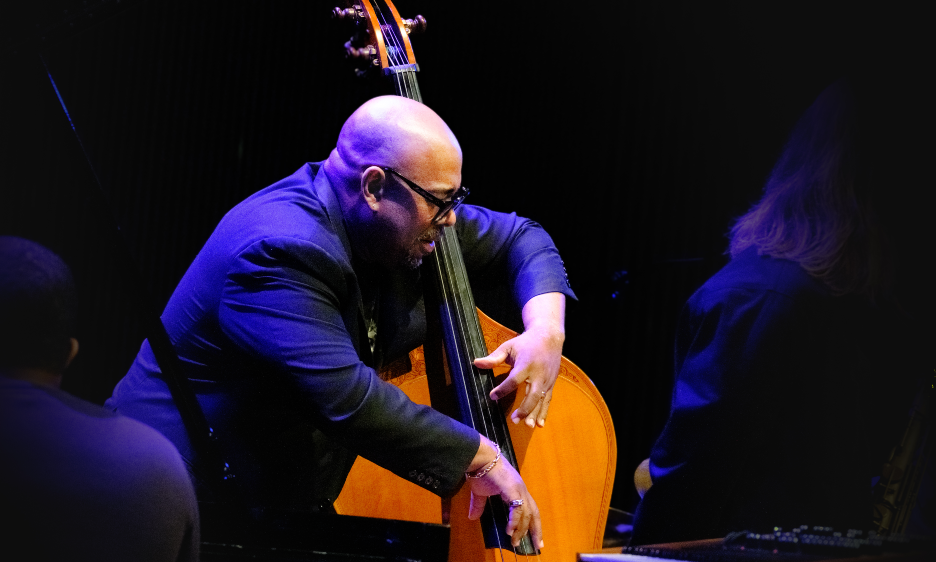
On the final night of SFJAZZ's season-opening residency, the bassist guided a quintet whose individual voices carried the room.
Miner Auditorium
San Francisco, CA
September 13, 2026
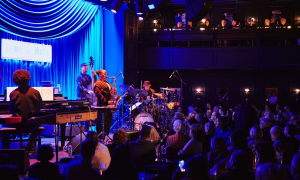
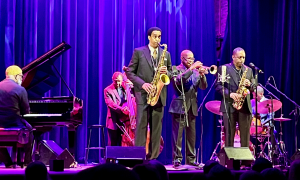
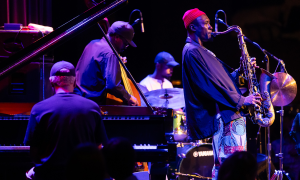
Christian McBride stood toward the rear of the Miner Auditorium stage Sunday night, directing traffic from behind Nicole Glover and Ely Perlman. Even when he switched from upright to electric bass and began one of his fleet, muscular solos, he remained there. The placement suited Ursa Major. McBride may have assembled the quintet, but its final concert of SFJAZZ's season-opening residency drew its force from the room he gave its younger musicians.
SFJAZZ CEO Gabrielle Armand welcomed the audience to the 2026-27 season and marked the fourth and final night of McBride's residency. McBride had opened Thursday and Friday with pianist Benny Green and drummer Gregory Hutchinson in a centennial tribute to Ray Brown, his mentor and greatest inspiration. On Saturday and Sunday, he shifted to Ursa Major, which had played one of its earliest engagements at SFJAZZ in 2022.
Hutchinson connected the two programs. After the Ray Brown tribute, he moved into the drum chair normally occupied by Savannah Harris. McBride explained that Harris had injured her foot earlier in the week. "As they say in football, she's going to be on the injury list for about four to six weeks," he said. "But she will be back before the end of the season."
Ursa Major opened with George Duke's "No Rhyme, No Reason," the first single from the quintet's debut album, Points of Light. The record is due October 30 on Mack Avenue and was produced by Terrace Martin, with McBride as associate producer. The performance began with electronic tones curling into eddies before widening into a waterfall of sound. Behind the players, loops of pink, purple, gray, black and white pulsed across the screen. Glover stood nearly motionless, head lowered, and let her tenor carry the expression.
The band absorbed the substitution quickly, though the rhythmic chemistry had changed. On McBride's "Familiar Steps," Mike King 's piano solo gathered momentum before yielding to Hutchinson. The drummer separated the cymbals into distinct colors, letting each ring on its own before drawing them together. Glover and Perlman turned toward him, then aligned their parts as the full quintet came in for a gentle landing.
The new album grew out of Ursa Major's first four years as a working band, and several of its pieces anchored the set. On "Orquídea," McBride took up fretless electric bass as the projected images tightened into lace-like patterns and clockwork gears. His lines with Hutchinson had a bluesy snap, and a mellow statement from Glover passed naturally to Perlman and then King. When McBride broke into a low boogie figure, the band turned to watch the fingerwork before drums, guitar and piano traded responses around him.
Perlman's effects pedals gave Ursa Major one of its defining colors. During his composition "Elevation," he opened with an eerie loop that seemed to reverse and scatter his guitar phrases. He used space, distortion, and sustained tones in place of an extended solo, changing the ensemble's atmosphere.
Glover stepped forward as a composer with "Blues for Mel," written for Portland drummer Mel Brown, one of her mentors. Her tenor began in a warm, unhurried register. King answered with boogie-woogie figures while McBride thickened the bottom with a rough— edged blues line. The piece showed how comfortably the band could move from contemporary textures into older forms and make both feel native to the same ensemble.
Mike King made the transition between the group's acoustic and electronic sides seem effortless. His playing could be clipped and percussive at the piano, then broaden into funk and soul colors at the keyboards. "A Morning Story" gave the band a quieter stretch, with Glover's mellow line handed across the stage to guitar and piano. The musicians sustained the tension at this lower temperature by listening for the next small turn.
A standing ovation brought Ursa Major back for "Cows," an Ely Perlman composition from Points of Light. The encore pushed the concert toward its funkiest stretch, with McBride driving a muscular electric-bass groove while King moved between piano and keyboards over Hutchinson's backbeat. The band gathered for a bow, and McBride flashed a peace sign as he left the stage. He had begun the residency by honoring Ray Brown and ended it a few steps behind Ursa Major, listening as the musicians in front of him carried the music forward.
 FOLLOW Steven Roby
and get notified whenever a new article published.
FOLLOW Steven Roby
and get notified whenever a new article published.
San Francisco-based Steven Roby is a music journalist, best selling author, and host of the Backstage Bay Area.
About Christian McBride
Tags
PREVIOUS / NEXT

Christian McBride Concerts


Become a Sustaining Member

Since 1995, All About Jazz has championed jazz as an art form and supported the musicians who create it. Over three decades, it has grown into one of the world's leading jazz resources, serving hundreds of thousands of readers, musicians, presenters and industry professionals each month.
Help Build the Future of All About Jazz
Your support helps us continue building All About Jazz for the next generation—expanding our editorial coverage, preserving jazz history, developing new community features and creating better ways to discover the music and the people behind it.
Become a sustaining member for as little as $20 per year and you'll immediately enjoy an ad-free experience along with access to subscriber features and future articles for a full year.
Together, we're not simply sustaining All About Jazz—we're building its future. Thank you for being part of the journey.