Home » Jazz Articles » Book Review » Tom Waits and Anton Corbijn: Waits/Corbyn
Tom Waits and Anton Corbijn: Waits/Corbyn
Together, these two artists have created Waits/Corbijn, a book that spans over three decades of collaboration, offering a multi- dimensional exploration of Waits' persona through Corbijn's lens and Waits' own written reflections.
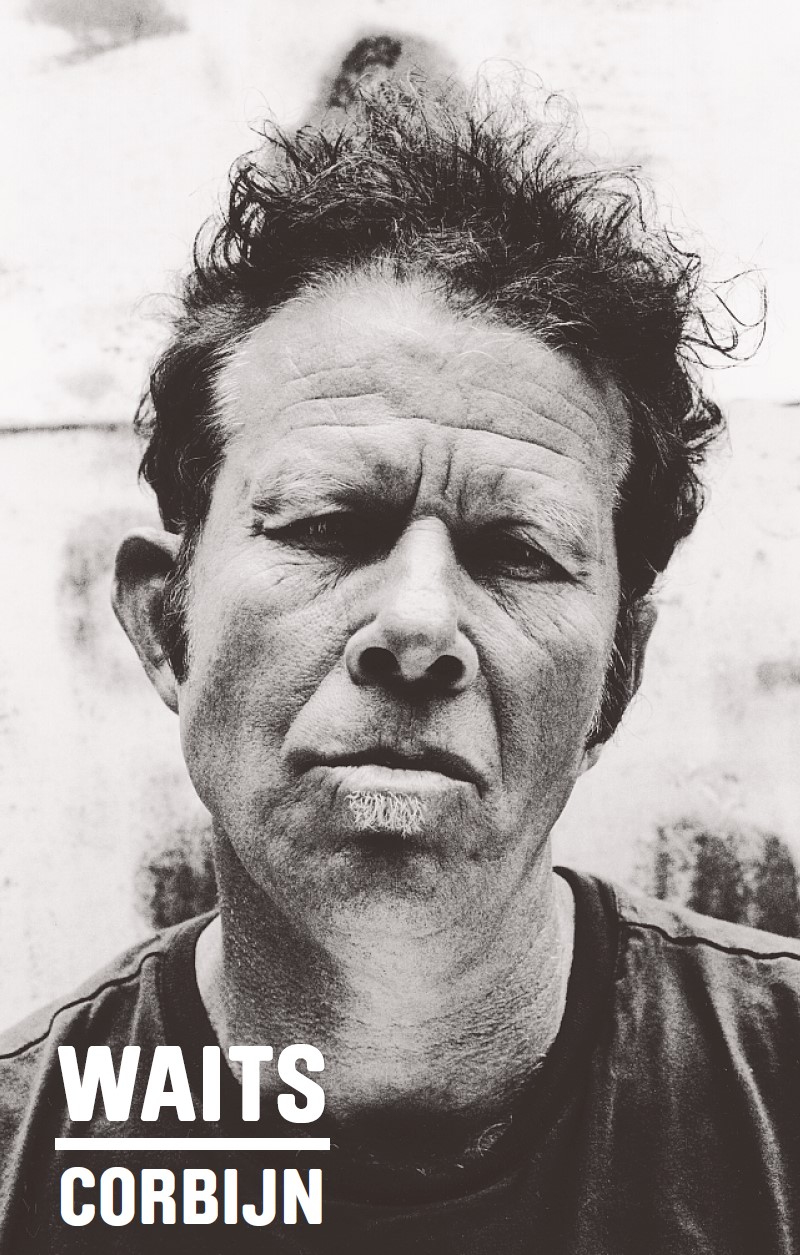 Waits/Corbijn
 Tom Waits and Anton Corbijn
272 pages
978-3791393254
Prestel Publishing
2013/2025
Anton Corbijn and Tom Waits are creative forces whose respective crafts have redefined their fields. Corbijn, a Dutch photographer and filmmaker, is celebrated for his stark, atmospheric images that have captured the essence of artists such as Joy Division, U2, and Depeche Mode, among others. Beginning his work photographing musicians in the late 1970s, he would eventually progress to directing music videos and feature films, but his photographic vision remains instantly recognizable—an interplay of light and shadow that imbues his subjects with an almost mythical quality.
Tom Waits, on the other hand, is an iconic American singer-songwriter whose gravelly voice and cinematic lyrics have painted vivid, often surreal portraits of outcasts, dreamers, and misfits. Together, these two artists have created Waits/Corbijn, a book that spans over three decades of collaboration, offering a multi-dimensional exploration of Waits' persona through Corbijn's lens and Waits' own written reflections.
The book is as much a visual treat as it is an intellectual and emotional journey. It begins with Corbijn's striking black-and-white photography, chronicling Waits' evolution from a brooding troubadour in the late 1970s to the enigmatic, shape-shifting artist of the 21st century. Across 145 photographs, we witness Waits transforming from age 27 to 61, captured in settings that range from gritty urban landscapes to intimate studio sessions. Corbijn's photographs are not mere documentation; they are evocative artworks that amplify Waits' theatricality and mystique. Whether Waits is portrayed as a solitary figure against desolate backdrops or in a carefully staged tableau, Corbijn captures the essence of his music—a blend of melancholy, absurdity, and gritty realism.
One of the book's highlights is the way Corbijn transforms Waits into a character within his own mythology. In several images, Waits appears as an exaggerated version of himself—leaning into his reputation as an outsider artist. Yet there's also a playful tomfoolery that runs throughout: Waits climbing trees barefoot, running through pools of dirty water, posing absurdly in a superhero's cape. As Waits himself remarked, "I love working with Anton; he's someone with a real point of view. Believe me, I won't go jumping off rocks wearing only a Dracula cape for just anyone."
Corbijn employs unconventional angles, dramatic contrasts, and textured environments to create a surreal, almost otherworldly aura. For instance, one photograph frames Waits under a dim light, his silhouette merging with shadows, evoking the noir sensibilities often found in his music. Another presents him in a cluttered room, surrounded by props that seem to have emerged from his lyrics—a broken clock, a bottle of whiskey, and a battered typewriter. These details invite viewers to immerse themselves in the world of Tom Waits as filtered through Corbijn's distinct aesthetic.
What makes Waits/Corbijn more than just a photo book is its duality. Alongside Corbijn's images are texts and musings by Waits himself, offering insight into his creative process and personality. Waits' contributions are often playful, cryptic, and richly textured, mirroring his songwriting style. His words provide a counterpoint to Corbijn's visuals, weaving a tapestry of wit and introspection. Together, they create a layered narrative that captures not only Waits' artistry but also his philosophy and humor. One section of the book particularly stands out: a series of candid images juxtaposed with Waits' musings about identity and performance. These pages delve into the artist's relationship with his public persona. Waits reflects on the masks he wears—both literally and metaphorically—and how they serve as a shield and a canvas. Corbijn complements these reflections with portraits that blur the lines between reality and fiction, such as one where Waits, in theatrical makeup, peers out from behind a curtain. The interplay between the written and visual elements in this section reveals the complexity of Waits' self-presentation, a theme central to his music and career.
Another remarkable aspect of the book is its chronological breadth. Spanning from 1977 to 2011, it allows readers to witness the evolution of both Waits and Corbijn. Early photographs capture a younger, more raw Waits, brimming with the restless energy of a performer carving his niche. These images feel intimate and unvarnished, showing the man behind the gravelly voice and eccentric stage presence. As the years progress, the photographs become more stylized, reflecting Waits' growing confidence and experimentation as an artist. Through Corbijn's lens, Waits emerges not merely as a musician but as a multifaceted character—the troubadour, the poet, the raconteur. Corbijn's evolution is equally apparent; his early, more straightforward compositions give way to increasingly elaborate visual narratives.
The design of this 272-page volume itself deserves praise. Its large format and minimalist layout give each photograph room to breathe, allowing viewers to absorb the details and nuances. The sequencing of images is deliberate, often creating a dialogue between past and present or between contrasting moods. This careful curation enhances the book's narrative flow, making it more than a collection of photographs but a cohesive artistic statement. The book concludes with a 53-page section titled "Curiosities," which reveals an entirely different dimension of Waits' creative vision. Here are his own photographs, poems, stories, and collages—a deliberately quirky collection that feels both deeply personal and gleefully bizarre. Objects found on the ground in cities from Kansas City to Moscow are arranged like archaeological artifacts. Sidewalk stains become "Monsters on the sidewalk." A surreal map uses heirloom tomato seeds to mark locations associated with creative heroes like Alfred Hitchcock, Ray Charles, Thelonious Monk, among others.
The book is enriched by thoughtful contextual contributions. Filmmaker Jim Jarmusch, who directed Waits in Down By Law, Mystery Train, and more recently Father, Mother, Sister, Brother, provides an introduction titled "Hamlet with Camera," describing the collection as "something special, some kind of vortex, an axis of evil geniuses." Music critic Robert Christgau's writing conjures the "goateed imp brooding wearily"—a phrase that perfectly captures Waits' essence across these decades.
For fans of Tom Waits, Waits/Corbijn is a treasure trove that captures his essence in ways words alone cannot. For admirers of Anton Corbijn, it is a masterclass in the power of photography to convey narrative and emotion. For those new to either artist, the book serves as an inviting gateway, offering a glimpse into two creative minds that have continually pushed boundaries.
 FOLLOW Nenad Georgievski
and get notified whenever a new article published.
FOLLOW Nenad Georgievski
and get notified whenever a new article published.
For as long I can remember music has been a focal point in my life.
About Tom Waits

Tags
PREVIOUS / NEXT

Become a Sustaining Member

Since 1995, All About Jazz has championed jazz as an art form and supported the musicians who create it. Over three decades, it has grown into one of the world's leading jazz resources, serving hundreds of thousands of readers, musicians, presenters and industry professionals each month.
Help Build the Future of All About Jazz
Your support helps us continue building All About Jazz for the next generation—expanding our editorial coverage, preserving jazz history, developing new community features and creating better ways to discover the music and the people behind it.
Become a sustaining member for as little as $20 per year and you'll immediately enjoy an ad-free experience along with access to subscriber features and future articles for a full year.
Together, we're not simply sustaining All About Jazz—we're building its future. Thank you for being part of the journey.