Home » Jazz Articles » Live Review » The Tension Is Where The Music Lives: Miles Davis At 100...
The Tension Is Where The Music Lives: Miles Davis At 100, Parts 1 & 2
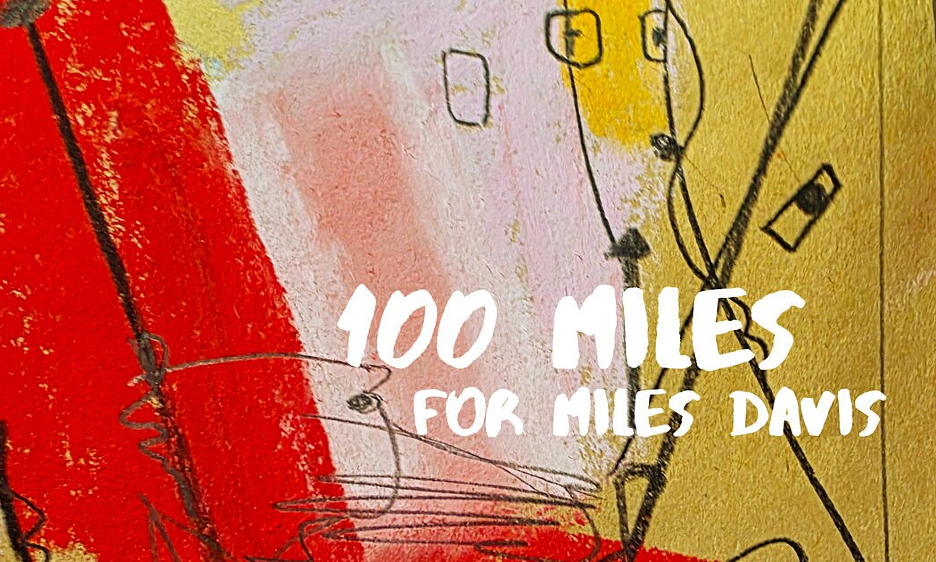
Jazz at Lincoln Center Orchestra
Frederick P. Rose Hall, Jazz at Lincoln Center
Sketches of Miles: Miles Davis at 100
New York, NY
May 14, 2026
The JALC Orchestra opened with "Springsville," the 1956 John Carisi composition that opens Miles Ahead, marking the reunion between Miles Davis and arranger Gil Evans. Ryan Kisor on trumpet handled its complexity without sounding clinical. The Orchestra followed with "Miles Ahead" and "The Duke," both Evans arrangements from the same suite. On "Miles Ahead"—which Evans and Davis composed together, making it a particularly special track—Kisor was accompanied by Carlos Henriquez on double bass and Obed Calvaire on drums; on "The Duke," by Charles Pillow on oboe. The mastery of these opening renditions was transcendent and lasted the whole evening.
The orchestra followed with "My Ship" (Nathaniel Williford, trumpet), "I Don't Want to Be Kissed (By Anyone but You)" (Kellin Hanas, trumpet), "Blues for Pablo" (Mike Rodriguez, trumpet), and "Lament" (Kenny Rampton, trumpet), paving the way for "New Rumba."
"New Rumba" was written by Ahmad Jamal, whom Davis acknowledged in his autobiography: "when people say Jamal influenced me a lot, they're right." Arranged by Evans and transcribed note for note from Jamal's 1956 recording, the performance testified to both men's reverence for him. Rampton's horn led the way, the gravitational pull of Henriquez's double bass felt as much as heard.
The completion of the Miles Ahead program opened the door for the magnum opus, Porgy & Bess (Sony Records, 2010). Evans' reinterpretation of the Gershwin classic gave a leading African American musician of his era the opportunity to claim ownership of one of the American songbook's most sacred operas. The evening's performances included "It Ain't Necessarily So" (Rampton, trumpet; Kevin Newton, French horn), "Gone" (Marcus Printup, flugelhorn), "There's a Boat That's Leaving" (Printup, trumpet), "Prayer (Oh Doctor Jesus)" (Printup, trumpet), and "Summertime" (Rodriguez, trumpet). Printup's "Prayer" was luminous with grace and uplift, speaking to the southern African American church tradition that had shaped Leontyne Price—the first African American singer to achieve an international reputation in opera, whose 1963 studio recording of the piece remains its definitive performance. Jessye Norman once described Price's singing of it as "a cloud filled with silver, and the silver was the part that gave it its light." In "Summertime," every note seemed steeped in silence, and Rodriguez's trumpet drew the sorrow inward, turning it into something painfully, beautifully intimate.
Completing the evening, "Solea" (Rodriguez, trumpet; Monica Ellis, bassoon; Riza Printup, harp; Mike Truesdell, percussion)—the sole track from Sketches of Spain—was one of the the last pieces Davis performed in public. He did so at the 1991 Montreux Jazz Festival in a tribute to Gil Evans. Quincy Jones, who produced the concert, conducted. A few weeks later, Miles died.
No review would be complete without mentioning Chris Crenshaw and Calvaire. Crenshaw, as music director and master of ceremonies, guided the evening with deep personal knowledge, humor, and warmth. Calvaire on drums was the orchestral breath binding everything together, going effortlessly from whispers to thunder.
Terence Blanchard and Ravi Coltrane, with the E-Collective
Symphony Hall
Miles Davis and John Coltrane Centennial
Boston, MA
May 24, 2026
Where the JALC Orchestra honored Davis by inhabiting his music, Terence Blanchard honored him by extending it—demonstrating, with Ravi Coltrane and the E-Collective, how Davis and John Coltrane have shaped the music that followed them. The evening opened with "Flow," from the Grammy-nominated 2005 studio album produced by Herbie Hancock, a member of the 1963 Davis quintet. "Flow" is influenced by Davis's electric period, marking the point of no return of the Bitches Brew (Sony Records, 1970) recording sessions.
That evening, the performance brought to the fore the mastery of the gifted Charles Altura, who opened "Flow" with a solo that gradually became the channel for the vamp, breathing wider as his playing heralded the entrance of Blanchard. His performance embodied a reconciliation at the heart of the tradition both men have inherited from Davis: between music as an act of individual imagination—the solitary listener moved by a single voice—and music as communal participation, the African insistence that the groove belongs to everyone in the room. The vamp was both platform and philosophy—the one chord holding open a space where both truths could coexist. This inheritance was never simply musical: the African American tradition that produced Davis, shaped Hancock, and formed Blanchard carried within it what Du Bois called a double consciousness, and Baldwin, in "Sonny's Blues," showed that music could transmute the tension between its two selves into something that redeemed both simultaneously. Jazz, at its greatest, has never resolved this tension so much as played inside it, making the irresolution itself the source of the music's power.
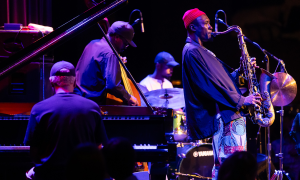
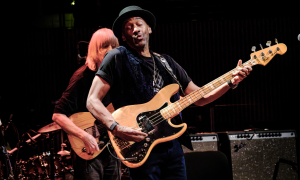
That same deepening would continue as the evening moved through "Flamenco Sketches," "On Green Dolphin Street," and "All of You"—three pieces in which the African roots that Davis drew into the tradition: the open modal space, the call answered by a response, the groove that holds a community together while a soloist speaks alone, were not historical references but living presences, audible in every phrase he chose and every silence he left open. Blanchard's arrangement of "On Green Dolphin Street" made this geography explicit and visceral: Mark Whitfield, Jr. on the drums held an African beat throughout, while on bass, Alex Smith carried a reggae groove—two branches of the same diaspora, one arriving directly from the continent, the other via the Caribbean, interlocking beneath a melody drawn from a Hollywood film. On this foundation, Ravi Coltrane on saxophone, Tom Oren on piano, and Altura each took solos—the last of these haunting in its interiority, a single voice speaking quietly over the communal ground the rhythm section had laid. That Coltrane should be among those voices was itself a statement.
Blanchard had structured the evening with Coltrane as a guest whose presence spoke through the music rather than about it—and rightly so, because this is precisely how John Coltrane himself had once stood in relation to Miles Davis: not as an equal billing but as a voice given space within another musician's vision, soloing on Davis's own recording of "Someday My Prince Will Come," learning the tradition by moving within it. The lineage was not merely historical but present in the room, audible in every phrase—and so was its logic: that the music speaks loudest when the individual voice serves the larger argument rather than competing with it.
Before the final piece, Blanchard wove together a medley of "Someday My Prince Will Come," "All Blues," and "Two Bass Hit." These were not chosen idly—together they trace the arc of Davis's life's work, which extends from the bebop roots of "Two Bass Hit," through the modal revolution of Kind Of Blue (Columbua Records, 1959), on which "All Blues" appeared and which Davis associated with the mbira and the African musical tradition, to the lyrical consolidation of "Someday My Prince Will Come," where the waltz rhythm created an intimate space between a single voice and a single listener. To hear them woven together was to hear Du Bois's double consciousness played out in real time—the African communal self in the groove of "Two Bass Hit'" and "All Blues," the American self in the melodic lyricism of "Someday My Prince Will Come"—because the tension itself is where the music lives.
The evening ended with "Wandering Wonder," Blanchard's sole composition on the Flow (Blue Note Records, 2005) album. Closing the evening with his own composition was no accident—it was the one moment when the inheritor stepped forward and spoke in his own name. Yet even here the inheritance was audible, not as imitation but as transformation. The Latin rhythms that define the piece trace another side of the same African root that had sounded earlier in the reggae groove and the African beat of the drums of his arrangement of "On Green Dolphin Street"—the diaspora arriving once more from a different direction but speaking, as it always does, the same language. All through the evening, Blanchard had demonstrated that the double consciousness Du Bois described need not be a burden carried in silence. Miles Davis had shown that it could be played—that the tension between the African communal self and the American individual voice did not become a wound to be healed but a creative condition to be inhabited. "Wandering Wonder," positioned at the close, was Blanchard's quiet confirmation that he had not merely inherited that condition but made it his own—that the wandering of the title does not mean being lost, but names a way of moving through the world with both selves intact, each enriching the other, the groove and the solitary voice finally, and without resolution, at home in the same room.
 FOLLOW Kofi Adjepong-Boateng
and get notified whenever a new article published.
FOLLOW Kofi Adjepong-Boateng
and get notified whenever a new article published.
I grew up to Louis Armstrong, which says it all.
About Terence Blanchard

Tags
PREVIOUS / NEXT
Terence Blanchard Concerts

Become a Sustaining Member

Since 1995, All About Jazz has championed jazz as an art form and supported the musicians who create it. Over three decades, it has grown into one of the world's leading jazz resources, serving hundreds of thousands of readers, musicians, presenters and industry professionals each month.
Help Build the Future of All About Jazz
Your support helps us continue building All About Jazz for the next generation—expanding our editorial coverage, preserving jazz history, developing new community features and creating better ways to discover the music and the people behind it.
Become a sustaining member for as little as $20 per year and you'll immediately enjoy an ad-free experience along with access to subscriber features and future articles for a full year.
Together, we're not simply sustaining All About Jazz—we're building its future. Thank you for being part of the journey.