Home » Jazz Articles » Profile » The Latin Side of Conrad Herwig
The Latin Side of Conrad Herwig
During Miles
—Conrad Herwig
Herwig has been very busy on the jazz scene since his college days at the renowned University of North Texas jazz studies program. While in school, he played club gigs with noted pianist Red Garland at clubs in the nearby Dallas-Fort Worth area. After graduation, Herwig joined Clary Terry’s big band, and then moved on to the big bands of Buddy Rich, Toshiko Akiyoshi, Mel Lewis, Dizzy Gillespie’s United Nations Orchestra and the Mingus Big Band. He also worked in smaller bands with the likes of Joe Henderson, Jack DeJohnette and many Latin groups –including bands led by legends Eddie Palmieri and Mario Bauza.
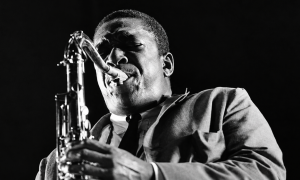
 Herwig has also released over a dozen recordings as a leader since 1987 – including the Grammy-nominated The Latin Side of John Coltrane in 1996. The soon-to-be-released The Latin Side of Miles Davis recording and tour underscore Herwig’s intense interest in the crossroads where Latin music and jazz meet. According to Herwig, that crossroads is well traveled – going back to the early days of jazz and New Orleans pianist Jellyroll Morton.
“Jellyroll Morton always used to talk about the Latin tinge in jazz,” states Herwig. That’s a good point, because he was actually born in Haiti and raised by Cuban godparents. So Cuban musical influences both harmonically and rhythmically are inherent in his music. And that Latin musical influence on jazz has been happening over the decades. Charlie Parker and Machito, Dizzy Gillespie and Chano Pozo – the connection is undeniable. It’s a very organic thing. What you realize is nothing is ever invented new. Instead, I believe there’s a constant rediscovery of characteristics that are inherent in the music already. Some people look for the differences in styles of music. I look for the connections.”
For Herwig, his exploration of those connections between jazz and Latin music began when he first arrived in New York and had the chance to play with Mario Bauza, the Cuban-born bandleader who was instrumental in bridging the gap between the two musical styles.
“When I was playing with Mario Bauza and Dizzy Gillespie on concerts, “ recalls Herwig, “that’s when I met Paquito D’Rivera, Claudio Roditi and Eddie Palmieri. Mario Bauza really is the source – the link – connecting jazz and Latin, because he heard it and communicated it so strongly.”
Herwig interest in Latin music was also fueled by his friendship with trumpeter Brian Lynch, who had arrived in New York at about the same time. The instantaneous rapport they developed at jam sessions and in the bands of Akioshi and Palmieri – combined with their mutual interest in Latin music – laid the groundwork for Herwig’s The Latin Side of John Coltrane recording and the current The Latin Side of Miles Davis recording and tour.
“One of our goals we decided on a long time ago while in Eddie Palmieri’s band, was to explore the music of Coltrane and Miles in a Latin context,” says Herwig. “I always tell people if someone put a gun to my head and said all you can do is play Miles Davis and John Coltrane for the rest of your life, it wouldn’t be bad. Hey, it could be the Latin side of Liberace... which would be a disaster!”
For Herwig, the connection between the music of Coltrane and Latin influences was apparent in both Coltrane’s explorations of various world music styles and in some of the bass line patterns in his compositions.
“John Coltrane had a definite affinity for Afro-Caribbean and Afro-Brazilian music, and even in the music of India,” states Herwig. “After all, he wrote tunes titled ‘Brasilia,’ ‘Africa Brass’ and ‘India.’ In addition, there are definite clave bass lines in his music – that 2-3 clave rhythm.” The relationship between Latin music and the work of Miles Davis isn’t as obvious according to Herwig. But in terms of basic rhythms and the way Davis structured his tunes to encourage improvisation, Herwig and Lynch found enough connections to make the project interesting and rewarding.
 “During Miles’ fusion era, he used Latin percussionists and got that Afro-Caribbean influence directly,” explains Herwig. “But in his other music, there’s a less obvious connection – unless you go back to the roots of jazz in African rhythms. As Eddie Palmieri once said, ‘It’s the 40,000 year history of the rhythmic patterns that’s the foundation.’ So because Miles’ music is so strong rhythmically and the inherent characteristics of those rhythms exist in many styles of Afro-Caribbean music, we found a way to deal with the connections. In addition, one of the great things about Mile’s music is that it provides a great structure for improvisation. Miles wanted his musicians to have a lot of freedom to improvise, and encouraged them to create their own musical ideas. So there’s a natural freedom in the music’s structure that allows us to try and find something fresh in it from our perspective.”
In fact Herwig, Lynch and the other members of the band found so many “Latin sides of Miles” that enough material was recorded to fill up a second CD that will focus on the classic Davis recording, Sketches of Spain. The prolific results of the recording sessions for the Miles Davis project as well as the recent Coltrane sessions has also solidified the collaboration between Herwig and Lynch – who by mutual agreement are now co-leaders of the band.
“The first Miles release will actually come out under my name,” explains Herwig. But now Brian and I have agreed to co-lead the working group. There’s such a strong feeling of collaboration between us, and it goes way back. I’m not one to exaggerate, but over the years, Brian and I have probably done about 1,000 gigs together. Of course, we still have to figure out the billing for the band now that we’re co-leaders. We’re joking that whoever gets the gig gets first billing!”
Visit Conrad Herwig on the web at www.conradherwig.com .
 FOLLOW AAJ Staff
and get notified whenever a new article published.
FOLLOW AAJ Staff
and get notified whenever a new article published.
Various staff members.
Tags
PREVIOUS / NEXT
Become a Sustaining Member

Since 1995, All About Jazz has championed jazz as an art form and supported the musicians who create it. Over three decades, it has grown into one of the world's leading jazz resources, serving hundreds of thousands of readers, musicians, presenters and industry professionals each month.
Help Build the Future of All About Jazz
Your support helps us continue building All About Jazz for the next generation—expanding our editorial coverage, preserving jazz history, developing new community features and creating better ways to discover the music and the people behind it.
Become a sustaining member for as little as $20 per year and you'll immediately enjoy an ad-free experience along with access to subscriber features and future articles for a full year.
Together, we're not simply sustaining All About Jazz—we're building its future. Thank you for being part of the journey.