Home » Jazz Articles » Live Review » The Gil Evans Project at Birdland
The Gil Evans Project at Birdland
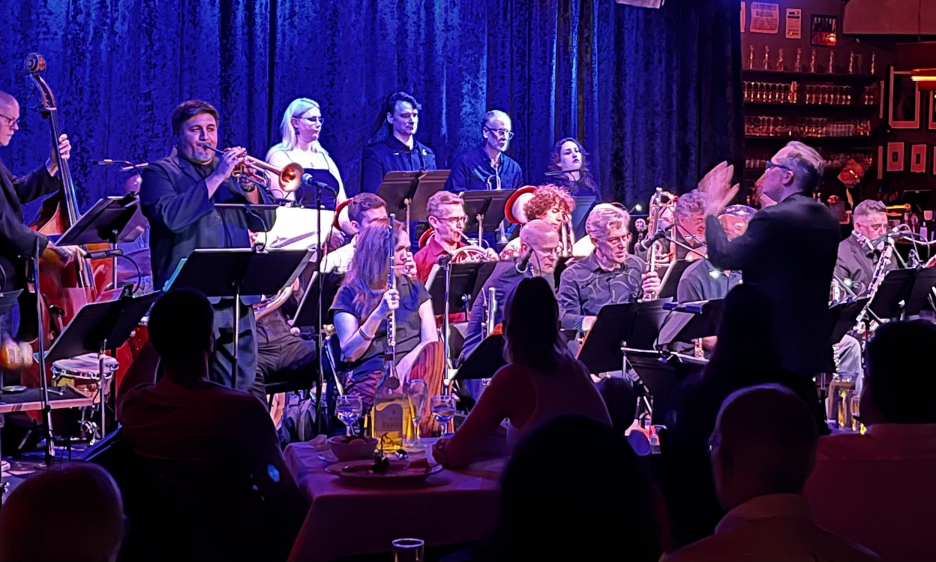
Courtesy Paul Reynolds

It was thrilling to hear Sketches of Spain and Porgy and Bess, performed in their entirety using Evans' original charts and instrumentation and within the intimate environs of a club.
Birdland
Sketches of Spain and Porgy and Bess
New York NY
May 27 and May 30, 2026
Among the many celebrations of Miles Davis during his centennial week, it's hard to rival the ambition of Ryan Truesdell's fine five-night takeover of the main room at Birdland to present Sketches Of Spain (Legacy Recordings, 1960) and Porgy and Bess (Columbia Records, 1959), two of the classic big-band collaborations between the trumpeter and arranger and composer Gil Evans.
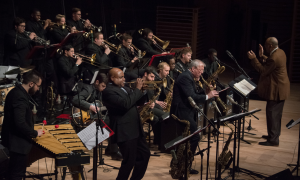
Part of the joy of these shows—which were billed as the annual Birdland residency of Truesdell's The Gil Evans Project—was to hear the familiar (indeed, for many fans, deeply ingrained) recordings performed using Evans' original charts and instrumentation, and within the intimate environs of a medium—sized club. The distinctive four-trumpet fanfares in both works, as just one example, were all the more bracing when heard cannonading around Birdland's walls. Being able to see as well as hear the band's top-rank tuba player (Marcus Rojas) and bass trombonist (George Flynn) offering bottom-end musical support to the soloist provided a reward that home listening to the classic albums couldn't match.
It's no slight to the shows (three nights of which were devoted to Sketches of Spain, and two to Porgy and Bess) to say that their approach—especially with Sketches—was less re—interpretation than reproduction. As Truesdell, who conducted from the bandstand, pointed out to the audience for Sketches, even the solo trumpet parts, played to perfection on Wednesday (the day after Davis's 100th birthday) by Mike Rodriguez, were "incredibly notated—written out—to the tune of 80% of what you are hearing."
Yet Truesdell, for all his commitment to honoring these works, isn't averse to tinkering with them—or "mixing it up a bit" when it comes to soloists, as he put it in a sidestage chat after Saturday's late-set performance of Porgy and Bess. For Sketches, that meant using as soloist for one evening of the three devoted to the work, a violinist, Sara Caswell—albeit one who specializes in jazz and has worked with the likes of Brad Mehldau and Esperanza Spalding.
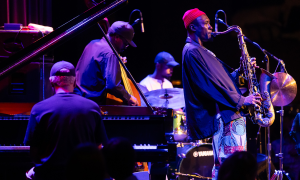
For Porgy and Bess, a George Gershwin work, Truesdell also switched out the solo instrument, in this case from trumpet to saxophone. As with the choice of Rodriguez, the designated saxophonist, Steve Wilson, is a musician's musician, a player who is quietly (and deservedly) celebrated within the jazz community but is hardly a marquee star. Truesdell's staffing decisions kept the focus as much on the ensemble and the arrangements as on the soloist.
Sketches is an especially gutsy selection for a jazz club, as Truesdell acknowledged early in Wednesday's set: "Those of you who came expecting swinging jazz may not find it tonight, but [Sketches of Spain] is a pinnacle of orchestration and recomposition."
The Project's performance justified that description, with rich renditions of the album's Spanish-flavored themes, aided by three percussionists (to render a score rich in castanets, cowbells, and rat-a-tat snare drum) and other instrumentation that duplicated Evans' unique musical vision, including the presence of bassoon, oboe, and timpani. (As Truesdell asked from the bandstand, "When's the last time Birdland had a band with three french horns and only one saxophone?!")
Since Sketches draws more on European classical and folk traditions than from jazz, and includes the pensive 17-minute-long Concierto de Aranjuez, one worried that the distinctly unswinging music might lose the Birdland audience, with its many midtown tourists seeking an American jazz experience. Yet the house remained rapt throughout, even during Truesdell's engaging but often scholarly introductions. (At one point, he played a 1952 field recording of a Spanish pan pipe performance—the welcome call of the town's visiting pig castrator, he said to much laughter—by way of introducing Pan Piper, Evans' big-band arrangement of the tune.)
Porgy is the jazzier of the two works, by far, and was played with a leaner ensemble than for Sketches—with no extra percussionists, and not even a piano, which was played for the Sketches' performances by the ever-dependable Gary Versace. To better conjure up Davis's playing, Wilson mostly put aside his alto saxophone in favor of the soprano iteration of the instrument, which shares a Bb key and a similar range with the trumpet.
The stellar ensemble—largely the same for both nights—contributed heavily to the success of the performances, beginning with the rhythm section. While best known for his small-group work, Lewis Nash drove the band with subtle power through such highlights as the stop-time introduction to Porgy's "Gone." Jay Anderson's rock-steady bass playing was a reminder of his extensive experience with, among other large groups, the Maria Schneider Orchestra (many albums by which happen to have been produced by Truesdell.)
To finish both evenings, the band left behind the strictures of the respective albums with an expansive version of "So What," from Davis's classic Kind Of Blue (Columbia, 1959) album, released the same year as Porgy and Bess. This closer offered a return to more customary jazz structure, including extensive soloing, which was all but absent from the rest of the programs, save for the Davis solo parts.
Though the main program hardly outlived its welcome, the closer provided a relaxed coda to the disciplined and rare renditions of the classic timeless album tracks that preceded it.
About Ryan Truesdell

Tags
PREVIOUS / NEXT
Become a Sustaining Member

Since 1995, All About Jazz has championed jazz as an art form and supported the musicians who create it. Over three decades, it has grown into one of the world's leading jazz resources, serving hundreds of thousands of readers, musicians, presenters and industry professionals each month.
Help Build the Future of All About Jazz
Your support helps us continue building All About Jazz for the next generation—expanding our editorial coverage, preserving jazz history, developing new community features and creating better ways to discover the music and the people behind it.
Become a sustaining member for as little as $20 per year and you'll immediately enjoy an ad-free experience along with access to subscriber features and future articles for a full year.
Together, we're not simply sustaining All About Jazz—we're building its future. Thank you for being part of the journey.
Near
New York Concerts