Home » Jazz Articles » The Moment's Energy » The Fire, Regardless
The Fire, Regardless
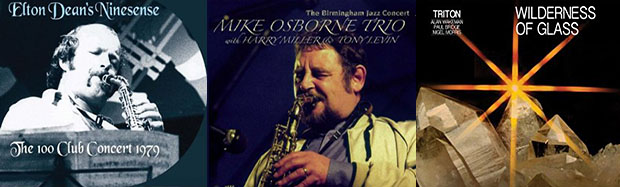
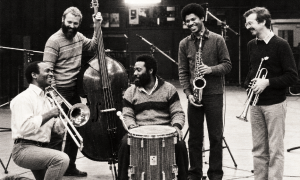
After he left the band, Dean managed to maintain the punningly-named band Ninesense—which, perhaps unsurprisingly, consisted of nine pieces. In a way not dissimilar to pianist Chris McGregor's big band Brotherhood of Breath, another institution which defied the economic odds of the day, the band often achieved a sound bigger than its membership through sheer fervor. Although there's no little distance between their respective musical outlooks the fact remains that some musicians, most notably Dean himself and trumpet and flugelhorn man Harry Beckett, were at home in both bands.
Situated on Oxford Street in London, the 100 Club was a fixture on the circuit even back in 1979, and many of the names of the day worked there. On the night of March 5th of that year, Ninesense was captured for posterity on a cassette, and despite Reel supremo Michael King's audio restoration work, the set is marred a little by the fact that pianist Keith Tippett is, through unfortunate positioning, literally somewhat distant by comparison with the rest of the band. Such a shortcoming is, however, negated by the sheer commitment with which the music's shot through.
Such are the vagaries of making improvised music for a living that, at this time, musicians were relatively blessed in having, in Britain, a gig circuit which took in colleges and small clubs—in short, small venues for essentially minority music. This was, of course, thanks in no small part to the work of a handful of committed individuals. This, in combination with a level of public funding for jazz above the negligible, made for a potent wider European scene which, with the release of both the Dean and the Osborne sets, becomes further enriched decades after the event.
One of those committed individuals is George West, the founder of Birmingham Jazz, an organization that started out in England's second city in 1976 and which is remarkably still fulfilling the same function, namely the promotion of live music. The Mike Osborne trio set we're now blessed with was the third concert the organization was responsible for setting up. Osborne, a man whose alto sax work can be nominally equated with that of both Jackie McLean and Ornette Coleman, seems, with the benefit of hindsight, to have been one of those musicians whose playing evolved at a phenomenal rate. By 1976, he was entirely accustomed to starting a set at a level of intensity that a lot of musicians spend an evening trying to locate and only infrequently find. Drummer Louis Moholo-Moholo was a cornerstone of Osborne's trio earlier in the decade, but here his replacement by Tony Levin results in no diminution of that intensity.
Despite a vigorous albeit small live scene it was left to labels such as Ogun to document the music. Graham Collier was appreciative of the situation and formed his own Mosaic label in the last quarter of the decade, one of the initial releases of which was the Triton album which is now back with us. As with the Osborne trio, the sax-bass-drums lineup produces potent music; indeed, it's true to say that the entire album is marked by an edginess that serves to emphasize how in-the-moment creativity was a central part of the band's credo.
The past, then, is a potent and inspiring place which, in defiance of the cliché, is not so much a foreign country as it is a place where a few individuals—promoters, producers and others, as well as the musicians themselves—could wield power and have influence out of all proportion to their negligible numbers.
 FOLLOW Nic Jones
and get notified whenever a new article published.
FOLLOW Nic Jones
and get notified whenever a new article published.
Nic gets a positive sense of wonder from the most worthwhile music.
Tags
PREVIOUS / NEXT

Become a Sustaining Member

Since 1995, All About Jazz has championed jazz as an art form and supported the musicians who create it. Over three decades, it has grown into one of the world's leading jazz resources, serving hundreds of thousands of readers, musicians, presenters and industry professionals each month.
Help Build the Future of All About Jazz
Your support helps us continue building All About Jazz for the next generation—expanding our editorial coverage, preserving jazz history, developing new community features and creating better ways to discover the music and the people behind it.
Become a sustaining member for as little as $20 per year and you'll immediately enjoy an ad-free experience along with access to subscriber features and future articles for a full year.
Together, we're not simply sustaining All About Jazz—we're building its future. Thank you for being part of the journey.