Home » Jazz Articles » The Moment's Energy » Wadada Leo Smith: More Than Moments in Time
Wadada Leo Smith: More Than Moments in Time

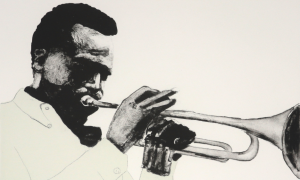
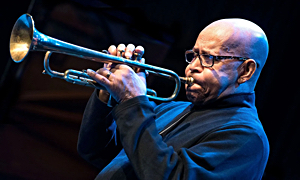
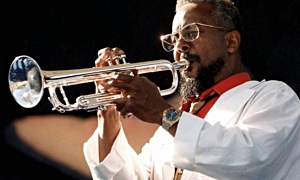
 Trumpeter Wadada Leo Smith has been pursuing his muse for decades now; that pursuit has yielded music as singular as anything out there, as his now abundant discography testifies. The release of Ten Freedom Summers (Cuneiform, 2012) earlier this year amounts to something monumental, however, and not merely because the music pans out across four discs. Smith's music has never had about it the air of culmination, and accordingly no release of his amounts to anything other than a facet of his art. This is not, however, to damn his work with faint praise, for to be an artist of his stature is no mean achievement. Smith has attained the status he now enjoys not merely because of sheer longevity. Instead, his art has deepened with the passing years, which is profoundly human.
A consequence of this humanity is the identities his work now has. In recent years, his work on record—in duos with the likes of saxophonist Anthony Braxton and drummer Gunther 'Baby' Sommer, and further back with drummer Ed Blackwell—has bucked the idea of the tradition as something worthy only of reverence; but, in contrast, the ways in which he has conducted wholesale revision of trumpeter Miles Davis in the early years of his electric period have yielded music which has his identity stamped all over it even while it's mindful of the statues Davis kicked over.
A third facet of Smith's work is to be found in his work with the Golden Quartet, a grouping which plays Ten Freedom Summers in company with the Southwest Chamber Music ensemble. Smith is a habitual builder, and it's the presence of that ensemble which is the clearest sign of a master structuralist at work. For him, as Matthew Sumera points out in the accompanying booklet notes, Ten Freedom Summers has been 34 years in the making, but it would be wrong to assume that this is a sign of laziness. What's clear on a piece like "Thurgood Marshall and Brown vs. Board of Education: A Dream of Equal Education" is that the music is reflective of ongoing processes of thought and refinement. By title alone it indicates also a preoccupation with political concerns that's at odds with the apolitical nature of much creative improvised music.
This is reflective of the times that Smith grew up in. As a 70-year-old man, he has both seen and felt the civil rights struggles that have helped to shape the course of American history in the 20th century, and rather than use these as a provocation for something purely rhetorical, he has utilized them in his art, and thus overtly yet subtly indicated their profundity. Both the vigor and depth of his art are summarized—profoundly—in "Black Church," where his writing for the chamber ensemble is both melancholic and alive with color. The demands his writing makes of the players are met with aplomb, the outcome being a gentle coercion into the business of more than listening. This essentially is what Smith asks of us. The lack, throughout the set, of words spoken or sung makes that all the more demanding, but Smith's knowledge of abstract poetry facilitates the intellectual effort requires. To call the end result of his decades of effort an achievement seems inadequate, for what Smith has reached is yet another plateau in the trajectory of his art.
About Wadada Leo Smith

Tags
PREVIOUS / NEXT

Become a Sustaining Member

Since 1995, All About Jazz has championed jazz as an art form and supported the musicians who create it. Over three decades, it has grown into one of the world's leading jazz resources, serving hundreds of thousands of readers, musicians, presenters and industry professionals each month.
Help Build the Future of All About Jazz
Your support helps us continue building All About Jazz for the next generation—expanding our editorial coverage, preserving jazz history, developing new community features and creating better ways to discover the music and the people behind it.
Become a sustaining member for as little as $20 per year and you'll immediately enjoy an ad-free experience along with access to subscriber features and future articles for a full year.
Together, we're not simply sustaining All About Jazz—we're building its future. Thank you for being part of the journey.