Home » Jazz Articles » Mr. P.C.'s Guide to Jazz Etiquette and Bandstand Decorum » September 2015
September 2015
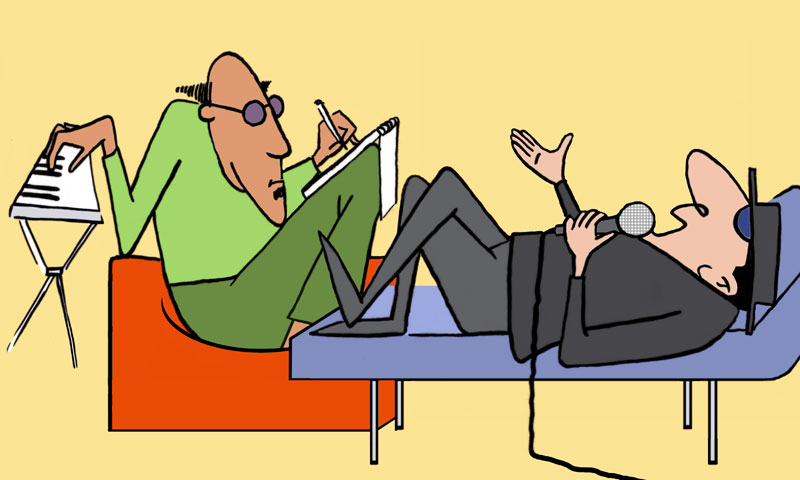
Should it matter whether a jazz musician is or isn't pretty or handsome?
—Can't Understand The Etiquette
No it shouldn't, but unfortunately it does anyway. Jazz has historically been music of the down-trodden, disenfranchised and disfigured, and that's led to tremendous prejudice against good-looking players. What can we do? A full-fledged affirmative action plan would be hard to implement, but a sensible informal policy would ask each quartet of greasy down-and-outers to reserve a position for the terminally attractive.
Attractive musicians can't help their beauty. And jazz musicians—of all people—should know better than to judge them for the way they look.
Dear Mr. P.C.:
When we're soundchecking before a gig, the trumpet player in my band deliberately plays really quietly while they set the house levels. Then when we're actually performing he blows full bore and is the loudest guy in the room. So he tricks the soundman to turn him up, and all the ladies swoon at his monster sound. What am I supposed to do?
—Quietly Simmering
Do you really want to attract the sort of ladies who "swoon" at a "monster sound"? Today they're the linebacker's girl, the bully's catch, the bouncer's chick. But where will they be when their musclemen turn old and frail? Nowhere to be found, that's where!
Take heart, QS. Somewhere out there is a sensitive young woman just dying to nurture a puny-toned player like you; your feeble sound will wrench her heart, and she'll happily be your caregiver for life.
Dear Mr. P.C.:
How come every time a musician is described by another as a "nice guy," he turns out to be a bad player?
—Puzzled in PA
Bad players have to be nice or they won't get work. And although nice musicians don't have to play badly, having niceness to fall back on dooms them to complacency and mediocrity.
Good players don't always start out mean, but once they realize their goodness entitles them to meanness, few can resist. And mean players don't always start out good, but driven by the desire to belittle lesser (and nicer) players, they practice hard and quickly improve.
This has led to a highly segregated jazz community, with a growing chasm between the best, meanest players, and their nicer, lesser counterparts. It's reflected in their audiences, too. Snotty, effete listeners gravitate toward the best, nastiest bands, while likable listeners are perfectly happy listening to well-intentioned drivel.
 FOLLOW Mr. P.C.
and get notified whenever a new article published.
FOLLOW Mr. P.C.
and get notified whenever a new article published.
Inspired by the cutting edge advice of Abigail Van Buren, the storied bass playing of Paul Chambers, and the need for a Politically Correct doctrine for navigating the minefields of jazz etiquette, I humbly offer my services.
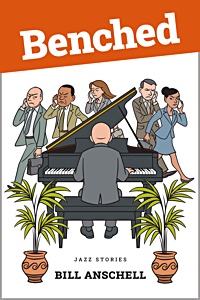
Get 'Benched!'
Benched, Bill Anschell's debut book of short stories / jazz humor. The stories are interspersed with the very best of Mr. P.C., hand-picked from the 400+ questions answered over the column's 16-year history. Benched is available on Amazon (paperback and Kindle) and most online booksellers.
Tags
PREVIOUS / NEXT

Become a Sustaining Member

Since 1995, All About Jazz has championed jazz as an art form and supported the musicians who create it. Over three decades, it has grown into one of the world's leading jazz resources, serving hundreds of thousands of readers, musicians, presenters and industry professionals each month.
Help Build the Future of All About Jazz
Your support helps us continue building All About Jazz for the next generation—expanding our editorial coverage, preserving jazz history, developing new community features and creating better ways to discover the music and the people behind it.
Become a sustaining member for as little as $20 per year and you'll immediately enjoy an ad-free experience along with access to subscriber features and future articles for a full year.
Together, we're not simply sustaining All About Jazz—we're building its future. Thank you for being part of the journey.