Home » Jazz Articles » Profile » Robin Kenyatta
Robin Kenyatta
After being heard by trumpeter Bill Dixon at a Harlem club Kenyatta was performing at with Pucho and The Latin Soul Brothers (Kenyatta remembers, "Someone had told Bill about me, because the word was going through the grapevine that some fantastic [laughs with pride] young alto player was coming up."), he was immediately invited to be a participant in what has since become known as the historic "The October Revolution in Jazz" that took place at Judson Hall in New York City. It was a gathering of musicians associated with the "New Thing" back in 1964.
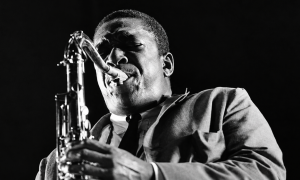
This was also where Kenyatta was to meet one of the music's giants, John Coltrane, who he fondly recalls, "Came up to me after the concert and told me how much he admired my playing...He asked me how to do certain little tricks I was doing. It was a big moment in my life - 1964. Meeting Trane was fantastic!"
From then until half a dozen years later, Kenyatta looked skyward, performing on over a dozen significant recordings, including a handful under his own leadership up until 1972. Following his recording debut with Valerie Capers in 1965, Kenyatta would contribute to such significant statements from that time period as Roswell Rudd's Everywhere, Bill Dixon's Intents and Purposes, and a pair of early '70s Alan Silva recordings - Seasons and My Country, not to mention recording dates with Andrew Hill from 1967 on Blue Note (which have yet to see the light of day!).
His hard-to-find leader debut, Until (Vortex), recorded in 1966, featured bassist Walter Booker, and the recording debuts of pianist Fred Simmons and drummer Horacee Arnold. The standout title is the 11- minute Kenyatta original, "You Know How We Do", in which the quartet is augmented by trombone (Rudd), an additional bassist and drummer (Lewis Worrell, and Archie Lee respectively), as well as trumpeter Mike Lawrence who also plays with the smaller ensemble on two other tunes. It's as representative as anything recorded within the year of Coltrane's passing, and helped bring Kenyatta's youthful influences of Cannonball Adderley, Sonny Stitt and teacher John Handy to fruition, establishing himself as one of THE altoists of the '60s alongside Marion Brown, Jimmy Lyons, Sonny Simmons and Charles Tyler. Only a few months previous, he recorded with Stitt, one of his earliest idols, on the elder saxophonist's Deuces Wild for Atlantic.
Kenyatta eventually signed with Atlantic for a series of commercially successful albums beginning with Gypsy Man (1972): "I changed. I was not interested in esoteric music. I wanted to touch a larger audience, [and] I started recording for Atlantic. Some people would like for me to revisit that free period, [though] I use different elements of 'free' playing even when I did 'Last Tango in Paris' [his big 1973 hit]. I did it in such a way that it was commercial. People didn't even realize they were listening to a 'free' style of playing."
Since then, Kenyatta has opted for more rhythm behind him, as well as occasional elements of funk, reggae, and the blues. "If I were to go back, I'd have listened to a lot of blues. I'm sorry I missed it. I got into blues a bit later, like Howlin' Wolf, early Junior Wells and Buddy Guy, [and] James Cotton." Kenyatta has also since favored utilizing electronic instruments such as synthesizers and electric keyboards (which he claims he used prior to Herbie Hancock), as well as electric bass and guitar. In the mid '70s, he recorded with bluesman Luther Allison (and more recently played behind B.B. King), but his session work since - as leader and sideman - has been sporadic at best. His latest CD ( Cool Blue, Jazz Dance), produced by ex-Miles Davis keyboard wiz Adam Holzman (who adds piano and keyboards to the sextet session), is several years old and halts a decade of not recording. Kenyatta now looks to permanently return to the hussle and bussle of the U.S. scene, becoming a NYC resident with a weekly teaching position in Boston. All About Jazz welcomes Kenyatta back to the fold and looks forward to hearing what he has in store for his devotees as well as new listeners.
 FOLLOW AAJ Staff
and get notified whenever a new article published.
FOLLOW AAJ Staff
and get notified whenever a new article published.
Various staff members.
Tags
PREVIOUS / NEXT

Become a Sustaining Member

Since 1995, All About Jazz has championed jazz as an art form and supported the musicians who create it. Over three decades, it has grown into one of the world's leading jazz resources, serving hundreds of thousands of readers, musicians, presenters and industry professionals each month.
Help Build the Future of All About Jazz
Your support helps us continue building All About Jazz for the next generation—expanding our editorial coverage, preserving jazz history, developing new community features and creating better ways to discover the music and the people behind it.
Become a sustaining member for as little as $20 per year and you'll immediately enjoy an ad-free experience along with access to subscriber features and future articles for a full year.
Together, we're not simply sustaining All About Jazz—we're building its future. Thank you for being part of the journey.