Home » Jazz Articles » New York Beat » Jimmy Owens and the Monk Evolution
Jimmy Owens and the Monk Evolution
 When an artist comes along who convolutes traditional form, it sometimes takes eons for that artist's contribution to be understood, evaluated and finally appreciated. Initially, composer Igor Stravinsky was thrown out of Paris at the premier of "Le Sacre du Printemps," author James Joyce was banned in Boston for Ulysses," and composer John Cage ridiculed for his performance of "4'33." The list of convoluters is a long one.
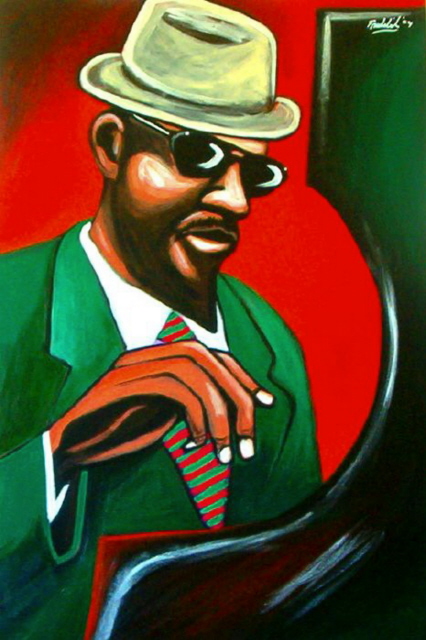
 In the 1940s, pianist Thelonious Monk finally settled on exploring new melodic and harmonic creations made possible by the innovative chord changes and progressions of bebop, and astounded even his revolutionary colleagues at Minton's Playhouse. Because his melodic and harmonic extensions sounded so hip, few sidemen questioned the master's scribbling on the score sheets of his cryptic compositions. Very few of them understood his theories but who could resist standing next to him on a bandstand and playing "Ruby, My Dear," "'Round Midnight," "Pannonica" or "Epistrophy"?
One of the most amusing episodes of musicians trying to figure out what Monk was doing occurs in Charlotte Zwerin's excellent documentary Straight, No Chaser, produced in 1988. In the film, saxophonist Charlie Rouse—who played with Monk for 10 years (longer than any other tenor man)—is seen pouring over a Monk manuscript, unable to decipher a freshly written notation. Rouse, a brilliant intonator with mellifluous sub-tones, played Monk ballads as few others could. He was a quiet individual with dutiful humility. But in this scene he strolls over to Monk, who is seated at the piano, and, as he places the chart in front of his leader, whispers "Is this supposed to be a 'B' or a 'B flat' here?" Monk, perfunctorily gazes over and replies "Whatever you want." Rouse is undaunted. He obediently writes "whatever I want" on the chart and silently slips away, not daring to question his master's paradoxical comment.
In later scenes the film shows a group of all-star jazzers around a piano, many years after Monk's passing, still trying to interpret some esoteric phrase that the bebop legend had written long ago. Another episode to make the film viewer smile.
Recently, several excellent performances and CDs with fresh interpretations and thoughtful executions of Monk's music have virtually flooded Gotham. It has been a Monk extravaganza year, with great benefit to younger musicians and listeners who have only distantly heard about this strange-looking pianist/ composer of yore.
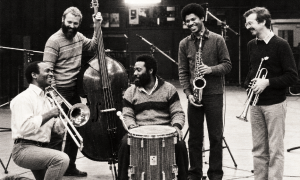
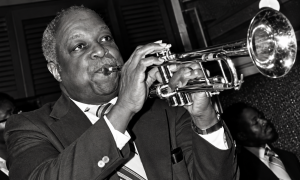
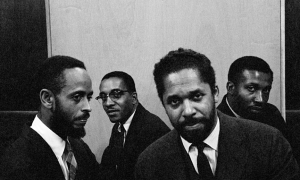
One of the most interesting CDs is by trumpeter Jimmy Owens, who knew Monk and helped produce one of his last concerts. The Monk Project (IPO, 2011) is notable for its frontline brass grouping, with trombonist Wycliffe Gordon and tubaist/ baritone saxophonist Howard Johnson joining Owens, who plays flugelhorn on some cuts. The sound of the brass layers produces cacophonous utterings that echo Monk's harmonic ideas . The rhythm section, with pianist Kenny Barron, bassist Kenny Davis and drummer Winard Harper, punctuates the session in a manner reminiscent of those early Minton's Playhouse days. Those original Monk harmonies may have been tough sledding for the listeners but they steadfastly packed the Harlem boîte, because the music always swung.
Photo Credit
Artwork by John Froehlich
 FOLLOW Nick Catalano
and get notified whenever a new article published.
FOLLOW Nick Catalano
and get notified whenever a new article published.
Dr. Nick is a TV writer/producer and professor of Literature and Music at Pace University.
About Jimmy Owens

Tags
PREVIOUS / NEXT

Become a Sustaining Member

Since 1995, All About Jazz has championed jazz as an art form and supported the musicians who create it. Over three decades, it has grown into one of the world's leading jazz resources, serving hundreds of thousands of readers, musicians, presenters and industry professionals each month.
Help Build the Future of All About Jazz
Your support helps us continue building All About Jazz for the next generation—expanding our editorial coverage, preserving jazz history, developing new community features and creating better ways to discover the music and the people behind it.
Become a sustaining member for as little as $20 per year and you'll immediately enjoy an ad-free experience along with access to subscriber features and future articles for a full year.
Together, we're not simply sustaining All About Jazz—we're building its future. Thank you for being part of the journey.