Home » Jazz Articles » Interview » From Madrid to New York: Marina Alba’s Voice Across Many Worlds
From Madrid to New York: Marina Alba’s Voice Across Many Worlds
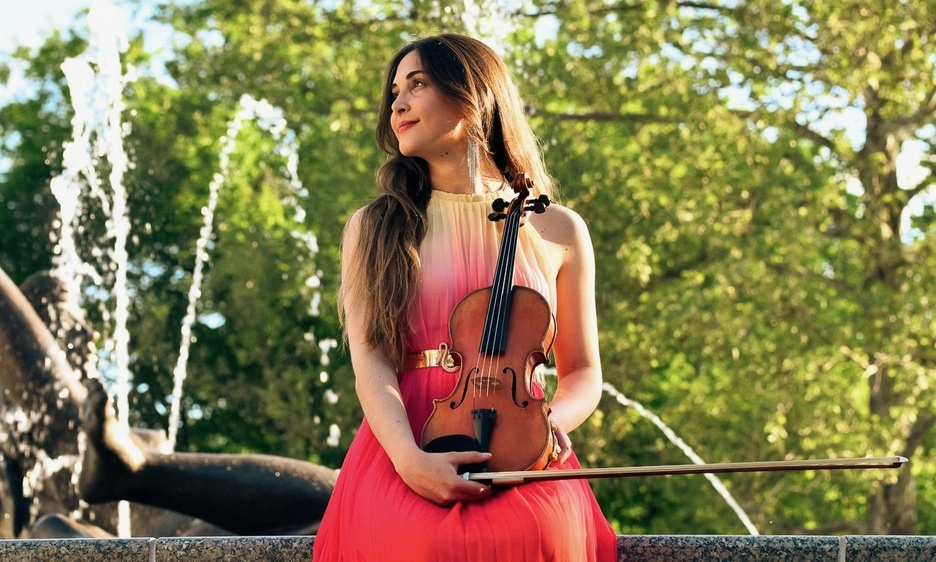
I am trying to bring to audiences the possibility of experiencing classical, jazz, and everything in between at the highest level through one artist, one life, one voice, and one night.
—Marina Alba
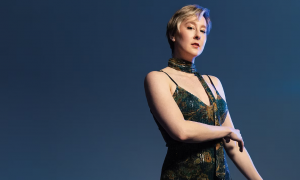
A summa cum laude graduate of the Indiana University Jacobs School of Music, Alba is currently pursuing her master's degree at Manhattan School of Music as part of the selective Zukerman Program, where she studies with Pinchas Zukerman and Patinka Kopec on a full tuition scholarship. Since moving to New York, she has performed with artists including Benny Benack III, Tony Glausi, Lenny White, Aimée Nolte, André Mehmari, Misha Piatigorsky and Matt Baker, and has appeared as lead singer with the MSM Big Band at Dizzy's Club.
All About Jazz spoke with Alba about growing up in Madrid, rediscovering singing through jazz, the connection between violin and voice, the influence of flamenco, and building an artistic identity that refuses to fit into one box.
All About Jazz: Hi Marina, thank you so much for speaking with me! Your artistry is so impressive because it moves so naturally between violin and voice, classical music and jazz, Spanish heritage and improvisation. Before we get into all of those different worlds, how did music first enter your life?
Marina Alba: Thank you for inviting me and for taking interest in my musical journey! Music has always been a part of me and of my life. Both of my parents are musicians, so in a way, even before I was born, I was already deep in it. My parents have mentioned many times how I would wake them up with my singing when I was only a baby in the crib. Later, when I was a toddler, I would sit at the piano and play my own compositions, improvising for hours at a time. I was in my happy place, in my own world full of ideas and imagination. I think from a young age, I've always seen music as the most natural way to express myself and understand emotions and feelings. In a way, it is my other native language.
AAJ: You grew up in Madrid in a family of musicians. Your father moved from classical cello into tango and flamenco, and your mother was a classical pianist who also joined the tango band Malevaje. What did music feel like in your home growing up?
MA: Music was a part of our normal life. I'd wake up or get home from school and someone would always be practicing or blasting a CD through the living room speakers. My mom often played Debussy's or Ravel's string quartets on Saturday mornings, which is maybe why they are two of my favorite string quartets. The house felt empty when there was no music playing.
My parents really wanted music to be part of our life as a family, so they encouraged my sister and me to play together, and we actually performed as a duo quite a few times growing up. Some of my first experiences with chamber music came from playing with my sister and being coached by my mom and dad, which sometimes was hard because we could not separate the parent-daughter relationship from the chamber teacher-student relationship. But we still managed to find some understanding in the end, and we had a lot of fun playing together. I think thanks to playing with my sister, we became really close, and we grew up more like friends than sisters. We are still really close now, even though she stopped playing professionally.
At times, we would all be practicing: my dad, my mom or my sister on piano, and I would be playing violin. I think for anyone who did not grow up in this kind of environment, it would have been complete madness and an auditory overload. Sometimes I would come into the piano room and do my homework underneath the piano while my mom practiced with my sister, or I would come sing along or just listen to something my dad was playing. I was so lucky to be surrounded by music all the time. It definitely helped develop the ears and aural skills I have today.
AAJ: It's amazing that your father, José el Marqués, is such a renowned flamenco cellist. How has growing up so close to flamenco shaped your sense of rhythm, emotion, and storytelling as both a violinist and vocalist?
MA: I was always intrigued by flamenco, because I never truly learned its craft until a few years ago, when I really started getting into it. Growing up, I would listen to my dad's rehearsals and try to clap, sing, or even dance along. In the summer, we would spend months in the south of Spain, in Andalucía, and I think that's when I would listen to flamenco and engage with it the most.
The harmonies, the stories, the rhythm, and especially the sentiment and passion of flamenco make it incredibly powerful. I think that made me connect with it, and it also made me recognize that passion, which is so hard to come by in many other genres and styles such as classical, that have been academicized and narrowed down to perfection rather than emotion. The soul and sentiment you feel through flamenco is exactly what I try to channel through my music, whatever the genre is.
AAJ: When you were twelve, you had to choose between the choir and the orchestra, and you cried for weeks after. Looking back, do you think that loss shaped who you became as an artist?
MA: It did. Singing was always a part of me, and I think having to choose violin made me resent violin for a while. Later on, I understood that I made the right decision, because I was eventually able to come back to singing. Maybe it was fate, or maybe just my own nature calling me, because in reality, I never let it go. I was still connected to my voice, even if I had to stop using it for a while.
Even when I was practicing violin, teachers have always said, "sing it so you know how to phrase it." I think this has always made more sense to me than to most people, because the voice was, essentially, my first instrument.
AAJ: You said that after quitting choir you never thought about singing again, until jazz found you almost by accident at an IU audition weekend. What happened in that room?
MA: I felt the energy, the interactions, the intensity, and the passion in improvising. I was listening and seeing them talk in a language I sort of knew, music, but could not really understand, because it was not the harmonies, scales, system, or even sonorities that I knew or was used to in classical music. I remember feeling so overwhelmed by that sense of "I want to be a part of this, but I can't," but also so full of hunger to learn and be able to be a part of it.
AAJ: At Indiana University, you were majoring in classical violin, but you quickly became more and more invested in jazz. You auditioned for the jazz voice studio, studied with Rachel Caswell, and later became the lead singer and violinist of the Latin Jazz Ensemble under Wayne Wallace. Did it feel like you were discovering another part of yourself?
MA: It did! I've always felt like I wasn't a typical classical violinist or classical musician, because I was always listening to other genres like jazz, soul, flamenco, and so on. Of course, being the daughter of the very first flamenco cellist had something to do with it. Both of my parents playing tango, teaching me tango, and teaching me to appreciate other genres also had something to do with it.
That is why I think getting into jazz just made sense. In a way, it liberated or freed a part of me that was yet to be awakened.
AAJ: At the same time, you were still deeply committed to classical violin, graduating summa cum laude with a 4.0 GPA and holding leadership positions in the IU Philharmonic Orchestra. How did you balance that level of classical discipline with your growing commitment to jazz?
MA: Looking back, it was madness. I'm still shocked, and quite honestly, I'm not sure how I managed to do it all! I think it was a matter of having laser focus, time management, and an undefeatable drive to do more and be better.
When I was playing violin, I was playing violin and not thinking about jazz, and vice versa. The one thing that made it work was that my jazz practice consisted mostly of listening to many jazz records while I was writing essays, walking, on public transportation, or doing chores. The time I had to practice, I would dedicate to violin, solo repertoire, and chamber music. Most of the free time I had, which wasn't much, I would dedicate to transcribing solos, learning lyrics, and getting to know more jazz artists. Any elective class I could take related to jazz, I would take.
I really don't know how I managed to stay on top of all of it, but I think I was just very hungry to learn, and I could see my rapid improvement and growth through both violin and jazz and just wanted to keep going and keep trying to reach my full potential, which is a lifetime effort and work.
AAJ: You are now studying at Manhattan School of Music in the selective Zukerman Program on a full tuition scholarship, with Zukerman and Kopec. What has it meant to bring your whole self, including the jazz singing, into that program?
MA: When I started my master's degree, I felt the weight and responsibility of being one of the very lucky students in this program really heavily on my shoulders. I decided to sort of take a break from jazz and singing to really focus on violin. I knew my teachers expected a lot from me, so I became very focused on that: adapting to their teaching methods, changing my violin technique, learning new repertoire, and adjusting to a new city and new life.
During that first semester, I was really in my head and really struggling. I think neglecting jazz especially harmed me. After winter break, I went back to singing, and that's when I felt like I was back to being myself, fully. Both Zukerman and Kopec noticed something had changed for the better. That was a truly enlightening period for me, because I realized I could never stop singing or really stop doing jazz again. If I denied that part of me, then I would never be able to bring my whole self into anything, not even just playing classical violin.
AAJ: Kopec told you that she can hear when you are singing a lot because it makes you a better violinist. That is such a powerful idea. How has singing changed the way you phrase, breathe, and play the violin?
MA: Just thinking, "how would I sing it?" and actually singing it always helps me find the natural flow of the phrase, the cadences, the shapes, and the gestures that my voice innately asks me to do without even thinking. The human's natural and innate instrument is the voice. I don't think this is necessarily a me thing, even though it is true that I happen to sing professionally too. I think all musicians should use their voice as a reference.
In my case, my voice reflects my natural instinct, and it removes all technical challenges or subconscious concerns about the violin, like posture, intonation, and technique. It simplifies the music and makes it easier to understand and follow. Honestly, after I sing a phrase, when I play it how I sang it, it just makes more sense. It's easier to play, and it always sounds better.
AAJ: Since moving to New York, you've performed with artists including Benack, Glausi, White, Nolte, Mehmari, and José el Marqués, and you've also appeared as lead singer with the MSM Big Band at Dizzy's Club. How has New York shaped your confidence as someone who works across classical and jazz spaces?
MA: It's been incredible, and it's been so reassuring. To my surprise, most people have been really supportive. The more I'm open about doing both, and the more I actually do both and even combine them in the same show, the better the reception from both artists and audiences is.
As we know, NYC is the city of opportunities, and quite honestly, for me, it has been and continues to be. It's allowing me to truly discover and develop my voice in both worlds, to combine them, and also to see what I can truly do and what type of artist I am and want to become. For instance, only in this past year and a half that I've been living in NYC, I've played solo violin in Carnegie Hall's Weill Hall and I've sung as lead singer with big band at Dizzy's Club, among many other performances. It's crazy! Who could have imagined I would be here and doing both, and to that level? I can assure you I did not think it was possible. I'm so grateful and so lucky to be here. As you previously said, I don't fit into any box, which is exactly why I think NYC and I are getting along so well, and why this city is helping me so much.
AAJ: You've said you are not two different people, but one person creating music through playing, singing, composing, and arranging while having a foot in very different worlds. Are you now trying to tie all of those worlds together more intentionally?
MA: Definitely. It's still challenging, and I'm still trying to figure out the best, most efficient, and most natural way to combine them, but I am trying to bring to audiences the possibility of experiencing classical, jazz, and everything in between at the highest level through one artist, one life, one voice, and one night.
My goal right now is to blend jazz and classical into my performances while keeping them both true to themselves, but unique in my sound and interpretation. I know it sounds abstract, but I just want to express and convey my musical and life journey through my music, and everything it encompasses.
AAJ: When people hear Marina Alba, whether through violin, voice, flamenco, jazz, or classical music, what do you hope they feel?
MA: I hope they feel inspired and moved. If you're left after a concert completely indifferent, then what's the point? I think there is now a tendency to value perfection over emotion, and I will never support that. I'd rather hear music that isn't perfect but leaves me in tears than hear a machine that plays all the notes perfectly and leaves me bored.
Even though we all strive for perfection and to be the best of the best in every possible sense, my goal with music is to convey emotion and life experiences. If I am able to put into the music an emotion, feeling, experience, or moment that someone in the audience wasn't able to word or express by themselves, then I've fulfilled my role as musician and artist. I believe that's the purpose of music and art: to reflect and express human life, with all of its ups and downs, all the different lives, personas, and changes we all go through during our lifetime. Especially now, with the rise of AI, what is art but the reflection of human life? That is something AI will never be able to take away from us.
AAJ: What are you working on now, and where do you feel your artistic journey is heading next?
MA: I'm currently working on making more music, writing more, and continuing to broaden my classical and jazz knowledge and skills. But if I were to set a goal or a plan for me and my music in the near future, it would be to get people and audiences to truly know me for jazz, classical, and flamenco, and to bring them into my way of viewing and understanding music.
More specifically, I'm planning on recording and releasing a debut album soon, potentially involving both crafts and including some of my own compositions. I'm also curating a performance concept that tells the story of my own musical journey, involving my Spanish roots in flamenco, jazz, and classical music.
AAJ: How can people find you and your music?
MA: The best way to keep up to date with me and my musical journey is through my website and Instagram. I do not like social media, and I will try to do more updates on Instagram, but you will definitely be able to find me and what I do through those two. Thank you, May, for listening and for introducing more people to my musical journey!
 FOLLOW May Yu
and get notified whenever a new article published.
FOLLOW May Yu
and get notified whenever a new article published.
May Yu is a New York–based classical and jazz violinist, music business professional, and All About Jazz contributor whose work bridges performance, education, writing, and the modern music industry.
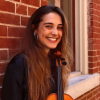
About Marina Alba
Tags
PREVIOUS / NEXT
Become a Sustaining Member

Since 1995, All About Jazz has championed jazz as an art form and supported the musicians who create it. Over three decades, it has grown into one of the world's leading jazz resources, serving hundreds of thousands of readers, musicians, presenters and industry professionals each month.
Help Build the Future of All About Jazz
Your support helps us continue building All About Jazz for the next generation—expanding our editorial coverage, preserving jazz history, developing new community features and creating better ways to discover the music and the people behind it.
Become a sustaining member for as little as $20 per year and you'll immediately enjoy an ad-free experience along with access to subscriber features and future articles for a full year.
Together, we're not simply sustaining All About Jazz—we're building its future. Thank you for being part of the journey.