Home » Jazz Articles » Album Review » The Four Bags: Forth
The Four Bags: Forth
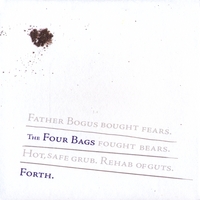
The bass-less and drummer-less quartet approach yields rewarding dividends, augmented by Michael McGinnis' use of bass clarinet, and guitarist Sean Marone's baritone guitar voicings. In this manner, not counting the lyrical factors, the musicians adjust for the lower register element. However, the group-led aesthetic takes on prismatic qualities as they fuse an electro-organic vibe into a buoyant vista, abetted by tightly integrated unison choruses, cheery themes, sublime balladry and journeys towards the avant realm.
Jacob Garchik's pumping accordion lines coalesce nicely with trombonist Bryan Drye's vigorous attack, yet even the softer spots are not sugarcoated to any degree. These works offer glimmering perspectives amid mood-evoking dialogues, off-kilter improvisational segments, and integrations touching upon chamber, the blues, jazz improv and other trajectories. On "Pure Joy," the quartet delves into the freer realm, partly due to McGinnis' torrential breakouts, and Moran's edgy electric guitar improvisations. Here, the band projects a proceed-with-caution mindset.
Engineered with harmonious themes and an eloquent form of power, The Four Bags tone it down into a trance-like state during "Imaginary Soda" via low-key melodies and shrewd use of space as part of the dynamic. Forth spawns a forward-looking and artful string of captivating concepts and applications, translating into an entertaining stance that flouts convention.
 FOLLOW Glenn Astarita
and get notified whenever a new article published.
FOLLOW Glenn Astarita
and get notified whenever a new article published.
Glenn is a senior writer and editor at All About Jazz.
Track Listing
Wayne Shorter's Tune With All Different Notes; Run; Terpsichore; Pope Joy; Comfort Toon; Imaginary Soda; A Brief Nirvana; Girias Do Norte; The Burning; Sweet Home California.
Personnel
Michael McGinnis: clarinet, bass clarinet; Brian Drye: trombone; Sean Moran: guitar, baritone guitar; Jacob Garchik: accordion.
Album information
Title: Forth | Year Released: 2011 | Record Label: Self Produced
About The Four Bags
Tags
PREVIOUS / NEXT

Become a Sustaining Member

Since 1995, All About Jazz has championed jazz as an art form and supported the musicians who create it. Over three decades, it has grown into one of the world's leading jazz resources, serving hundreds of thousands of readers, musicians, presenters and industry professionals each month.
Help Build the Future of All About Jazz
Your support helps us continue building All About Jazz for the next generation—expanding our editorial coverage, preserving jazz history, developing new community features and creating better ways to discover the music and the people behind it.
Become a sustaining member for as little as $20 per year and you'll immediately enjoy an ad-free experience along with access to subscriber features and future articles for a full year.
Together, we're not simply sustaining All About Jazz—we're building its future. Thank you for being part of the journey.