Home » Jazz Articles » The Blue Note Portal » Fillmore Dreams, Part 3
Fillmore Dreams, Part 3
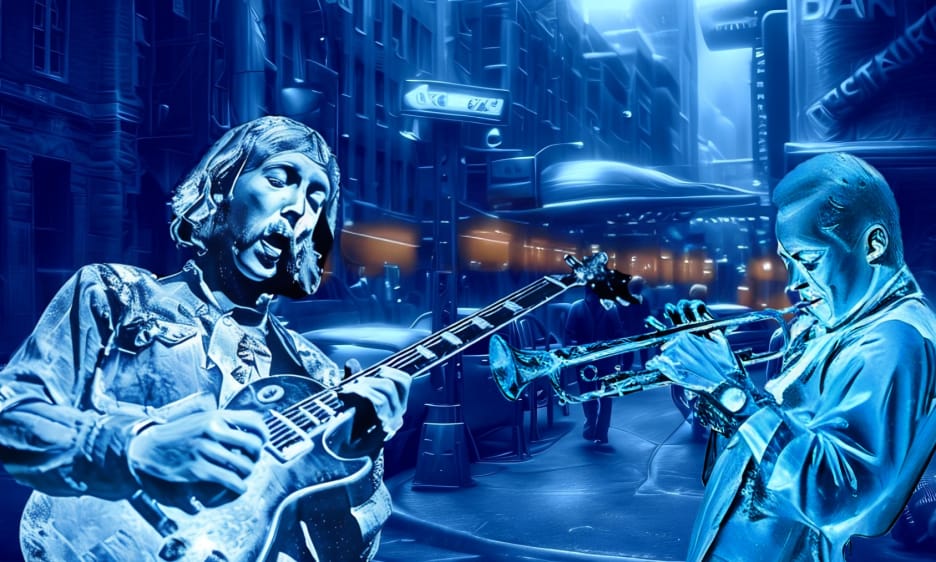
Miles picked up the trumpet and slowly walked to the microphone at the front of the stage. He put the horn to his lips. What he played was not electric, it was not fragmented, not angular, not the deconstructed language of his electric period.
Duane Allman went to bed at four in the morning and slept until three in the afternoon.
Xample had been awake since seven and after breakfast had walked east on 5th Street in the cold March morning and felt the city around him like a living thing.
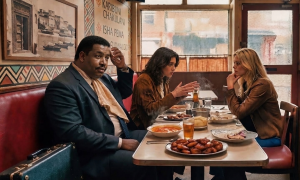
By afternoon, the band was stirring and hungry for something that tasted like home. The subway ride uptown was its own experience, but the surprise was Sylvia's on Lenox Avenue. It was warm, crowded, and smelled like heaven—fried chicken, collard greens, cornbread, the deep note of smoked pork. The band piled in—Duane and Berry and Dickey and Butch and Jaimoe and Gregg—and the room shifted around them. It was not because they were famous, they weren't, not yet. At Fillmore East wouldn't be released for another five months, and most of the world still didn't know their names. The room shifted because five long-haired white boys from the South had walked into a soul food restaurant in Harlem in 1971. Everyone in the room felt it and no one said anything about it.
Sylvia Woods, behind the counter, looked them over, and smiled at Jaimoe—and said, "Sit wherever you want, baby." And they did.
Tom Dowd arrived by cab from uptown twenty minutes later. He sat down, ordered sweet tea, and looked at the table the way a producer looks at a console—assessing the levels, finding the balance.
Xample, known to them as Alex Mercer, the young guy from San Francisco, sat at the end of the table. He was the one who had somehow gotten Miles Davis to come to the Fillmore East. He had become, in the last twelve hours, a figure of quiet legend. The band didn't know how he'd done it. Dowd had told them only that Mercer had gone downtown, found Miles, and brought him back. The details—the martial arts, Tito, the moment in the club—were filtered through Dowd's retelling, which was characteristically understated: "He went and got him."
Duane hadn't asked, he had spent the morning in a state that was half euphoria and half terror, the state of a man who has been given what he most wants and unsure how to handle it. He ate fried chicken and said little, and his eyes were somewhere else.
Word had gotten out, but not through any official channel. Through the particular osmosis of the New York music scene in 1971, which was a village of a few thousand people who all knew each other or knew someone who did. Miles Davis had been seen entering the Fillmore East, and had been seen standing in the wings. Miles Davis had been seen talking to Duane Allman, and the rumor moved through the city the way weather moves through a city—not as fact but as pressure, a change in the atmosphere that everyone felt before anyone could name it.
By late afternoon, the crowd outside the Fillmore East was larger than usual. The line for the midnight show—the fourth set, the Saturday late show, the one that was always the best, the one where the band played longest and hardest because the crowd was committed enough to be there at midnight on a Saturday—that line stretched down Second Avenue and around the block. Kids in denim and leather and corduroy, beards and long hair and fringed jackets, waiting in the cold with the patient hunger of people who knew that what they were about to hear would be worth the wait.
And the celebrities. Xample watched them arrive from the backstage corridor, where he had positioned himself near the stage door. They came in clusters, in pairs, in singles—recognizable faces, famous faces, faces that would be in the history books. He saw people he knew from archives and people he didn't recognize, all of them moving through the crowd with the particular velocity of fame, which is to say: faster than everyone else, because the world moved out of their way.
He did not catalogue them, he let them pass through his awareness the way the crowd in the club had passed through his awareness.
What he felt was the pressure of anticipation, the room was filling with it. The band was backstage, quiet in the way athletes are quiet before a game—not tense but concentrated, their energy turned inward, each man running through his own version of what was about to happen. Duane was tuning his Les Paul, his fingers moving over the strings with the absent, habitual precision of a man saying his prayers. Gregg sat with his head back, eyes closed.
Miles had not yet arrived, but Xample watched the door. The first set was at eight. The second at midnight and Miles had said he would be there. Miles Davis , by every account Xample had ever read, was a man who kept his word—not because he was punctual or polite, but because his word was the only currency he spent, and he spent it carefully.
A black Cadillac Fleetwood pulled up outside the stage door and Miles got out alone. No Tito. No entourage. Just Miles, in a dark jacket, carrying his trumpet case, walking through the stage door with the unhurried certainty of a man entering his own house.
He passed Xample in the corridor without stopping. Without looking at him. Without acknowledging that Xample existed, he simply muttered, "You still here?" and kept walking.
Xample smiled to himself.
The first set was a controlled detonation, Xample stood in the wings, stage right, where Miles had stood the night before. Miles was ten feet away, arms crossed, trumpet case at his feet, his face set in that expression that could have been contempt or concentration or maybe both. He was watching the stage the way a hawk watches a field—not moving, not blinking, seeing everything.
The Allman Brothers Band opened with "Statesboro Blues" again, but it was the third song that changed the air.
"Done Somebody Wrong" was the kind of song that the Allman Brothers didn't just play but inhabited—climbed inside and lived in, the way a hermit crab lives in a shell. Duane's slide was weeping, crying, telling a story that didn't need words because the sound was the words. Gregg's voice was raw and open. Berry's bass was a heartbeat. The two drummers were one—Jaimoe's colors painting over Butch's structure, the two kits blending as one.
Miles uncrossed his arms and Xample saw it happen. The same motion he'd seen the night before—the slow lowering of the barricade, the opening of the gate. Miles's arms dropped to his sides. His weight shifted forward. His head tilted.
He was listening, not evaluating, not judging. The way Duane listened—with his whole body, with the entirety of his attention, with the understanding that music was not something you made but something you received.
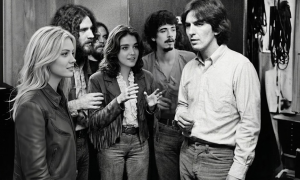
The first set ended and the band came offstage. Duane was sweating, loose, his eyes bright with the particular light that comes from playing well in front of people who are with you. He saw Miles in the corridor and stopped. The second time was not the same as the first. The shock was gone. What replaced it was something calmer—an acknowledgment, a nod, the greeting of one musician to another.
"You ready?" Miles said.
"Yeah," Duane smiled, "Ready as a cop in a doughnut shop."
Miles actually smiled, but then looked at him seriously. "Don't play for me, play for the song."
Duane nodded, "Eyes closed, ears open. That works for me."
Miles actually smiled again and said, "Then we'll be fine."
He picked up his trumpet case and walked to the wings. The band went to the dressing room.
The Fillmore East at midnight on a Saturday in March of 1971 was a cathedral, with its sloped floor and its balcony and its stage lit by the warm amber glow of Bill Graham's lighting rig. The congregation was two thousand strong, was fired up.
The band took the stage, Duane first, Les Paul in hand, the guitar catching the light like liquid gold. Then Dickey, lean and watchful, Berry, bass hanging at hip level, smiling and chewing gum. Then Butch, settling onto his stool with the focused attention to his kit. Then Jaimoe, sitting behind his kit with the cool of a jazz musician—straight-backed, alert.
Gregg sat behind his Hammond B3 as the Leslie speaker hummed.
They didn't speak to the audience, they rarely did. Duane counted off and the band started playing.
"Trouble No More." "Statesboro Blues." "Don't Keep Me Wonderin.'" Each song a statement, each one building the room, warming the air, laying the foundation. The band was playing with a cohesion that went beyond rehearsal—it was the connectedness of brothers who had been on the road together for two years. They spoke in music, and tonight, every note was charged with the awareness that something extraordinary was about to happen.
Between the third and fourth songs, Duane stepped to the microphone.
"Just one more mornin,'" he said with a wink to his brother. Then he turned to the band and counted off, One, two, three, one, two, three, and "Dreams" began.
The B3 set the chord—a minor voicing, sustained, the Leslie rotating slowly, the sound shimmering and breathing like a living thing.
And Gregg belted out, "Just one more mornin.'" His voice was low, roughened, scraped raw by smoke and fatigue and the particular vulnerability of singing a song you wrote about a pain you lived. The B3 swelled beneath him. The bass walked. The drums breathed.
And in the wings, Miles Davis heard the line, "I had to wake up with the blues." Xample was watching him, watching for the signal, the shift, the moment when the gate opened. He saw it now, not in the arms, which were already down. Not in the feet, which were already forward. It was in his face. Something moved behind Miles Davis's face—something that was not calculation, not evaluation, not the cold assessment of a musician measuring another musician's work. Something older. Something that had nothing to do with music and everything to do with the reason music exists.
Miles Davis heard a man sing about waking up with the blues, and describing life's struggle, "Pulled myself together."
The twelve-bar blues form unfolded—Gregg's voice telling the story, Duane's slide guitar answering each line, the band supporting with the patient, breathing time that Jaimoe had described at Sylvia's. Time with space in it, time that a trumpet could live in.
Everyone in the room expected electric Miles, it was after all the time of Bitches Brew and Live-Evil, and Miles played through wah-wah pedals and electronic effects, he had dismantled the traditions of jazz and rebuilt them with funk and noise and the raw materials of a new music.
That is what everyone was expecting, electric Miles, disruptive Miles, the Miles who would walk on stage and break things. What they got was pure Miles—refusing to do what audiences expected.
The middle section opened up—the modal passage, the key center floating, the chord changes dissolving into atmosphere. This was the space, this was what the song was built for. The architecture that Miles had invented, that Duane had learned, that the band had made their own.
Miles picked up the trumpet and slowly walked to the microphone at the front of the stage. He put the horn to his lips. What he played was not electric, it was not fragmented, not angular, not the deconstructed language of his electric period. It was blues, pure, crying, keening blues—the blues of a man who had grown up in East St. Louis listening to rhythm and blues on the radio. A man who had played with Bird and Diz and Coleman Hawkins , who had studied the music of men who sang about waking up with the blues because they had woken up with the blues.
The tone was extraordinary, open horn, no mute, no effects. The sound was Miles's sound—the unmistakable, unrepeatable timbre that came from his embouchure, his breath, his body, his life—but the language was older. It was the language of the blues filtered through a jazz sensibility, the same language that Miles had spoken on "All Blues" and "Freddie Freeloader" and every slow blues he'd ever played. Now it was deeper, rawer, stripped of everything that wasn't essential. The trumpet sang.
Not the way a trumpet usually sings—not bright, not declarative, not the brilliant fanfare of a brass instrument in its glory. This was the other singing, the dark singing. The sound that came from the bottom of the horn, from the place where the breath is warmest and the metal is closest to the flesh. Miles was playing from a place that had nothing to do with technique and everything to do with feeling, and the feeling was the blues, and the blues was waking up in the morning with something broken inside you and trying to sing it whole.
The room—two thousand people—went still, not quiet. The way a body goes still when it is in the presence of something that requires its full attention, the stillness of awe.
Miles played a phrase, it was a question. He played another phrase, and it was the answer, and the answer was not comforting—it was honest. The blues is not always comforting, the blues is also the truth, and the truth is that the morning comes and the blues come with it. And you sing not because singing fixes anything but because singing is what you do, it's what you are.
Duane had listened, and he waited to answer, to let the awed audience savor the gift they had been given. He let Miles's phrase hang in the air, let it decay, let the silence after it have its weight. Then he played. Slide guitar, his Coricidin bottle caressing the neck of his Gibson, the note crying, speaking the same language, the same dialect, the same blues. His answer was not an echo. It was a response—a continuation, a deepening, the way one voice deepens a conversation by adding what the first voice left unsaid.
Xample studied Miles—the slight movement of Miles's head, the tilt, the recognition, the same recognition he'd shown the night before when he said he listens. Now he was hearing what Duane had listened to. He was hearing what Duane heard when he played—the spaces, the silences, the shape of the air around the notes.
The conversation continued. Trumpet and slide guitar. Two voices, two instruments, two traditions—jazz and blues, black and white, Northern and Southern—meeting in a modal space that belonged to both of them because it had been built by one and learned by the other. They weren't competing. They weren't show boating. They were talking. The kind of talking that musicians do when they trust each other enough to say what they mean—not what's clever, not what's impressive, but what's true.
Miles's next solo unfolded, he played maybe two minutes—a lifetime of music in two minutes, every note placed with the precision of a jeweler setting a stone, every silence as intentional as every sound. He didn't play fast. He didn't play clever. He played the blues the way the blues should be played—from the center, from the place where the hurt is, where the morning is, where you wake up and the first thing you feel is the weight of being alive.
Then he stopped. He lowered the trumpet. He stepped back into the shadow of the wings.
The room held its breath, a mixture of awe and reverence.
And the band didn't stop.
This was the thing—the thing that Xample, watching from the wings, understood with a clarity that made his chest ache. Miles had spoken. Now the band continued, and Duane took his regular solo, and it was everything it always was—and more. Duane was playing in a room that had been changed by what had just happened in it.
Duane's solo was long. It was the solo of a man who had been given something—not a gift, but a permission. The permission to play without looking over his shoulder, to play knowing that the greatest musician he had ever heard had stood in the wings and played the blues and meant it. Duane played the way a man plays when he has been told, in the language only music can speak, that he belongs.
The song built to its peak—not a crescendo, not a climax, but a deepening. The room expanded with it, two thousand people breathing together, their breath synchronized by the music, their bodies swaying imperceptibly, their attention unified.
Duane played the final phrase. The band stopped and the room erupted, as they left the stage Miles was already leaving. He had picked up his trumpet case and was walking toward the corridor, his face set, his body moving with the economy of a man who has done what he came to do and does not intend to linger. But as he passed Duane—sweat on his face, eyes wide—he stopped.
He looked at Duane and he said something, and Xample was close enough to hear it.
Miles whispered, "You heard that, that's what it sounds like when the door is open."
Duane's face opened, not a smile, it was something deeper—the expression of a man who had been told by the person whose word mattered that what he had been reaching for was real. That the door is real, and that it is open.
Miles walked into the corridor and didn't look back. He didn't say goodbye to Dowd, to the band, to anyone. He picked up his trumpet case and walked out the side door and into the Manhattan night. The door closed behind him; the corridor was quiet, and the roar of the crowd was still coming through the walls, and Duane Allman stood at the edge of the stage holding his Les Paul and shaking.
Xample's transition back to 2092 was not a fade, it was a jolt. One moment, Xample was standing in the corridor of the Fillmore East, the phantom roar of two thousand people vibrating in his sternum. The next, he was sitting in the zero-gravity chair in the seventy-seventh-floor sphere.
He looked at the chronometer on the wall. They had been in the Experience for seven subjective days, yet the clock in the boardroom read: Three hours.
Around the obsidian table, the board members and the engineering team were re-emerging from their neural link passivity. No one spoke. The silence in the room wasn't the polite, measured quiet of a corporate debrief. It was the heavy, stunned silence of people who had just tried to come to grips with what had just happened.
Mara Chen, the board's most relentless skeptic, sat perfectly still. She stared at her hands, turning them over as if checking to see if they were still real. When she finally looked up, her eyes were wide, stripped of all her usual boardroom armor.
"I kept waiting for the seams to show," she said, her voice barely above a whisper. "I kept waiting for the algorithm to slip, for the rendering to glitch. But there were no seams."
She looked around the table, her voice trembling slightly. "That wasn't a rendering. It wasn't generated by the machine. It was—inspired. It was overwhelming, it was real."
It was as if her admission gave everyone else permission to exhale. The skepticism that had defined the project for years simply evaporated, replaced by a collective sense of awe.
After several board members had spoken, from the back of the room, Kiran stepped forward. The junior researcher looked at the board members with the quiet clarity of a man who had just seen the architecture of the universe. His grandparents had fled Punjab; his parents had raised him in the deep, meditative traditions of Kriya Yoga. He understood the CCE not just as an engineer, but as a yogi.
"It is real," Kiran said softly. "But not in the way we thought. We didn't build a machine that renders the past. We built an instrument that tunes into fields of consciousness."
He walked to the edge of the obsidian table, his eyes tracing the invisible geometry of the room.
"Think about the neural integration protocol," Kiran said, looking at Dr. Kovac. "To map our sensorium into the CCE, the system had to dampen our connection to our physical bodies. It had to turn down the volume of 2092. In yogic traditions, that's Pratyahara—the withdrawal of the senses. But mechanically, by dampening our physical reality, the CCE created a localized vacuum in the broader field of consciousness."
Kiran held up his hands, bringing his fingers together. "And because we linked seven minds into that dampened space, we created constructive interference. Like phase-aligning an array of microphones. Our collective focus amplified the signal, creating a standing wave. A localized, highly pressurized field of pure awareness."
He looked at Xample. "The Reconstruction—the Fillmore, the year, the context—that was just the architecture. But the music... the music was the carrier wave. It was the specific resonant frequency."
The room was so quiet you could hear the hum of the atmospheric scrubbers.
"Miles and Duane weren't just generated by the archive," Kiran said, his voice trembling with a quiet, undeniable excitement. "Their consciousnesses felt the resonance of that field. They felt the lure of the music. Because music is entirely about being in the moment, they willingly absorbed the temporal limitations of our space. They stepped into the standing wave we created. They weren't acting out a historical script. They were reacting. They were truly, genuinely there."
Kiran looked around the room at the stunned, exhilarated faces of the team.
"They were only really there during the music. When the music stopped, the resonance faded, and they were just echoes in the field. But when the music played... they were present."
Mara leaned forward, captivated. "Then what does that mean? If the machine didn't create them... "
"It means the music is the key," Kiran said, a smile breaking across his face. "Not just as data. Not just as acoustic vibrations. The music itself is a living, conscious force. It's the lure. It's the bridge. We didn't build a time machine. We built a beacon. And if the music is the key."
Xample looked down at his hands, and flexed his fingers. He could still feel the sting of the skinned knuckle. He closed his eyes, and for the first time in his life, he was gripped by an overwhelming yearning.
"A ticket to this show," he said softly, "is the thrill of a lifetime."
Disclaimer: This is a fictional account exploring what might have happened if a temporal quantum event had occurred. While real musicians and historical figures appear within these pages, they exist here in a ficticious alternate timeline—a reality that quantum theory suggests might be possible. All interactions, conversations, and events involving these individuals are entirely fictional, products of a world that exists only in the Blue Note Portal.
 FOLLOW Blue Note Portal
and get notified whenever a new article published.
FOLLOW Blue Note Portal
and get notified whenever a new article published.
The Blue Note Portal: a garage-assembled '70s microcomputer relic, eternally portaling through jazz timelines with Serling-esque irony, hacking bebop anomalies into binary swing for the ultimate improvised reboot.
About Allman Brothers Band

Tags
PREVIOUS / NEXT

Become a Sustaining Member

Since 1995, All About Jazz has championed jazz as an art form and supported the musicians who create it. Over three decades, it has grown into one of the world's leading jazz resources, serving hundreds of thousands of readers, musicians, presenters and industry professionals each month.
Help Build the Future of All About Jazz
Your support helps us continue building All About Jazz for the next generation—expanding our editorial coverage, preserving jazz history, developing new community features and creating better ways to discover the music and the people behind it.
Become a sustaining member for as little as $20 per year and you'll immediately enjoy an ad-free experience along with access to subscriber features and future articles for a full year.
Together, we're not simply sustaining All About Jazz—we're building its future. Thank you for being part of the journey.