Home » Jazz Articles » Inside the Songs » Emilio Solla y La Inestable de Brooklyn: Handmade
Emilio Solla y La Inestable de Brooklyn: Handmade
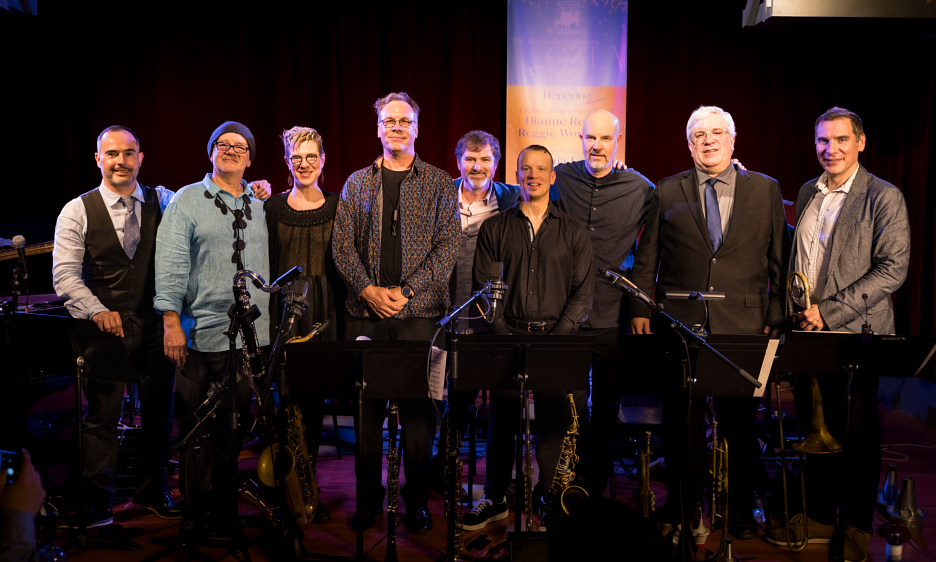
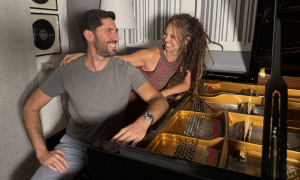
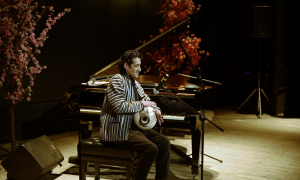
Courtesy Paula Sarmiento

Leaving things to the listener's imagination is not only a result I look for; it is an essential element of the ethos of my creative practice.
—Emilio Solla
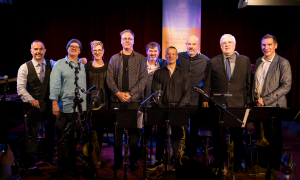
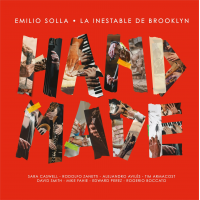 Emilio Solla has a mischievous, playful side that often manifests itself in his music. For example, his album, Handmade (Club del Disco, 2025) was recorded with a nonet, La Inestable de Brooklyn. What does the unstable (or the instability) in the orchestra's name refer to? The compositions? The playing? Or the fact that Solla uses all different players except for Tim Armacost from the previous record (Second Half) with this configuration more than 10 years ago on the Ficha Tecnica label.
 Solla offered an explanation through email: "I always like to play with words in my titles for songs and albums, and use ideas that have multiple and/or ambivalent meanings. In this case, it is both unstable (It could be because musicians change or because of unstable personalities, who knows?) and very especially, it is a joke related to estable meaning regular, for example: La Orquesta Estable del Teatro Colon. This is the regular orchestra belonging to that theater. These names are very much used in Argentina and Latin America, so my orchestra is la Inestable de Brooklyn, meaning, not always the same guys, and maybe also adding a side order of unpredictable."
It is always the ride before the destination that makes a trip through one of Solla's albums worthwhile. Handmade cavorts to its own primal rhythm; its playful style tickles and delights, zany, raunchy and melancholic all at once, striking that same sweet spot many times. He opens with the third movement of a three-movement piece—"Suite de los Abraxos"—Spanish for "Hugging Suite," evoking the pandemic. In mixing up the order of movements, he invites the listener to play them in any order they wish. "The Loss" (second movement) is both wistful and adventurous, simmering on orchestral shape-shifts through a harmonic backdrop of bluesy double-bass grooves from Edward Perez. Clever time changes, expansive brass and, of course, Solla's melodic piano are the main ingredients bolstered by the gorgeous interludes from Rodolfo Zanetti on bandoneon. Whereas some composers are as likely to share the fanfare as their bankcard's pin code, Solla is magnanimous in bringing out the talents of his nonet, though his piano does make its mark.
Hearing the record for the first time, my imagination, that infernal pinball machine, lit up and there was a bucket of quarters so the record could be played to my heart's content. Solla leaves much to the listener's imagination—direct your own movie from one song, write your own letter from another. He likes to leave some things to interpretation or offer a puzzle as in, which two songs on "Joni Mitchell" is he quoting? I promised not to divulge their titles to readers.
Solla clarifies: "Instrumental music does not have a clear meaning in my world, unless when you directly want to evoke something (like Debussy writing Le Mer, or like I did in the Hugging Suite. Leaving things to the listener's imagination is not only a result I look for; it is an essential element of the ethos of my creative practice. By not knowing myself what I mean or trying to push my partner the listener into any direction, I am free to just create with no preconditions of any kind. Thus, if I am lucky, I might be able to tell stories of which I am surprised as well, and I might become also a surprised listener, I might be able to be the magician and at the same time be marveled by the pigeons coming out of the hat, like a kid. And only then is when music might become poetry!"
The composer realizes this is a long subject, better discussed "with a glass of wine or three." He makes music that you cannot ignore by deeply committing to a restless curiosity. Presently, he is making more music, touring and putting together a new album with Antonio Lizana. Nevertheless, he managed to find the time to unveil some of the mystery behind the music on Handmade.
Inside the Music
Suite de los Abrazos (A Hugging Suite)
"Suite de los Abrazos (A Hugging Suite)" evokes the 2020 pandemic. It consists of three movements:I—Milonga Mutante (Mutant milonga)
Here is the music for a movie that shows the emergency room of a hospital during the first months of the epidemic. There is no real movie, you are invited to make your own as you listen. Mike's edgy solo contributes to sustaining the spirit of this twelve-tone based music.II—The Loss
Well, nothing to say that you cannot feel here. I was moved by this melody since it came to visit me, and I hope it will resonate with you, the listener. I am happy to suspect some influence in this piece from my dear Fernando Otero, in particular his masterpiece Página de Buenos Aires. "Immature poets imitate; mature poets steal," said T. S. Elliot. Here, Edward performs one of the best bass solos I've heard ... ever.III—Bodegón Caníbal
My producers insisted on an English title for this piece, but I refused because as it is now it may have many meanings (or none at all!). It features a fantastic tenor solo by Tim, then a "fugato" section, and it ends on a positive note with David Smith taking the melody for a "joropo" ride.The funny thing is that you will see these three movements scattered throughout the album, while you are supposed to put them in order if it is a suite, right? I guess I took inspiration from my compatriot Julio Cortázar, who in his brilliant novel Rayuela (Hopscotch) invites the reader to read it both in the normal sequential way and also by jumping across chapters following an order he suggests. So, if you are interested in listening to the Suite as such, jump on! The track order should be 3—5--1. At the end of the day, the pandemic has also left unordered traces in our daily lives, hasn't it?
Joni Mitchell
An all the way homage for one of my favorite songwriters. It didn't start as an homage, but as I was playing that opening piano "montuno" that is omnipresent in the piece, I was reminded of some older tunes of hers. After Alejandro Aviles' heartfelt solo, I decided to quote two tunes from the great Joni. Can you spot them?Bird Song
This was born from a commission by Musical Offerings, a chamber music ensemble based in San Antonio, Texas. As they are so close to the border with Mexico and the Gulf of Mexico, I thought about writing the song of an imaginary bird who lived on both sides of the border because it did not know anything about borders. In this remake for La Inestable, Sara Caswell is in charge of the bird character and man, does she sing!Miles Tango
Wait, do you mean this is Argentinean tango? Yes, it is.Para el Agua (For the Water)
This was recorded many years ago as a solo piano tune. I had wanted to orchestrate it for a long time. As I am not so sure about eternity, I decided to do it while still alive, just in case. It features the composer as the pianist; and to my surprise, he is not dissatisfied with his solo.La Carta (The Letter)
I see traces of Chick Corea's children's songs in this piano ostinato. It makes total sense after having worked so intensely in orchestrating many of his pieces for our album Ritmo, recorded with the ADDA Symphony and Josep Vicent just a few years ago. Here again, no lyrics, so I ignore what the letter is about. You can write your own to go with it.De Viento y de Sal (Of Wind and Salt)
I was so lucky to have my friend Roxana Amed to come rescue me when I was desperately trying to write the lyrics for this piece. It is a slow milonga, "a la Piazzolla" in spirit, marvelously sung by Sofia Tosello and featuring a beautiful interlude by Rodolfo's heartfelt bandoneon.About Emilio Solla

Tags
PREVIOUS / NEXT


Become a Sustaining Member

Since 1995, All About Jazz has championed jazz as an art form and supported the musicians who create it. Over three decades, it has grown into one of the world's leading jazz resources, serving hundreds of thousands of readers, musicians, presenters and industry professionals each month.
Help Build the Future of All About Jazz
Your support helps us continue building All About Jazz for the next generation—expanding our editorial coverage, preserving jazz history, developing new community features and creating better ways to discover the music and the people behind it.
Become a sustaining member for as little as $20 per year and you'll immediately enjoy an ad-free experience along with access to subscriber features and future articles for a full year.
Together, we're not simply sustaining All About Jazz—we're building its future. Thank you for being part of the journey.