Home » Jazz Articles » Album Review » Duke Ellington: Copenhagen 1964
Duke Ellington: Copenhagen 1964
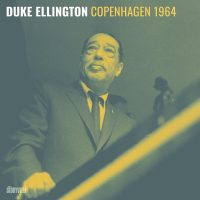
Ellington, Billy Strayhorn, and the orchestra toured Asia (the "Far East") in 1963. Rather than immediately writing new compositions, they deliberately allowed the impressions of the journey to settle, preferring that the process of transformation occur naturally rather than risk producing a mere pastiche.
Ellington's "The Far East Suite" (RCA 1966) was eventually recorded over three days, from December 19-21, 1966, at RCA Victor's Studio A in New York City. The Copenhagen recording discussed here includes five of the nine eventual pieces, a work in progress, capturing them before they reached their final form. Sam Woodyard, who was present in Copenhagen, would later be replaced by Rufus "Speedy" Jones on the studio recording. Likewise, Ernie Shepard's bass chair was taken by John Lamb. These personnel changes, subtle as they seem, affected the music's texture and balance in important ways.
The unusual feature of this Copenhagen performance is the inclusion of so many pieces that later appeared in The Far East Suite: "Amad," "Agra," "Bluebird of Delhi," "Depk" and "Isfahan."
"Amad" begins with Ellington's piano, supported by Shepard and Woodyard. The saxophones state the theme, while the full band responds with rich, 'oriental' inflections. Lawrence Brown takes the principal solo, his tone evoking, as has been observed, the call of a muezzin summoning the faithful to prayer.
"Agra," inspired by the Taj Mahal, Ellington described it as a "monument to love." Here, Harry Carney's baritone saxophone—an unmistakable voice within the orchestra—renders the theme with majestic breadth, resting securely on a cushion of trombones. Carney and the theme itself become inseparable, each magnifying the other's dignity.
In "The Bluebird of Delhi," bass and drums introduce Jimmy Hamilton's clarinet, whose graceful virtuosity mimics the bird that inspired the piece. A brief interjection from Cootie Williams' trumpet contrasts the scene before the bluebird triumphs musically, above the orchestra and nearly claiming the final phrase.
Ellington noted that "Depk" was inspired by a lively dance he had witnessed—six boys and six girls performing together. The resulting arrangement is intricate, with themes circulating through the ensemble before yielding solos by Hamilton and Carney.
"Isfahan," performed here by Johnny Hodges, is Strayhorn's exquisite evocation of the Iranian city. Ellington described the city as "a place of poetry," and Strayhorn chose the most poetic of soloists to portray it.
Verbal poetry was never far from Ellington's stage presence. Alongside excerpts from the Far East Suite, this concert includes a performance of "Harlem," accompanied by Ellington's spoken description of the neighborhood and the searching opening trumpet lines of Williams.
"The Banquet Scene (from Timon of Athens)" was written for the 1963 Shakespearean Festival in Ontario. It is a languorous showcase for Hodges. Ellington links it here to "Skillipoop," another piece from the suite. He explained that "Skillipoop" means "making what you are doing look better than what you are supposed to be doing"—an apt Ellingtonian quip. The music is a brisk dance featuring Hamilton's clarinet and a closing drum solo from Woodyard that fades almost to a whisper.
"Happy Reunion," introduced at Newport in 1958, became a long-term feature of the band's repertoire. Paul Gonsalves, celebrated for his marathon solo at Newport 1956 on "Diminuendo and Crescendo in Blue," revealed a different side of his artistry through this piece; he was a ballad player of remarkable depth and delicacy. Over the years, his interpretations of "Happy Reunion" grew richer and more profound.
The familiar crowd-pleasers are also present: "Take the 'A' Train," "Rockin' in Rhythm," and the medley of "Black and Tan Fantasy," "Creole Love Call," and "The Mooche." Even within these, Williams' trumpet retains all its bite and swagger, while Russell Procope's clarinet speaks in his singular, personal tone. Ellington's oft-repeated "Kind of Dukish," played thousands of times, still finds space for invention and wit.
This is the Ellington orchestra, on the road, at its best. The recording captures the vitality, beauty, and complexity of the ensemble—the rich orchestrations, the imagination, and the fierce joy that made every Ellington concert an event.
 FOLLOW Jack Kenny
and get notified whenever a new article published.
FOLLOW Jack Kenny
and get notified whenever a new article published.
Jack was turned on to jazz by a mixture of Stan Getz, Lee Konitz and Earl Bostic.
Track Listing
Take the 'A' Train; Medley: Black and Tan Fantasy, The Mooche, Creole Love Call: Harlem; Happy Reunion; Amad; Agra; Bluebird of Delhi; Depk; Isfahan; Things Ain't What They Used to Be; Banquet Scene (from Timon of Athens); Skillipoop; Kinda Dukish and Rockin' in Rhythm; Jones.
Personnel

Duke Ellington
piano
Cat Anderson
trumpet
Cootie Williams
trumpetHerbie Jones
trumpetRolf Ericson
trumpetLawrence Brown
trombone
Buster Cooper
tromboneChuck Connors
trombone
Johnny Hodges
saxophone, alto
Russell Procope
clarinet
Paul Gonsalves
saxophone, tenor
Jimmy Hamilton
clarinet
Harry Carney
saxophone, baritone
Sam Woodyard
drumsErnie Shepard
bassAlbum information
Title: Copenhagen 1964 | Year Released: 2026 | Record Label: Storyville Records
About Duke Ellington
Tags
PREVIOUS / NEXT
Become a Sustaining Member

Since 1995, All About Jazz has championed jazz as an art form and supported the musicians who create it. Over three decades, it has grown into one of the world's leading jazz resources, serving hundreds of thousands of readers, musicians, presenters and industry professionals each month.
Help Build the Future of All About Jazz
Your support helps us continue building All About Jazz for the next generation—expanding our editorial coverage, preserving jazz history, developing new community features and creating better ways to discover the music and the people behind it.
Become a sustaining member for as little as $20 per year and you'll immediately enjoy an ad-free experience along with access to subscriber features and future articles for a full year.
Together, we're not simply sustaining All About Jazz—we're building its future. Thank you for being part of the journey.