Home » Jazz Articles » Album Review » Marion Brown: Live in Europe 1968 & 1972
Marion Brown: Live in Europe 1968 & 1972
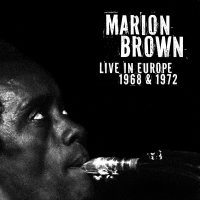
On the 1968 cuts, from a Paris radio studio, the quartet sticks to the conventional head-solos-head format on two pieces by Brown and one by Hampel. Although not unadulterated fire music, the whiff of freedom hangs over the set. The peppy boppish theme of "Current Events" leads seamlessly into an equally convoluted Brown solo. Here as elsewhere, Phillips and McCall generate a fluid momentum untroubled by meter.
Each musician gets a turn in the spotlight on each tune. Hampel's cascading shimmer on his own "Epiphanie" prompts Phillips to take up his bow, while Brown threads both squawks and lyricism through his corkscrewing lines. The compositions still exert an influence on the subsequent expositions. The catchy contours of "61 To Erie" resurface obliquely during the vibraphonist's outing. Brown too co-opts them for the basis of another feverish solo, behind which Phillips slips into a near walking groove.
During his stay in Europe, Brown developed a greater appreciation of his roots in rural Georgia, catalyzed by the reading of Harlem Renaissance author Jean Toomer's novel Cane (Boni and Liveright, 1923). Although he had been desperate to get away from the racial oppression, he even subsequently returned there for the birth of his son Djinji.
Artistically, his fascination resulted in what is now seen a minor classic, Afternoon Of A Georgia Faun (ECM, 1970). Made up of two controlled impressionistic improvisations by a cast including saxophonists Anthony Braxton and Benny Maupin, drummer Andrew Cyrille, and vocalist Jeanne Lee, the recording is also notable for pianist Chick Corea's most outside showing. In an interview Brown traced the album's inspiration to his youth, evoking "things that I saw and heard each day going from my house to school, church, visiting, roaming with my dog."
The final two tracks here, totaling just over 40 minutes of a 1972 concert from Chateauvallon in France, take the same titles as the two sides of the ECM date. Although the markedly reduced lineup comprises only Brown and McCall, the experimental episodic form remains similar. However, from moment to moment the ingredients are very different. A calm pastoral feel predominates the opening of "Djinji's Corner." Then, as conversational saxophone gradually becomes more outspoken, the first of several percussion interludes arrives, played by both men, using marimba, chimes, gongs, wood blocks and cymbals. The remarkable restraint of these and ensuing saxophone and drum exchanges suggests at least some preconception guiding the performance.
An extended passage of tinkling percussion introduces "Afternoon Of A Georgia Faun," through which Brown weaves gentle meditative flute, accompanied by a subdued rumble. Intermittent crashes signal a more propulsive approach by McCall, but not one that is sustained, apart from one sequence of pulsing drums and progressively mutating saxophone motifs. Brown and McCall demonstrate that the most radical gesture in free improvisation can sometimes be the refusal to fill the available space. It is striking how different this duet lands compared to the visceral intensity of Interstellar Space (Impulse!), Coltrane's 1967 summit with drummer Rashied Ali which became a benchmark for saxophone/drum pairings after its release in 1975. Indeed it represents an alternative path that has only become more trodden as the years have passed.
 FOLLOW John Sharpe
and get notified whenever a new article published.
John first fell under the spell of free jazz in the 1970s when he wistfully regarded the loft jazz scene from across the Atlantic
Track Listing
Current Events; Epiphanie; 61 To Erie Basin; Djinji's Corner; Afternoon Of A Georgia Faun.
Personnel


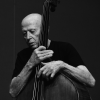
Additional Instrumentation
Marion Brown: flute; Steve McCall: percussion; Gunter Hampel: vibes (1-3).
Album information
Title: Live in Europe 1968 & 1972 | Year Released: 2026 | Record Label: NoBusiness Records
About Marion Brown
Tags
PREVIOUS / NEXT


Become a Sustaining Member

Since 1995, All About Jazz has championed jazz as an art form and supported the musicians who create it. Over three decades, it has grown into one of the world's leading jazz resources, serving hundreds of thousands of readers, musicians, presenters and industry professionals each month.
Help Build the Future of All About Jazz
Your support helps us continue building All About Jazz for the next generation—expanding our editorial coverage, preserving jazz history, developing new community features and creating better ways to discover the music and the people behind it.
Become a sustaining member for as little as $20 per year and you'll immediately enjoy an ad-free experience along with access to subscriber features and future articles for a full year.
Together, we're not simply sustaining All About Jazz—we're building its future. Thank you for being part of the journey.