Home » Jazz Articles » Opinion » Chuck Berry: 1926-2017
Chuck Berry: 1926-2017
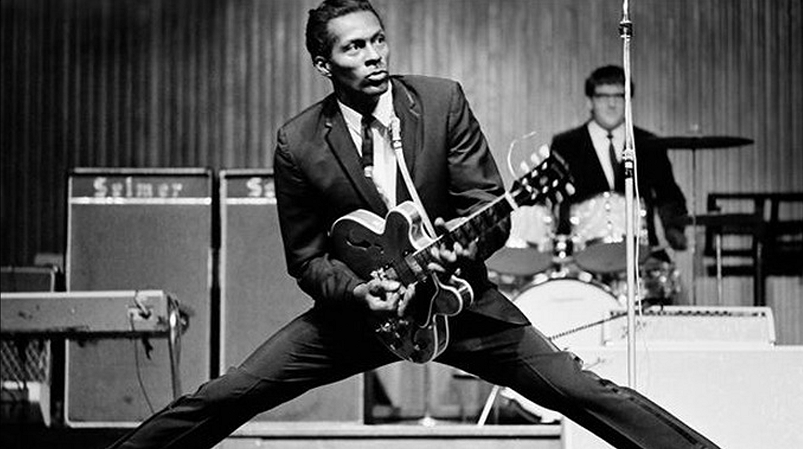
"While Elvis Presley was rock's first pop star and teenage heartthrob, Mr. Berry was its master theorist and conceptual genius, the songwriter who understood what the kids wanted before they knew themselves. With songs like "Johnny B. Goode" and "Roll Over Beethoven," he gave his listeners more than they knew they were getting from jukebox entertainment."
..."he gave his listeners more than they knew they were getting from jukebox entertainment." The Brown-eyed Handsome man, Chuck Berry, has been assumed into R&R Heaven, creating a new Holy Day of Obligation for every music lover. He leaves at a time when his initial messages of high-school good times, boys, girls, parties, and all the things that make being humans, human is needed more badly than ever. Rock & Roll's Apostle Paul has finally come home.
Berry was egalitarian, appealing to a white audience of teenagers and young adults having the initial stirrings of epiphany that Jim Crow America is not America but something far more malignant. A Malignancy that stubbornly remains today, untreatable, and presently enjoying a new era of popularity. March 31, 1958, Chuck Berry released: "Johnny B. Goode," mere months before this author showed up himself. Fourteen years later, having heard Johnny Winter's searing performance of the same at the Fillmore East, I was teaching myself to play this song, just as millions of other pimply-faced white boys did. Never mastered that essential introduction, but I played the song a trillions times.
It is the brutal existential fact that we will all die. While I am quite comfortable with my own, I am not so comfortable with the deaths of others. When a talent and personality like Chuck Berry passes on, a temporal and cultural vacuum is created that is in danger of being filled with something inferior, often vastly so.
 FOLLOW C. Michael Bailey
and get notified whenever a new article published.
FOLLOW C. Michael Bailey
and get notified whenever a new article published.
I'm Sanctified and Southern Fried / Mama tried and daddy cried / I tell the truth 'cept when I've lied / And like my huevos on the side.
About Chuck Berry

Tags
PREVIOUS / NEXT


Become a Sustaining Member

Since 1995, All About Jazz has championed jazz as an art form and supported the musicians who create it. Over three decades, it has grown into one of the world's leading jazz resources, serving hundreds of thousands of readers, musicians, presenters and industry professionals each month.
Help Build the Future of All About Jazz
Your support helps us continue building All About Jazz for the next generation—expanding our editorial coverage, preserving jazz history, developing new community features and creating better ways to discover the music and the people behind it.
Become a sustaining member for as little as $20 per year and you'll immediately enjoy an ad-free experience along with access to subscriber features and future articles for a full year.
Together, we're not simply sustaining All About Jazz—we're building its future. Thank you for being part of the journey.