Home » Jazz Articles » Mr. P.C.'s Guide to Jazz Etiquette and Bandstand Decorum » August 2013
August 2013
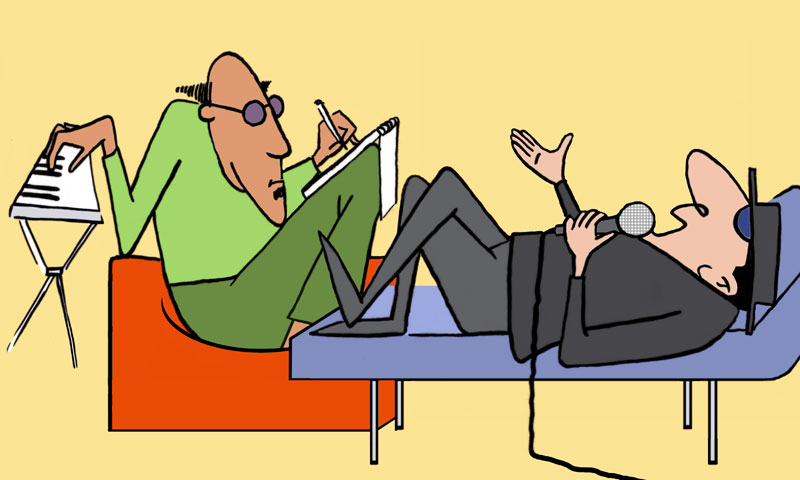
Why do guys want to play tunes really fast? Like, I'll call "It Could Happen to You," but instead of having a nice swinging groove they want to play it at 280 beats per minute or something. Then they say it's an "east coast" thing, which I guess is supposed to mean I can't understand because I always lived on the west coast. Why do people play faster on the east coast? Nice and Easy
Dear Nice:
They just are faster—how do you think they got three hours ahead of us?
I can already hear your objection: Wouldn't that make tempos even faster in Europe, since it's several hours further ahead? That, of course, gets into the metric system, and Europeans can legitimately claim to have taken the lead in exploring meters. But those are principally odd meters, which can't be played nearly as fast as ones that aren't odd, but rather reflect the American ideals of normalcy and conformity.
Do the Europeans care? Not after their obligatory wine with lunch, which of course slows them down even more. Thus the quintessentially European ECM sound—a mix of unAmerican meters and ballads, marketed as "pristine" to mask the musicians' inherent sluggishness.
Dear Mr. P.C.:
I teach at a pretty expensive private music school. Sometimes I get kids who have no talent whatsoever, and I can't figure out what to do. Do I go ahead and let them waste their parents' money for four years? Or should I be brutally frank with them and help them find a different field? Professor has Dilemma Dear PhD:
Not everyone who goes into music has to be a great player, you know. They can become administrators, promoters, or—as you well know—professors. The only downside to teaching is the occasional run-in with a grossly untalented student, which can understandably hit a little too close to home.
Dear Mr. P.C.:
I heard a pianist talk about his "reharm" of a song. Why would a musician want to harm a song at all, let alone multiple times? Ryan E.
Dear Ryan:
That's a great question! The initial harm, of course, is the banal solo he takes over a song whose harmonic structure he considers pedestrian. Can't you just see his condescending sneer as he's forced to navigate simple chord changes that are totally beneath his dignity? Musically harmful, indeed!
So he takes matters into his own hands, and writes a whole new set of chord changes. These are all about him—the way he thinks music should be, which is of course a very complicated series of chords that he alone can sail through, having worked on them for most of his life. And so we have a "reharm"; the damage he's done to a song once marked by simple beauty, and now a testament to his own harmonic conceit.
The greatest harm of all—a third harm (or re-reharm, if you will)—comes when others are forced to solo over these new changes. They can't sound nearly as good as he does, of course, and a clash of egos often ensues. The end product is a series of heated arguments—on and off the bandstand—about whose chord changes are better. The poor audience members, who wanted nothing but beautiful music, are left seriously harmed, if they're left at all.
Have a question for Mr. P.C.? Ask him.
 FOLLOW Mr. P.C.
and get notified whenever a new article published.
FOLLOW Mr. P.C.
and get notified whenever a new article published.
Inspired by the cutting edge advice of Abigail Van Buren, the storied bass playing of Paul Chambers, and the need for a Politically Correct doctrine for navigating the minefields of jazz etiquette, I humbly offer my services.
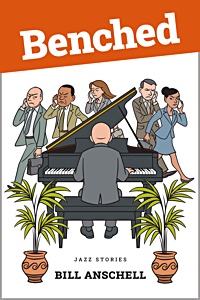
Get 'Benched!'
Benched, Bill Anschell's debut book of short stories / jazz humor. The stories are interspersed with the very best of Mr. P.C., hand-picked from the 400+ questions answered over the column's 16-year history. Benched is available on Amazon (paperback and Kindle) and most online booksellers.
Tags
PREVIOUS / NEXT


Become a Sustaining Member

Since 1995, All About Jazz has championed jazz as an art form and supported the musicians who create it. Over three decades, it has grown into one of the world's leading jazz resources, serving hundreds of thousands of readers, musicians, presenters and industry professionals each month.
Help Build the Future of All About Jazz
Your support helps us continue building All About Jazz for the next generation—expanding our editorial coverage, preserving jazz history, developing new community features and creating better ways to discover the music and the people behind it.
Become a sustaining member for as little as $20 per year and you'll immediately enjoy an ad-free experience along with access to subscriber features and future articles for a full year.
Together, we're not simply sustaining All About Jazz—we're building its future. Thank you for being part of the journey.