Home » Jazz Articles » Alexander von Schlippenbach
Jazz Articles about Alexander von Schlippenbach
About Alexander von Schlippenbach
Aki Takase / Rudi Mahall and the Alexander von Schlippenbach Trio: London, UK, January 26, 2012

by John Sharpe
Aki Takase / Rudi Mahall and the Alexander von Schlippenbach TrioThe VortexLondonJanuary 26, 2012 The last week in January at north London's Vortex was given over to a mini-festival curated by saxophonist Evan Parker, genteelly entitled “Might I Suggest." Sponsored by the Goethe Institute, it showcased several German-based musicians rarely seen in the UK. On paper at least, the highlight appeared to be the double bill showcasing in two contrasting halves, the husband-and-wife team of ...
Continue ReadingAlbum Review
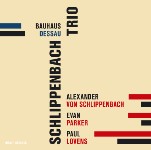
Schlippenbach Trio: Bauhaus Dessau
by AAJ Italy Staff
«Una caratteristica importante della maggior parte dei gruppi nella libera improvvisazione è la brevità della loro esistenza. È forse ovvio che quasi tutte le collaborazioni casuali, il tipo più comune di raggruppamento nella libera improvvisazione, tendano a esaurire rapidamente le aree in cui i componenti provano un reciproco interesse, considerando quindi soddisfatte le loro comuni ambizioni. Ma anche i gruppi più soddisfacenti dal punto di vista musicale, sembrano perdere dopo due o tre anni buona parte della loro vitalità. A ...
Continue ReadingSchlippenbach Quartet: At Quartier Latin

by Mark Corroto
Released as part of the limited edition box FMP im Rückblick--in Retrospect (1969 - 2010), this recording by pianist Alexander von Schlippenbach's Quartet, At Quartier Latin, is an incomparable time capsule that documents a crucial period in European improvisation and the development of today's jazz luminaries. Available separately from the 12-CD box, this disc brings together two live recordings--originally released as The Hidden Peak (FMP, 1977) and Three Nails Left (FMP, 1975)--featuring Schlippenbach's trio, which was regularly expanded ...
Continue ReadingSchlippenbach Trio: Bauhaus Dessau
by Nic Jones
The Schlippenbach Trio is now decades old; perhaps it's not surprising there are only a few improvised music groups that have lasted that long. In this trio's case the matter of pedigree goes without saying, but whether or not the depth of their familiarity with each others' work makes for sterile, unrewarding music, is a question that easily comes to mind. On this occasion it isn't, as it's far from sterile and unrewarding. Evan Parker, in particular, ...
Continue ReadingAlbum Review
Alexander von Schlippenbach: Friulan Sketches
by AAJ Italy Staff
Musica improvvisata. Detto diversamente, musica composta istantaneamente, da tre artisti che si conoscono bene, ma che non suonano stabilmente in questa formazione e che, pertanto, hanno realmente esplorato la fecondità della loro interazione nel corso della registrazione. Il trio è decisamente cameristico: Alexander von Schlippenbach, uno degli alfieri della musica improvvisata centroeuropea, al pianoforte; Daniele D'Agaro, che anche grazie alla sua pluriennale permanenza in Olanda con quella tradizione improvvisativa ha dialogato a lungo, al clarinetto (e quindi tralasciando del tutto ...
Continue ReadingAlexander von Schlippenbach, Aki Takase and Rudi Mahall: Betting on Tradition

by Clifford Allen
European improvisation began to set itself apart when it built its own tradition, drawing from folk forms and concert music rather than providing provincial answers to questions posed by Ornette Coleman, Thelonious Monk or Duke Ellington. Of course, all these figures factored into the music of players like trombonist Albert Mangelsdorff, drummer Gil Cuppini and reed player John Surman, but it was their geography and local traditions that made their approaches different. German pianist Alexander von Schlippenbach has been at ...
Continue ReadingAlexander von Schlippenbach: Piano Solo '77
by Nic Jones
Pianist Alexander von Schlippenbach hasn't so much refined his art over the course of his decades-long career as he has redefined his musical personality according to the demands of the setting he's working in and the musical company he's keeping. While that suggests adaptability, that tendency is tempered by the simultaneous singularity of his musical personality. This recital from 1977 is, therefore, a record of a work in progress, just as any recording of this pianist's trio is with saxophonist ...
Continue ReadingAlbum Showcase




Trending
 Interview
Lou Marini: A Solo Career Starting At The Age Of 80
 History of Jazz
John Coltrane in Detroit: A Brief History
 Live Review
The Tension Is Where the Music Lives: Miles Davis at 100,...
 Chats with Cats
Michael Ricci: Still Building a Home for Jazz
 Radio & Podcasts
Sullivan Fortner, Jim Rotondi & Dena DeRose, Ardeshir,...
 Reanimating Conversations Past
Charlie Haden: Anatomy of a Jazz Classic
 Radio & Podcasts
Miki Yamanaka, Stefon Harris, Paul Yonemura, Amber Weeks...
Premium
VOTE!