Home » Jazz Articles » Album Review » Charles Tyler Ensemble: Voyage From Jericho
Charles Tyler Ensemble: Voyage From Jericho

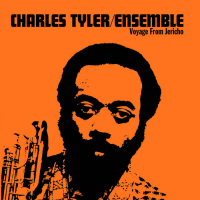
Was it a matter of timing, or simply living in the shadow of giants, that has kept saxophonist Charles Tyler off most listeners' radars? Born in Kentucky in 1941 and raised in Indianapolis, Tyler first gained recognition through his association with Albert Ayler. After relocating to Cleveland in the early '60s, the two became fast friends, and Tyler's fiery saxophone can be heard on Ayler's early ESP-Disk recordings Bells (1965) and Spirits (1965). He soon stepped forward as a leader with Charles Tyler Ensemble (ESP Disk1966) and Eastern Man Alone (ESP Disk, 1967), two albums that have drifted in and out of print, perhaps casualties of a moment when Ayler and Ornette Coleman's groundbreaking work dominated the conversation and left little room for similarly adventurous voices. Fellow Cleveland improvisers like Norman Howard and Bobby Few met similar neglect.
Tyler persisted, but Cleveland's free jazz scene garnered little national attention, and the New York loft era, where he also contributed, began to fade. Voyage from Jericho, released on Tyler's own small label, AK-BA Records, in 1974, suffered from limited distribution, obscuring what stands as a vivid testament to his artistry as both composer and instrumentalist.
Across the album, Tyler's affinity for Eastern-influenced sounds takes center stage, especially on "Return to the East" and also the title track which he shares the frontline with Arthur Blythe and trumpeter Earl Cross. With Blythe on alto, Tyler chooses baritone, its gruff resonance powering a march-like theme that opens and closes the tune. Blythe's serrated phrases push the music into high gear, followed by fierce, unrestrained solos that crash together in controlled chaos before snapping back into the martial refrain.
"Just for Two," a duo with Blythe, nods to the buoyant interplay of Coleman and Don Cherry. The soon to be Sun Ra band members, Cross and bassist Ronnie Boykins, also appear, foreshadowing Tyler's later tenure in the Arkestra. Drummer Steve Reid, a long-term collaborator, brings tensile energy throughout, notably on "Children's Music March," where hints of Tyler's military band experience weave through nimble baritone lines. "Surf Ravin" showcases Tyler's dexterity as he switches between alto and baritone, unleashing a torrent of bold, captivating sound.
Now newly reissued in a remastered LP/digital edition, with a deeply researched 28-page biography by historian Cisco Bradley, Voyage from Jericho presents a long-overdue opportunity to reassess a musician who should never have slipped from view. Tyler's music makes one thing clear: some voices may be overshadowed for a time, but brilliance has a way of resurfacing.
Track Listing
Voyage From Jericho; Return To The East; Just For Two; Children's Music March; Surf Ravin.
Personnel
Charles Tyler
drums
Arthur Blythe
saxophone, altoRonnie Boykins
bass, acoustic
Steve Reid
drumsEarl Cross
trumpetAdditional Instrumentation
Charles Tyler: alto saxophone..
Album information
Title: Voyage From Jericho | Year Released: 2026 | Record Label: Frederiksberg Records
About Charles Tyler Ensemble
Tags
PREVIOUS / NEXT


Become a Sustaining Member

Since 1995, All About Jazz has championed jazz as an art form and supported the musicians who create it. Over three decades, it has grown into one of the world's leading jazz resources, serving hundreds of thousands of readers, musicians, presenters and industry professionals each month.
Help Build the Future of All About Jazz
Your support helps us continue building All About Jazz for the next generation—expanding our editorial coverage, preserving jazz history, developing new community features and creating better ways to discover the music and the people behind it.
Become a sustaining member for as little as $20 per year and you'll immediately enjoy an ad-free experience along with access to subscriber features and future articles for a full year.
Together, we're not simply sustaining All About Jazz—we're building its future. Thank you for being part of the journey.