Home » Jazz Articles » Album Review » Decoy with Joe McPhee: Spontaneous Combustion
Decoy with Joe McPhee: Spontaneous Combustion
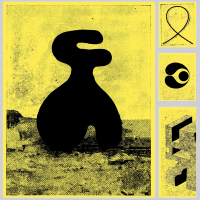
McPhee's vinegar and honey amalgam of post-Ayler fire and extemporized lyricism is already well-established. However Decoy as a unit has a lower profile. On bass it includes John Edwards, who furnishes ample confirmation of why he's in demand for almost every worthwhile session in London, while on drums is Steve Noble with who he forms a frequent pairing (both are part of Peter Brötzmann's English trio for example). But what sets Decoy apart is Alexander Hawkins' choice to utilize Hammond organ rather than his more familiar piano. He makes a virtue of the Hammond's lack of precision, working from a palette of broad brush smears, dynamic splatters and finely drawn whistles.
McPhee allows the trio space to stretch out and they reciprocate by diligently seeking ways to set off his pocket trumpet and saxophone to best advantage. In spite of the generational differences all four are accomplished breakers of new ground. They partake of collective route finding of the highest order without the benefit of any compositional satnav. Three long form improvisations progress through well-judged transitions, evidence of intensive deep listening and laudable absence of ego.
"Spontaneous Combustion 1" opens with McPhee's pocket trumpet squeals and stutters, over a pointillist backing which gradually coalesces behind heraldic fanfares. After many years performing in tandem Noble and Edwards prove virtually telepathic in their understanding, moving in and out of tempo at will. Once McPhee switches to alto saxophone, they slide into relaxed earthy ballad territory, which presages one of the first high points: a passage of intertwining alto and bowed bass in which they phrase as one. Another pinnacle comes as McPhee's blues drenched lines transmute into anguished vocal cries, somewhere in uncharted wilds between speech and music.
Of the newly issued material (from the second night of the band's residency), "Set 1" proves more episodic, featuring a series of rapidly evolving vignettes, including some splendidly tangled drum and bass thickets. Noble matches Edwards' explosive energy with an almost bottomless repertoire of arresting tone colors from an array of untethered cymbals. He also enjoys a percussive interchange with Hawkins' Hammond, which firmly evokes the Sun Ra end of the organ spectrum. "Set 2" convinces as the most raw and unrestrained, starting at an immediate peak with McPhee's insistent alto and fiery accompaniment.
After such crowd pleasing proceedings the final "Encore" almost seems counterintuitive as McPhee blows elegiac pocket trumpet over prickly but subdued support. It only goes to demonstrate the unpredictability and invention of this group and provides a powerful argument, were one needed, as to why the association should continue.
 FOLLOW John Sharpe
and get notified whenever a new article published.
FOLLOW John Sharpe
and get notified whenever a new article published.
John first fell under the spell of free jazz in the 1970s when he wistfully regarded the loft jazz scene from across the Atlantic
Track Listing
CD1: Spontaneous Combustion 1; CD2: Spontaneous Combustion 2 (Set 1; Set 2; Encore).
Personnel

Joe McPhee
woodwindsJoe McPhee: alto saxophone and pocket trumpet; Alexander Hawkins: Hammond B3 organ; John Edwards: bass; Steve Noble: drums.
Album information
Title: Spontaneous Combustion | Year Released: 2015 | Record Label: OTOrocku
About Joe McPhee
Tags
PREVIOUS / NEXT

Joe McPhee Concerts
Become a Sustaining Member

Since 1995, All About Jazz has championed jazz as an art form and supported the musicians who create it. Over three decades, it has grown into one of the world's leading jazz resources, serving hundreds of thousands of readers, musicians, presenters and industry professionals each month.
Help Build the Future of All About Jazz
Your support helps us continue building All About Jazz for the next generation—expanding our editorial coverage, preserving jazz history, developing new community features and creating better ways to discover the music and the people behind it.
Become a sustaining member for as little as $20 per year and you'll immediately enjoy an ad-free experience along with access to subscriber features and future articles for a full year.
Together, we're not simply sustaining All About Jazz—we're building its future. Thank you for being part of the journey.