Home » Jazz Articles » Afrobeat Diaries » Part 4 - Fela: Kalakuta Notes
Part 4 - Fela: Kalakuta Notes
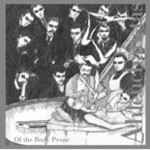
 Fela: Kalakuta Notes
John Collins
Softcover; large format; 160 pages
ISBN: 978 90 6832 748 9
KIT Publishers
2009
At the center of Fela: Kalakuta Notes is a diary its Ghanaian-based author, John Collins, kept during his stay at Fela Kuti's compound, Kalakuta Republic, in Nigeria over 18 days in January 1977. Fortunately for Collins, though unfortunately for eyewitness journalism, he wasn't there a month later, when around 1,000 soldiers broke into compound, burnt it to the ground and beat and raped its residents (see Part 2 of this series). Nonetheless, Collins' notes, and his interviews with musicians who knew and worked with Kuti, add some useful detail to the historical record.
The book's working title was Fela Through Ghanaian Eyes, and most of its original content derives from visits Kuti made to Ghana, Nigeria's western neighbour, in the 1960s and 1970s. The author himself first saw Kuti perform in 1972 at the University of Ghana (where he is in 2009 a professor in the music department), and met him for the last time, in Amsterdam, Holland in 1981. Kuti's life and career post 1981 until his death in 1997, which were every bit as dramatic as they were in the 1970s, are dealt with relatively briskly. So too, as a consequence, are Kuti's political activities, which included the formation of his own political party, Movement of the People, and his ongoing campaign to become President of Nigeria.
The absence of an informed Nigerian point of view unbalances Collins' story as much as it enriches it. His own Ghanaian perspective is matched by those of the other voices in the book, in the main musicians who worked with Kuti in the 1960s and 1970s. Their reminiscences are worthy of record, though like all memories, some may be colored by the passage of time. The late Ghanaian highlife singer Joe Mensah, for instance, says that "I've never, up to this day [1998], heard any trumpeter that great...He had everything, the embouchure, the intonation, the dexterity, the fingering." The guitarist Stan Plange, on the other hand, who knew Kuti at the same time as Mensah, says he played trumpet "very badly. Fela was never very good on trumpet but was much better on the keyboards, especially jazz piano." These contrary recollections, early in the book, trigger a caution the reader needs to apply on later pages.
Collins is strong on Kuti's relationships with the Ghanaian-based club and record label owner, Faisal Helwani, ubiquitous on the scene in the 1970s, and with West African Decca. Here Collins can be as entertaining as he is factually diligent. Chief Moshood Abiola was at the time the majority shareholder in Decca, which had severed Kuti's contract and was refusing to pay compensation. Kuti's dispute with the label was, Collins relates, "not helped when Fela had his people dump 14 barrels of human faeces outside Abiola's villa."
Collins' stay at Kalakuta was a short one, and the dozen or so pages given over to his description of day-to-day life there don't always make for pretty reading: in 1977, Kuti was in the middle of several years of especially brutal police and army oppression, and the miasma of state violence surrounding the Afrika 70 family of musicians, friends and hangers-on sometimes seeped through Kalakuta's fence. Residents who infringed house rules were at the time routinely offered the choice of a beating or expulsion.
The author, clearly, was shocked by some of what he witnessed during his stay. He describes Kuti's lifestyle as "fiery, promiscuous, rascally and egoistic." Others will remember Kuti as extraordinarily courageous, intellectually stimulating and a loyal friend. He was also entirely free of racial or cultural bitterness—he lived and studied in London, a city he very much enjoyed revisiting, for several years as a young man—and was as much at home with white foreigners as he was with his own people. It was the post-colonial mentality of Nigeria's rulers, and the incapacitating tribalism of its populace, that Kuti hated and worked against. Collins acknowledges that Kuti's "peppery character in the African soup (is) sorely missed," but it's unfortunate that he chose not to draw a more complete portrait of his subject.
Fela: Kalakuta Notes, which is copiously illustrated, is a warts and all reminiscence, and not all the warts are Kuti's. But it's a book any Afrobeat enthusiast will enjoy and its publication is be welcomed.
 FOLLOW Chris May
and get notified whenever a new article published.
FOLLOW Chris May
and get notified whenever a new article published.
Chris May is a senior editor of All About Jazz. He was previously the editor of the pioneering magazine Black Music & Jazz Review, and more recently editor of the style / culture / history magazine Jocks & Nerds.
Tags
PREVIOUS / NEXT

Become a Sustaining Member

Since 1995, All About Jazz has championed jazz as an art form and supported the musicians who create it. Over three decades, it has grown into one of the world's leading jazz resources, serving hundreds of thousands of readers, musicians, presenters and industry professionals each month.
Help Build the Future of All About Jazz
Your support helps us continue building All About Jazz for the next generation—expanding our editorial coverage, preserving jazz history, developing new community features and creating better ways to discover the music and the people behind it.
Become a sustaining member for as little as $20 per year and you'll immediately enjoy an ad-free experience along with access to subscriber features and future articles for a full year.
Together, we're not simply sustaining All About Jazz—we're building its future. Thank you for being part of the journey.